
The answer depends less on the word “inverter” than on duty cycle, usable output, electrical infrastructure, process fit, service access, and total ownership cost. By the end, you can test a Panasonic quotation against your welding schedule and decide whether its benefits outweigh the installation and maintenance demands.
Key takeaways
- Match rated current and duty cycle to your longest welding runs.
- Choose the process, torch, gas control and consumables as one complete setup.
- Confirm your electrical supply, earthing and local service support before buying.
- Compare energy, maintenance, downtime and productivity—not purchase price alone.
What an inverter changes—and where the value comes from
An inverter welder first rectifies incoming AC, switches it at high frequency through power semiconductors, then transforms and regulates it into welding current. A transformer-rectifier uses a large, low-frequency transformer followed by a rectifier, so it delivers dependable output but requires more iron, space, and handling effort.
| Factor | Inverter equipment | Transformer-rectifier equipment |
|---|---|---|
| Power source | High-frequency electronic conversion | Mains-frequency transformer and rectifier |
| Physical burden | Lighter, smaller, easier to move | Heavier, larger, harder to relocate |
| Arc control | Precise electronic adjustment and process settings | Simpler, rugged control architecture |
| Main risk | Dust, blocked cooling, poor supply, and failed boards | Heat, weight, and lower portability |
| Service requirement | Skilled diagnosis and model-specific spares | More accessible conventional repairs |
The difference justifies the purchase when your shop moves machines between bays, has limited floor space, runs long production hours, or gains measurable control over starts, wire transfer, and arc stability.
Lower input consumption can also matter across a heavily used fleet, but compare usable production output rather than open-circuit voltage or a short maximum-current claim.
When comparing welding equipments, match duty-cycle ratings on the same basis: IEC 60974-1, stated current, voltage, and ambient temperature, commonly 40 °C. Electronic equipment also needs clean airflow, protected placement, and reliable local access to power boards, IGBT modules, feeder motors, torches, liners, contact tips, and cables.
Fume extraction, ventilation, ultraviolet protection, and fire controls remain necessary; an inverter does not remove those hazards. Choose the inverter when reduced handling and downtime savings exceed its higher electronic repair exposure.
Can the rated current and duty cycle handle your production?
A 350 A or 400 A label does not tell you whether the machine will survive your production schedule. Start with the welding procedure specification: record the required current, arc voltage, wire diameter, transfer mode, and actual arc-on time for each job.
An industrial inverter welder for fabrication must sustain that combination, not merely reach a short-duration maximum output.
Calculate the demand from your work:
- Measure arc-on time during a representative 10-minute production interval, including repeated fillet welds, stops, repositioning, and restarts.
- Compare that percentage with the manufacturer’s duty-cycle rating at the same current, voltage, and ambient temperature. A 60% rating means 6 minutes of welding in a 10-minute test period, not 6 minutes every hour.
- Check the derating curve at 40 °C, the common IEC 60974-1 test basis. If your shop is hotter, enclosed, dusty, or poorly ventilated, select additional thermal margin.
Do not compare a 350 A unit and a 400 A unit by amperage alone. Read the output table for your wire size and transfer mode; a machine that reaches 400 A at one voltage may not sustain the voltage your thick-section weld requires.
Request the model-specific specification sheet, cooling method, protection features, feeder cable limit, and commissioning checklist. Run a production trial with the longest weld sequence before ordering. Repeated thermal trips will erase the value of higher nominal output.
Which process and complete setup match the work?
Match the process to the joint, material, thickness and finish before comparing inverter brands.
| Process | Best fit | Check before ordering |
|---|---|---|
| MIG | Clean, productive welding of aluminium and some non-ferrous alloys with inert gas | Wire diameter, spool size, U-groove rolls, aluminium liner, torch rating and usually DCEP polarity |
| MAG | Carbon or low-alloy steel fabrication using CO₂ or argon-CO₂ mixtures | Wire type, V-groove rolls, liner length, gas composition, flowmeter and DCEP polarity |
| TIG | Precise, low-spatter welds on stainless steel, aluminium and thin sections | AC or DC output, high-frequency start, torch and consumable sizes, foot pedal, gas lens and argon supply |
| DC arc | Portable repair work, outdoor fabrication and heavier steel sections | Electrode diameter, permissible electrode types, electrode-holder rating, work lead and polarity |
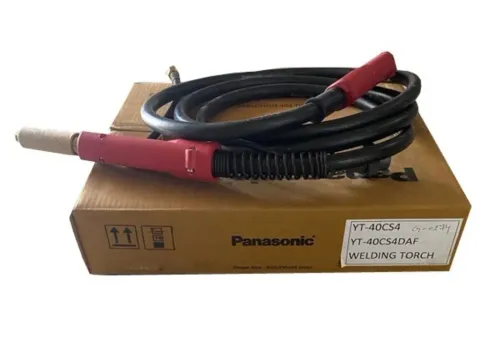
Do not treat “MIG-ready” as a complete cell. Ask for the exact wire feeder, interconnecting cable, torch, work lead, earth clamp, regulator, trolley and compatible spool arrangement. A separate feeder suits long reaches and overhead work, but model-specific cables or feeder parts can turn a small failure into downtime.
Before accepting the quotation, match these details to your welding procedure:
- Wire or electrode diameter and alloy
- Shielding-gas composition and flow range
- Torch rating, contact-tip size, liner and drive-roll profile
- DCEP, DCEN or AC polarity
- Transfer mode, required voltage and wire-feed range
- Spares for tips, liners, nozzles, rolls and fuses
A machine that cannot sustain the required wire size and transfer mode is not suitable, even if its maximum amperage looks impressive.
Is your electrical supply and service network ready?
A three-phase 380–415 V welder is not a plug-in replacement for a single-phase machine. Before ordering a Panasonic inverter welder in Hyderabad, match the machine’s input range and phase requirement to your measured supply, not only the voltage printed on the quotation.
1. Confirm the available three-phase voltage, frequency, phase balance, and permissible voltage fluctuation. Ask for the machine’s rated kVA and kW: the generator must cover apparent load in kVA and real load in kW, alongside lights, compressors, and other welders.
2. Have an electrician size the breaker, isolator, and copper cable for the manufacturer’s input current, installation distance, ambient temperature, and voltage drop. Confirm a dedicated protective earth, correct earthing resistance, and cable lugs that will not heat at full load.
3. If you use a generator, obtain its three-phase rating, regulation details, waveform specification, and minimum starting capacity. Test the generator under welding load; phase imbalance or voltage dips can trigger inverter protection or damage power electronics.
4. Request a written model-specific sheet and commissioning checklist covering input range, cooling method, IP rating, extension-cable length, torch and liner, feeder-to-power-source cable length, warranty exclusions, and spare-parts lead time.
Ask an inverter welding equipment supplier in Hyderabad, such as Weld Tech Corporation, whether it can source the correct IGBT or power board, control board, feeder motor, encoder, liner, contact tips, and interconnecting cable within your repair window.
Provide ventilation and fume extraction separately; efficient electronics do not remove fume, gas, ultraviolet, noise, or fire hazards.
Related products
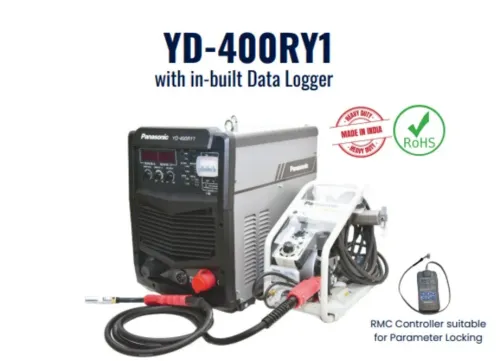
 | Welding machine Panasonic Inverter Welding Machines Brand Panasonic MODEL YD-400RX 1 INPUT SUPPLY 415 +10% -20% PHASE THREE /50-60HZ POWER CONSUMPTION 16.2KVA/15.6KW WELDING CURRENT RANGE 50-400AMP... View product → |
 | TIG Inverter Welding Machines Panasonic TIG Inverter Welding Machines Brand Panasonic MODEL YC-400TX3 INPUT SUPPLY 415 + - 10% PHASE/FREQUENCY THREE / 50-60 HZ RATED INPUT CAPACITY 13.9 KVA/13.2 KW RATED OUTPUT CURRENT... View product → |
How does the total ownership cost compare with other welders?
Electricity savings alone rarely justify an inverter for occasional welding. The case becomes stronger when repeatable MIG/MAG work keeps the machine productive, operators benefit from fine arc control, and moving a lighter unit reduces handling time and floor-space pressure.
| Factor | Inverter equipment | Transformer-rectifier equipment |
|---|---|---|
| Electricity | Lower input demand for the same welding output can reduce running cost during high utilisation | Higher losses matter less when arc-on time is low |
| Handling | Compact, lighter construction reduces movement and installation effort | Heavier, less convenient for frequent relocation |
| Arc control | Adjustable voltage, inductance and wire-feed response can reduce spatter and rework | Simpler controls can limit tuning |
| Uptime | Fast, stable welding supports production when service and cooling are maintained | Robust, simpler construction can be easier to keep running |
| Repair risk | IGBT modules, power boards, control boards and fans can create costly downtime | Fewer electronic assemblies simplify fault-finding |
| Setup | Requires correct power quality, ventilation, earthing, feeder settings and trained operators | Tolerates simpler setup, but may consume more space and power |
Choose the inverter when its saved handling, reduced rework and extra output exceed the cost of electronic failures. Before buying, obtain a repair-window commitment for the exact IGBT or power-board assembly, feeder motor, encoder, torch liner and interconnecting cable. Dust, blocked filters and poor ventilation shorten service life.
A low-volume shop with unreliable supply and weak maintenance support may achieve lower total ownership cost with a simpler welder. For any option, compare consumable waste, contact-tip changes, gas loss, downtime and rework—not just the purchase invoice.
Frequently asked questions
What does an inverter change in a welding machine?
An inverter rectifies incoming AC, switches it at high frequency and regulates welding current through power semiconductors. The design reduces transformer size and weight compared with a transformer-rectifier.
How do you check whether a welder’s rated current and duty cycle fit production?
Compare the machine’s output at the duty cycle you need with your electrode, wire diameter, material thickness and longest expected welding runs. Do not rely only on the maximum amperage.
What should a complete welding setup include?
Select the welding process first, then match the power source with the torch, wire feeder or electrode holder, shielding-gas regulator, cables, consumables and spare parts.
What electrical and service checks should fabrication shops make?
Confirm input voltage, phase, frequency, breaker capacity, cable size and earthing against the machine nameplate. Also identify a service provider that can support the power source, torch and controls.
How should you compare the ownership cost of inverter and transformer-rectifier welders?
Include purchase or rental cost, electricity use, consumables, planned maintenance, repairs, operator handling, downtime and the production value of easier setup or higher usable output.
Related products
 | MAG Welding Machines Panasonic MAG Welding Machines Brand Panasonic Model YD-350GZ4 Phase 3-Phase Current 350 A Voltage 380-415 V Dimension (L x B x H) 380x550x640 mm Product Type New Duty Cycle 60%... View product → |
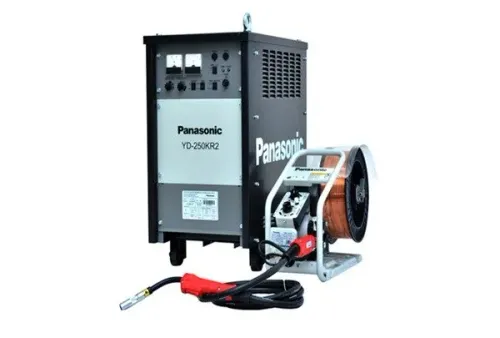
 | MIG Welding Machines Panasonic MIG Welding Machines Brand Panasonic MODEL YD-250KR 2 INPUT SUPPLY 415 +10% ,-10% PHASE/FREQUENCY THREE / 50-60 HZ POWER CONSUMPTION 9.5 KVA/7.9KW WELDING CURRENT RANGE... View product → |
 | TIG Welding machine Panasonic TIG Welding Machines Model Number 300 TSP Welding Type TIG Welding Voltage 415V, +10% (Input Voltage) Output Current Range 5-300 A Brand Panasonic Frequency 50-60 Hz... View product → |
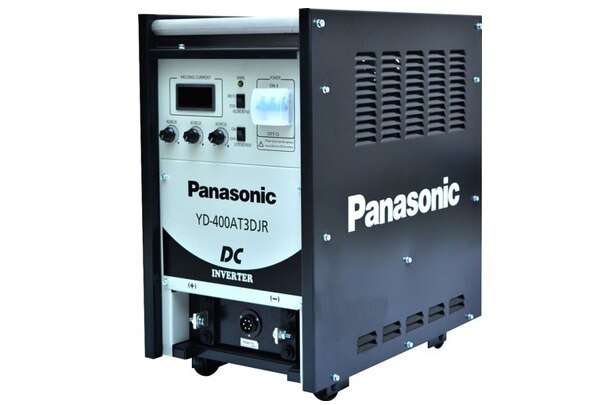
 | DC ARC Welding machine Inverter Controlled DC ARC Welding MODEL YD-400AT3 DJR INPUT SUPPLY 415 + - 20% PHASE / FREQUENCY THREE / 50-60 HZ POWER CONSUMPTION 17.6 KVA/16.7 KW WELDING CURRENT RANGE 20-400AMP... View product → |