A 250 A, 400 A or 500 A label does not tell you whether a MIG system will weld thin body panels cleanly, run reliably from your shop supply or sustain chassis work. By comparing usable duty cycle, low-current control, wire-feeding options, gas requirements and input power, you can select a machine that matches the work rather than the headline rating.
Key takeaways
- Choose 250 A for body panels, 400 A for chassis work, and 500 A for sustained heavy welding.
- Compare duty cycle, input power, wire-feed range and cooling—not maximum amperage alone.
- Match shielding gas, transfer mode and thin-panel controls to the repair material.
- Pay for pulse MIG and local service when repair quality and uptime justify it.
Match 250 A, 400 A and 500 A to the Work You Actually Weld
A 250 A digital IGBT MIG machine is usually the sensible ceiling for body panels and light brackets; 400 A suits heavier chassis repair; 500 A earns its place when thick sections and long, repeated welds fill the day.
| Option | Best match | Workload and limitation |
|---|---|---|
| 250 A | Body panels, floor patches, brackets and light repairs | Lower-current short-circuit MIG is easier on thin steel. It is not intended for sustained heavy chassis welds. |
| 400 A | Chassis sections, suspension mounts and thicker structural parts | Provides reserve for larger wire and longer beads, provided its duty-cycle rating remains usable at your welding current. |
| 500 A | Fabrication-heavy shops, thick chassis assemblies and production repair | Select it for high duty demand, not for the maximum number alone. It requires greater input capacity and costs more to operate. |
A 500 A MIG welding machine for automotive shops does not improve thin-panel work if its minimum stable current, wire feeding or arc control is poor. Short-circuit transfer remains the practical starting point for body steel because it limits heat compared with spray transfer.
Compare the rated output at the stated duty cycle and ambient temperature, not just the front-panel maximum. A machine marked 250 A at a short duty cycle may deliver less useful production time than a lower-rated unit with stronger continuous output.
Match the choice to your longest bead, number of repair bays and hours welded per shift. Oversizing also brings heavier cables, larger breakers and higher purchase and running costs.
Read the Datasheet Beyond the Maximum Amperage
A 250 A label tells you the ceiling, not how long the welder can deliver it. Ask for the rated duty cycle at the stated welding current and ambient temperature, preferably under IEC 60974-1 test conditions.
“60% at 250 A, 40°C” means six minutes of welding in a ten-minute cycle at that output; it does not promise continuous 250 A operation. Compare machines only when current, duty cycle and test temperature match.
Then ask for the limits that decide whether a digital IGBT MIG machine behaves well on body panels. A unit that reaches high current can still be a poor repair tool if its minimum stable current is too high, starts spit, or feeds wire unevenly.
Check the wire-feed speed range, supported wire diameters, burn-back adjustment and inductance or arc-control range. Short-circuit transfer at the low end is the usual starting point for thin steel; spray transfer needs higher current and argon-rich gas, so it suits fewer thin or out-of-position panels.
Request these figures in writing before comparing models:
- Duty cycle at 40°C, with output current and voltage shown
- Minimum stable current and lowest usable wire-feed setting
- Wire diameters, spool size and feeder speed range
- Inductance or arc-control adjustment, arc-start and burn-back settings
- Torch and earth-lead ratings, plus replacement liner, contact-tip and drive-roll availability
If the datasheet gives only “MIG 250” and maximum amperage, you cannot judge continuous workload or thin-panel control.
Verify Power, Wire Feeding and Material Compatibility Before Buying
A 250 A label does not prove that a digital IGBT MIG system will run from your shop socket or feed the wire reliably. Confirm the complete electrical, feeder and material specification before connecting it.
1. Match the nameplate to the premises: 230 V single-phase or 380–415 V three-phase, 50 Hz, input current, phase arrangement, recommended breaker, cable size, earthing requirement and permitted voltage variation. Ask whether the machine operates safely on your generator; inverter machines can trip unstable generators.
2. Request rated output and duty cycle at the stated ambient temperature, not maximum amperage alone. Record the welding-voltage range, minimum stable current, wire-feed-speed range, inductance or arc-control adjustment, gas-solenoid timing and burn-back setting. Poor low-current control produces harsh starts, burn-through and wire sticking on panels.
3. Confirm wire diameters and materials: 0.6, 0.8, 0.9, 1.0 or 1.2 mm, spool diameter and weight, and drive-roll profiles for steel, stainless steel and aluminium. Aluminium needs a spool gun, push-pull feeder or short torch with the correct liner; a steel feeder can bird-nest soft wire.
4. Inspect the feeder specification before purchase. Check torch and earth-lead ratings, liner and contact-tip availability, drive-roll replacement, feeder access, and compatible consumables. Ask for separate programs for mild steel, galvanised steel, stainless steel and aluminium.
Use these checks when comparing welding machine options in Hyderabad, rather than comparing “MIG 250” labels alone.
Set Gas, Transfer Mode and Thin-Panel Controls for Clean Repairs
Use short-circuit transfer for most thin automotive steel. A MIG welding machine for automotive shops needs a stable low-current arc, smooth wire feeding, adjustable inductance or arc control, and reliable starts; simply reducing voltage can create lack of fusion.
| Material | Shielding gas and polarity | Transfer and heat control |
|---|---|---|
| Mild steel | 75% argon/25% CO2, DCEP with solid wire | Short circuit; use low wire speed, controlled voltage, short stitches and cooling pauses |
| Galvanised steel | The same gas and DCEP; remove zinc from the weld zone | Short circuit; keep heat low, control gaps, and provide fume extraction because zinc coating produces hazardous fumes |
| Stainless steel | Stainless tri-mix, commonly helium/argon/CO2, DCEP | Short circuit for thin repairs; use brief welds to limit distortion and avoid overheating |
| Aluminium | 100% argon, DCEP | Pulsed transfer helps control heat; use a spool gun, push-pull feeder or short aluminium-lined torch to prevent bird-nesting |
Keep the torch close enough for a short, consistent stick-out and tack opposite sides before joining them. A long continuous bead can warp a panel even at a modest setting.
- Set wire diameter and wire-feed speed before chasing voltage changes.
- Select pulse or spray only when thickness, position and the machine’s program support it; spray transfer demands higher current and an argon-rich gas.
- Confirm the machine’s polarity terminals match the selected wire; reversed polarity can cause spatter, unstable transfer and poor penetration.
Decide Whether Pulse MIG and Local Service Justify the Extra Cost
Pulse MIG earns its extra setup and training cost when your shop needs low-spatter, repeatable welds on thin aluminium, stainless steel or visible bodywork. Controlled pulsing reduces heat input and distortion, but it adds parameter selection, gas-quality discipline and operator training. For occasional mild-steel repairs, conventional short-circuit MIG is usually the simpler choice.
When comparing welding machines digital IGBT MIG automotive in Hyderabad, use this checklist:
- Confirm 230 V single-phase or 415 V three-phase, 50 Hz input, breaker size, earthing, voltage tolerance and generator compatibility. A 250 A label cannot make an incompatible socket suitable.
- Request duty cycle at the stated welding current and ambient temperature, with reference to IEC 60974-1. Two machines marked 250 A can deliver very different continuous output.
- Test low-current starts, wire-feed smoothness, burn-back control and inductance or arc-control adjustment on thin sheet; maximum amperage does not predict panel performance.
- Check the pulse programs for your wire, gas, thickness and material, then ask how operators save, lock and edit parameters.
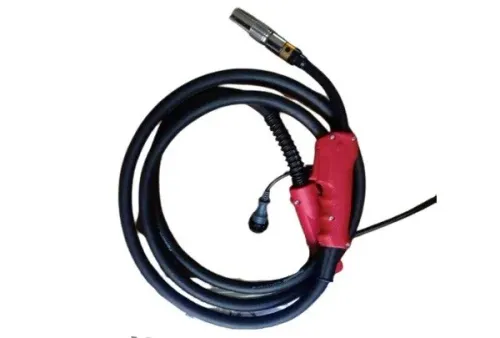
- Price liners, contact tips, drive rolls, torches, earth leads and feeder repairs, not only the power source. Ask who stocks them locally and what service response covers.
Compare welding machine options in Hyderabad through a live weld demonstration. Weld Tech Corporation can identify the correct consumables and serviceable feeder parts before you commit to a pulse system.
Related products
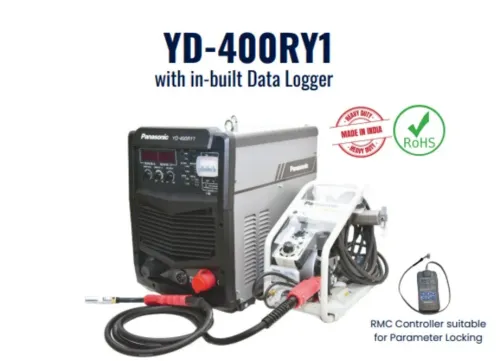
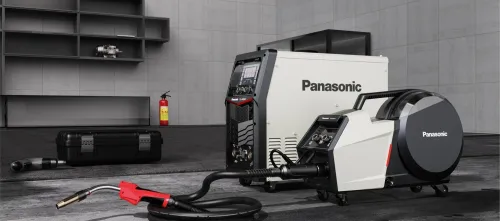
 | MIG Welding Machines Digital + Inverter IGBT-Controlled MIG/MAG Welding Machine Available in 250 AMP, 400 AMP & 500 AMP options Energy Saving & High Reliability Soft Arc (Thin Metal) & Hard Arc (Thick Metal) Characterisitcs... View product → |
 | CO2 welding machine Inverter IGBT-Controlled CO2/MAG Welding Machine Advanced arc stability for high-quality welds Flexible parameter settings for materials & thicknesses Robust build for long-term durability in... View product → |
Frequently asked questions
Which MIG machine amperage suits an automotive shop?
A 250 A machine suits body panels and light brackets, 400 A suits heavier chassis repairs, and 500 A suits thick sections with repeated welding.
What should you check beyond a MIG machine’s maximum amperage?
Check duty cycle, input power, wire-feed range, cooling arrangement, torch rating and compatibility with your available electrical supply.
How do gas and transfer mode affect automotive MIG repairs?
Choose the shielding gas and transfer mode for the material thickness; use thin-panel controls to reduce burn-through and distortion.
When is pulse MIG worth the extra cost?
Pulse MIG is worth considering when you need better control of heat input, appearance and spatter across demanding automotive repairs, provided local service supports the system.
Related products
 | MAG Welding Machines Full Digital Controlled Pulse MIG/MAG Welding Machine Root Welding control technology IBC (The Arc Ignition & Burn Back Control) Pulse Constant Arc Length Control, ALC (Arc Length Consistence) HL-Pulse... View product → |
 | MAG Welding Machines Panasonic MAG Welding Machines Brand Panasonic Model YD-350GZ4 Phase 3-Phase Current 350 A Voltage 380-415 V Dimension (L x B x H) 380x550x640 mm Product Type New Duty Cycle 60%... View product → |
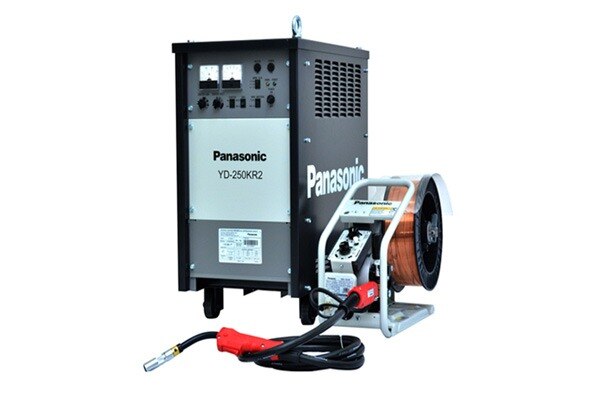
 | MIG Welding Machines Panasonic MIG Welding Machines Brand Panasonic MODEL YD-250KR 2 INPUT SUPPLY 415 +10% ,-10% PHASE/FREQUENCY THREE / 50-60 HZ POWER CONSUMPTION 9.5 KVA/7.9KW WELDING CURRENT RANGE... View product → |