A Panasonic inverter and a six-phase thyristorized MAG power source can weld the same joint yet produce different arc responses, service demands and operating costs. By the end, you will be able to compare them on equal welding conditions, identify the better fit for your Hyderabad workshop, and specify a field trial that avoids misleading amperage claims.
Key takeaways
- Choose inverters for precise arc control and lower electrical demand.
- Choose thyristorized systems when rugged serviceability outweighs compact size.
- Test arc stability, penetration and wire-feed response under identical settings.
- Match the machine to structural, pressure-vessel or repair workload demands.
How inverter and thyristorized MAG power sources control the arc
An inverter creates welding output by rectifying the incoming supply, switching the resulting DC at high frequency, and regulating that switching electronically. A six-phase thyristorized source controls the main transformer through phase-controlled rectifiers, so its output follows the slower mains-frequency cycle.
The transformer and control hardware are therefore larger, heavier, and less responsive to rapid arc changes.
The technical difference becomes clear at short-circuit transfer, when the wire touches the pool and the current must rise and fall quickly. An inverter can alter switching, inductance, and dynamic response within each transfer cycle; a thyristorized source offers coarser control through firing-angle changes.
| System | Arc-control method | Practical effect |
|---|---|---|
| Panasonic inverter CO2/MAG machine | High-frequency switching with electronic current and voltage regulation | Faster starts, tighter short-circuit control, lower spatter, and better response when torch distance changes |
| Six-phase thyristorized system | Phase-controlled rectifiers feeding a large mains-frequency transformer | Slower response, robust conventional output, and fewer fine waveform adjustments |
| Both systems | Wire feeder, polarity, shielding gas, and return circuit determine the final arc | A poor feeder, long cable, or loose work return can imitate a power-source fault |
The Panasonic inverter CO2/MAG machine versus thyristorized systems in Hyderabad comparison is meaningful only with identical wire, gas, joint fit-up, polarity, and settings. CO2 shielding still produces a harsher, more penetrating arc than an argon-rich mixture; inverter control reduces that arc’s instability but cannot change the gas chemistry.
Compare arc behaviour under identical welding conditions
Use the same wire batch, contact tip, polarity, gas, joint fit-up, plate thickness and torch distance before judging either source. Otherwise, a change in setup can masquerade as a machine advantage.
| Feature | Panasonic inverter CO2/MAG | Six-phase thyristorized system |
|---|---|---|
| Arc start | High-speed control establishes current quickly, giving cleaner starts and fewer stub-end failures | Slower output response can produce a harder start, especially with poor tip contact or long stick-out |
| Short-circuit control | Rapid waveform correction limits current overshoot, reducing spatter and improving restart stability | Phase-controlled output reacts more slowly, so transfer can sound harsher and throw more spatter |
| Penetration | Adjustable inductance and waveform control help balance penetration against burn-through | Strong, less finely shaped output can give deep penetration but less control on thin sections |
| Bead quality | More consistent toe wetting, width and profile when torch speed or distance changes | Bead shape is more sensitive to operator technique and arc-length variation |
The inverter advantage is most visible on thin-to-medium plate, positional welds and frequent parameter changes. A stable short-circuit arc reduces grinding time; it does not eliminate defects caused by incorrect voltage, wire-feed speed or gas flow.
Shielding gas still sets the baseline. Pure CO2 gives a harsher, deeper arc and more spatter than an argon/CO2 blend, and no waveform control makes those gases equivalent. Record start failures, cleanup time, porosity, bead profile and penetration during the weld-off.
That evidence makes a co2 mag machine comparison in hyderabad meaningful rather than a comparison of nameplate amperage.
Which machine fits structural, pressure-vessel and repair work?
Choose the source around the weld procedure, not the sales label. A thyristorized system suits repetitive structural fabrication when the transformer, rectifier, feeder and contactor are healthy, the arc runs in a stable globular or spray mode, and a workshop electrician can service conventional components.
Choose a Panasonic inverter when frequent parameter changes, positional welding, short-circuit starts, lower spatter and tighter control on thin-to-medium sections matter more.
| Application | More suitable starting choice | Decision checks |
|---|---|---|
| Structural beams and frames | Thyristorized for repetitive production; inverter for varied positions | Match wire diameter, shielding gas, duty cycle and required transfer mode. Check the project WPS and fabrication code. |
| Pressure vessels | Whichever source passes the qualified procedure | Confirm WPS/PQR coverage, material group, preheat, interpass temperature, consumable classification and required inspection. A machine marketed as a heavy engineering welding machine in Hyderabad is not compliance evidence. |
| Repair and maintenance | Panasonic inverter | Faster starts, easier adjustment and better response to torch-distance changes help on mixed thicknesses and awkward access. Confirm service support before deployment. |
For either choice, request safety and performance information under the applicable IEC 60974 series. Compare usable production range at the same output voltage, ambient-temperature convention, input phase arrangement, wire-feed speed and spool size; a nominal 350 A rating alone proves little.
Thick members may need spray or pulsed MAG, multiple passes and controlled preheat, so a basic CO2 short-circuit machine is not an automatic substitute.
Balance efficiency against serviceability and electrical demand
Do not approve a machine on its 350 A label alone. Compare duty cycle at the same ambient-temperature convention, output voltage, input phase arrangement, wire diameter, usable wire-feed speed and spool size; otherwise an inverter MAG welding machine in Hyderabad may appear stronger than a thyristorized unit without delivering more production time.
| Option | Check before purchase | Failure if ignored |
|---|---|---|
| Inverter | Clean airflow, heat-sink condition, stable input, earthing and surge or phase-loss protection | Thermal trips, inverter faults or damaged power modules |
| Thyristorized | Transformer, six-phase rectifier, contactor, feeder and cable-terminal condition | Unstable output, nuisance faults or expensive feeder repairs |
| Both | IEC 60974-series evidence, duty-cycle data and available consumables | A nominal rating that does not match coded work |
Inspect these points at the workshop or rental yard:
- Confirm the incoming voltage, phase count, breaker capacity and cable size against the nameplate. Record voltage sag during a high-current weld; an undersized supply causes nuisance trips and poor starts.
- Check fans, filters, heat sinks and vents for conductive dust. Tighten high-current terminals and verify protective earthing before energising an inverter.
- Ask for prices and lead times for the inverter module or thyristor stack, control board, feeder motor, contactor, torch liner, contact tips, rectifier diodes and cooling fan.
- Identify a local technician who can diagnose both control electronics and conventional transformer-rectifier faults. A thyristorized machine can be the better choice where that repair skill and its spare parts already exist.
Run a controlled weld-off before you buy or rent
A controlled weld-off is worth more than a rated-ampere comparison. Use machines in the same output class, then keep the following unchanged:
1. Fit the same material grade, plate thickness, joint preparation, gap, welding position, torch angle and operator. Use one wire batch, diameter, contact-tip size, polarity and gas cylinder; record wire-feed speed, voltage, inductance, gas flow and torch-to-work distance.
2. Run identical beads on test coupons, including starts, stops and positional welds. Record every failed arc start, visible porosity, spatter-cleanup time, bead width, penetration, deposition rate and burn-through.
3. Measure input current with a clamp meter during welding and note duty-cycle interruptions, feeder surging, thermal trips and cooling-fan behaviour. A machine that produces a good bead but stops repeatedly has a productivity cost.
4. Weigh collected spatter or time a defined cleanup task, then inspect cross-sections for fusion and profile. Do not credit the inverter for a gas change: 100% CO2 produces a harsher, more spatter-prone arc than an Ar/CO2 blend.
5. Price the tested wire, tips, liners, gas, torch parts, service visits and expected downtime over the rental or ownership period. Ask for IEC 60974 safety and performance documentation and confirm the weld procedure meets the project WPS/PQR.
Weld Tech Corporation can record these results while comparing a Panasonic CO2/MAG welding machine in Hyderabad with a thyristorized unit, giving your purchase decision evidence beyond catalogue claims.
Related products
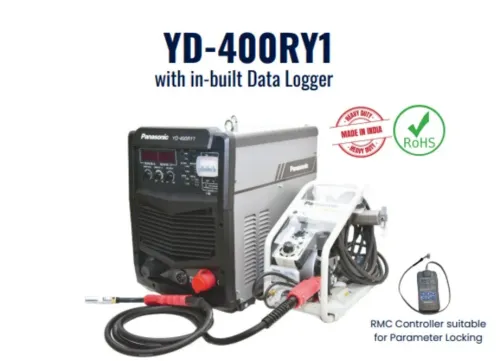
 | Welding machine Panasonic Inverter Welding Machines Brand Panasonic MODEL YD-400RX 1 INPUT SUPPLY 415 +10% -20% PHASE THREE /50-60HZ POWER CONSUMPTION 16.2KVA/15.6KW WELDING CURRENT RANGE 50-400AMP... View product → |
 | MAG Welding Machines Panasonic MAG Welding Machines Brand Panasonic Model YD-350GZ4 Phase 3-Phase Current 350 A Voltage 380-415 V Dimension (L x B x H) 380x550x640 mm Product Type New Duty Cycle 60%... View product → |
Frequently asked questions
How do inverter and thyristorized MAG power sources control the arc?
An inverter rectifies incoming power, switches it at high frequency and regulates output electronically. A six-phase thyristorized source controls its transformer with phase-controlled rectifiers across the mains-frequency cycle.
Which system suits structural welding?
Compare required arc control, duty cycle, portability and site service support. An inverter suits applications needing responsive electronic control, while a thyristorized unit suits demanding work where rugged serviceability matters.
Which machine is better for pressure-vessel welding?
Run both machines under identical wire, gas, current, voltage and travel-speed settings, then compare arc stability, penetration and repeatability before choosing.
What should you check in a weld-off before buying or renting?
Record current, voltage, wire-feed speed, shielding-gas flow, travel speed, bead profile, penetration, spatter and response to controlled parameter changes.
Related products
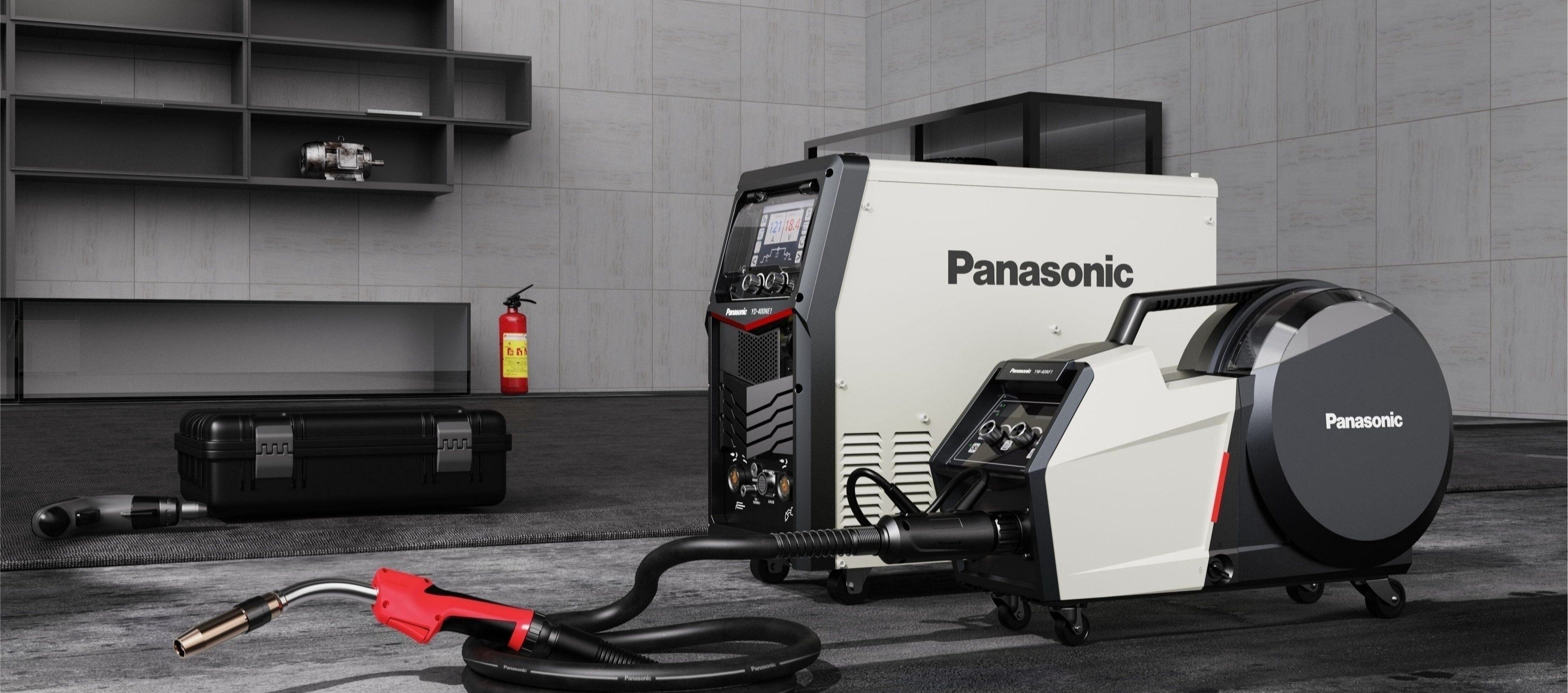
 | CO2 welding machine Inverter IGBT-Controlled CO2/MAG Welding Machine Advanced arc stability for high-quality welds Flexible parameter settings for materials & thicknesses Robust build for long-term durability in... View product → |
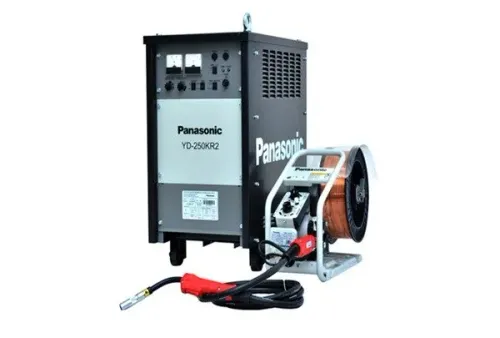
 | MIG Welding Machines Fully Thyristorised MIG/MAG Welding System Available in 250 AMP, 400 AMP & 500 AMP options Six phase thyristorised system gives ripple-free DC output superior quality welding Synergic mode... View product → |