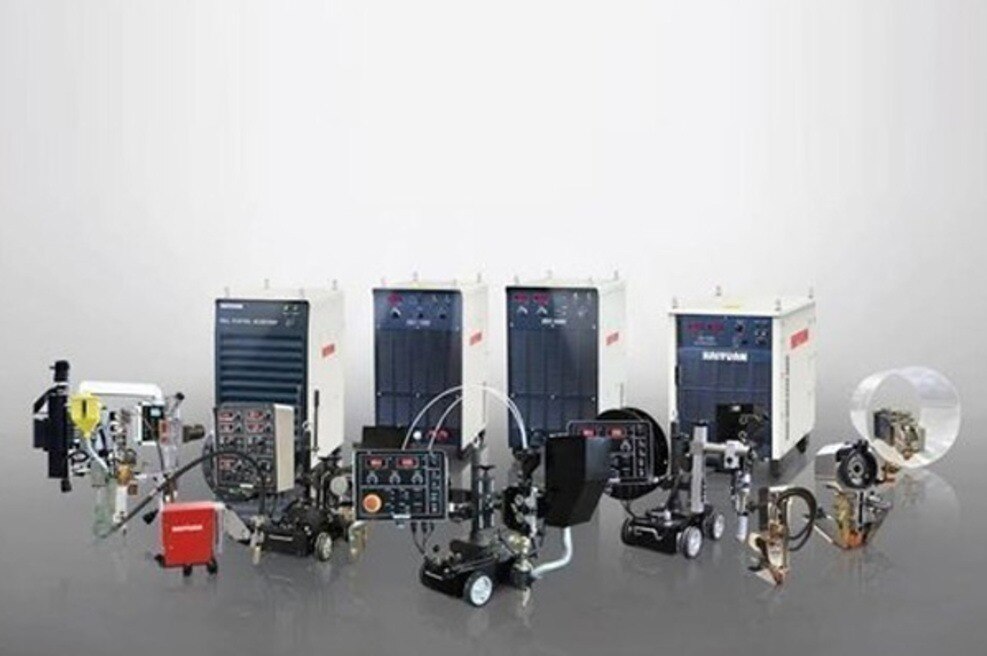
A monsoon rental decision depends on more than a machine’s 1200-amp label: you need a suitable weld layout, dry flux handling, stable three-phase power and a complete travel system. By the end, you can match the process to your fabrication work, verify a rental quotation and prepare a Hubballi site for safe, consistent production.
Key takeaways
- Choose SAW for long, straight, high-volume seams—not short or awkward joints.
- Demand duty cycle, output range, travel speed and power details in the quotation.
- Keep the welding bay dry and store flux in sealed, heated conditions.
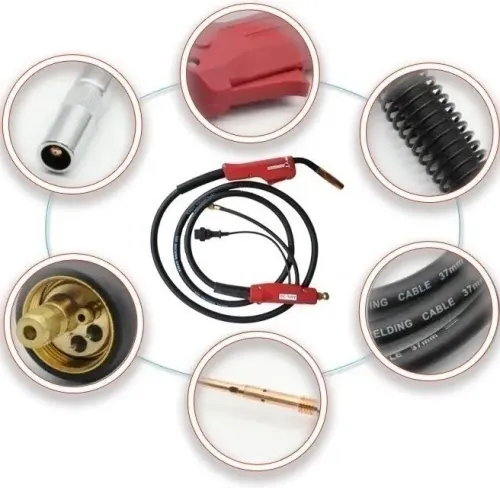
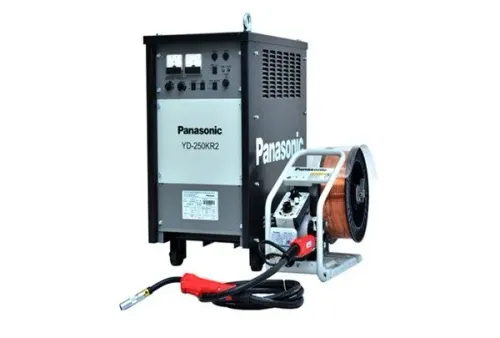
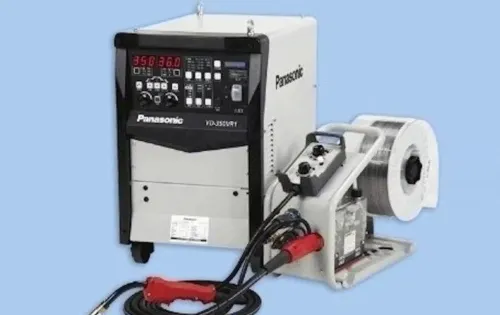
- Include the power source, carriage, wire feeder, flux system, cables and spares.
When SAW suits the job—and when it does not
Rent saw welding machines for long, continuous seams in a dry, roofed welding bay: pressure-vessel shells, storage tanks, beams, columns, pipes and heavy plate assemblies. SAW earns its setup time when a travel carriage can follow a straight joint for several metres and high deposition rate reduces total arc time.
A flux blanket does not make SAW rainproof. Wet flux, damp steel or condensation can cause porosity, unstable arc behaviour and hydrogen-related cracking risk; water entering connectors also creates an electrical hazard. Choose another process when the work is outdoors, frequently repositioned, vertical or overhead, confined, or made up of short intermittent welds.
| Option | Strength | Choose it when |
|---|---|---|
| SAW | High deposition and consistent long seams; requires granular flux, a carriage and dry work area | Fabricating tanks, shells, beams, columns, pipes and heavy plate with accessible, mostly flat joints |
| MIG/MAG | Faster setup, continuous wire and better manoeuvrability; more exposed to draughts and rain | Welding varied joint lengths, awkward positions or repair areas where the torch must move often |
| SMAW | Portable, flexible and less dependent on wire-feed equipment; slower deposition and frequent electrode changes | Performing field repairs, confined-space work, vertical or overhead joints and irregular site welds |
Treat seasonal welding equipment as a site-controlled asset: inspect it before issue and after return for wet flux, corroded terminals, damaged insulation, blocked flux lines, seized carriage wheels, worn contact tips and degraded earth clamps. For SAW, confirm the procedure’s wire, flux, polarity and travel arrangement before choosing the rental.
Which machine specifications must appear in the rental quotation?
A 1,000 A nameplate does not prove that a machine can weld continuously at 800 A. Compare the qualified welding procedure specification (WPS) with the quoted output, voltage, travel speed, wire diameter, wire-feed direction, polarity and flux type.
A change from DC to AC or from electrode-positive to electrode-negative can alter penetration, deposition and arc stability.
For a SAW welding machine rental, require these figures in writing:
- Welding current and voltage range at the required wire size, not only maximum output.
- Travel-carriage speed range, stated under welding load; compare it with the WPS speed.
- Duty-cycle rating at the required current, voltage and ambient temperature. Duty cycle is normally measured over 10 minutes, so calculate allowed arc-on time rather than treating maximum amperage as continuous capacity.
- Input voltage, phase, frequency and full-load current, plus cable, earthing and work-return requirements.
- Wire feeder capacity, electrode reel size, contact-tip rating, flux-hopper capacity and flux recovery arrangement.
| Quotation line | What to verify | Failure if omitted |
|---|---|---|
| Output rating | Current and voltage at WPS settings | Overheating or unstable penetration |
| Travel system | Loaded speed range and carriage load | Incorrect bead size or travel speed |
| Duty cycle | 10-minute rating at site ambient | Thermal shutdown during production |
| Power and return | Supply capacity, earthing and return path | Arc instability or unsafe operation |
A submerged arc welding machine hire quote is incomplete if it excludes the welding head, feeder, carriage, work-return cable or flux equipment. Confirm the site survey has checked access, cable routing and shelter dimensions before dispatch.
How should a Hubballi site handle power, rain and flux?
Keep the SAW head inside a dry, roofed welding bay during Hubballi’s monsoon. A flux blanket does not protect the process from direct rain: wet flux, damp steel or condensation can cause porosity, unstable arc behaviour and hydrogen-related cracking risk. Provide drainage, keep the power source above floor level, and prevent water from reaching connectors.
Before dispatch, an industrial welding rental in hubballi site survey should confirm:
- Incoming supply capacity and the machine’s required input voltage
- Earthing and work-return arrangements
- Cable routes protected from standing water and vehicle traffic
- Shelter dimensions and clear travel-carriage access
Do not judge capacity from maximum amperage alone. Ask for the duty-cycle rating at your planned current and site ambient temperature; the rating is normally based on a 10-minute test period. A machine that reaches the required current can still overheat during continuous welding if its allowable output is lower.
Treat flux as a controlled consumable. Store unopened flux dry and elevated, keep oil and rust away, and specify whether recovered flux is permitted. Confirm screening, drying or reconditioning limits, and do not repeatedly mix recovered flux with new material without the supplier’s procedure.
Check that the wire and flux classification matches the WPS, such as AWS A5.17/A5.23 or ISO 14171.
Inspect seasonal welding equipment at issue and return for water ingress, damaged insulation, corroded terminals, seized carriage wheels, blocked flux lines, worn contact tips, damaged feed rolls and degraded earth clamps. Condensation can damage equipment even when rain never enters the bay.
What should a complete SAW hire package include?
Accept a quotation only after it names the complete production setup, not just the power source. The package must match the qualified welding procedure: current, voltage, travel speed, wire diameter, feed direction, polarity and flux type. Changing DC polarity or using AC can alter penetration and deposition behaviour.
Confirm these items in writing:
- Power source, wire feeder, electrode reel, contact-tip assembly, flux hopper, welding head, travel carriage, work-return cable and unused-flux recovery or containment.
- Solid wire and granular flux by exact classification under AWS A5.17/A5.23 or ISO 14171; “SAW wire” alone is inadequate. Record ISO 4063 process 121 where applicable.
- Spare contact tips, nozzles, feed rolls, wire guides, carriage parts and welding cables. High current can overheat these before the source reaches its rated output.
- Commissioning, procedure-parameter setup, operator instruction, preventive maintenance, breakdown attendance and replacement-part response time.
- Delivery, collection, transport damage liability, minimum hire period, overtime or extension rates, security deposit, insurance, cancellation terms and responsibility for damaged equipment.
- Wire, flux and recovery losses: state whether the daily or monthly rate includes them, because a machine-only price can hide a higher cost per deposited weld length.
| Rate model | Included | Main risk |
|---|---|---|
| Machine-only | Equipment and basic delivery | You buy consumables and service separately |
| Package rate | Equipment, agreed consumables and support | Check consumption limits |
| Production contract | Setup, maintenance and response times | Confirm exclusions and downtime credits |
For Hubballi sites, ask Weld Tech Corporation to record supply capacity, earthing, return-current routing, carriage access and shelter dimensions during the pre-dispatch survey.
Related product
 | SAW Welding Machines Power Source DC 3 Phase (1200 amp) Welding Type Submerged Are Welding Phase 3 Phase Kaiyuan Brand 1200 amp Thyristor Ed Controlled DC SAW Welding... View product → |
How do you protect weld quality after the machine arrives?
Before production, compare the delivered setup against the approved WPS and make a documented trial weld. A machine that powers up can still produce the wrong penetration, deposition rate or bead profile.
1. Check the nameplates and accessories against the WPS: current and voltage range, travel-speed control, wire diameter, wire-feed direction, polarity, flux type, welding head, carriage, contact tip, work-return cable and flux hopper.
2. Confirm site compatibility during commissioning. Measure incoming voltage and available capacity, inspect earthing, test the return-current path, and watch the carriage travel over the actual joint length. A poor return connection can create arc instability and erratic penetration.
3. Use the qualified operator named in the project plan. Have that person set wire feed, current, voltage, travel speed, preheat and interpass temperature exactly as the WPS states; record the readings rather than relying on dial positions.
4. Run a procedure coupon or approved first-piece weld, then check bead dimensions, visual defects and required testing. Apply the acceptance criteria from the governing code, such as AWS D1.1 for applicable structural steel or ASME Section IX where specified, plus the project’s UT, RT or other inspection plan.
5. Record machine serial number, consumable batch, flux condition, parameter readings and inspection results. Hold production if the rental setup needs a parameter outside the qualified range; changing polarity or flux requires technical review and procedure control.
For industrial welding rental in Hubballi, retain this commissioning record with the daily weld log. It proves the delivered SAW welding machines match the procedure, operator capability and inspection requirements.
Frequently asked questions
When does SAW suit a welding job, and when does it not?
SAW suits long, straight seams on pressure-vessel shells, tanks, beams, columns, pipes and heavy plate assemblies. Choose another process for short welds, tight access, complex positions, frequent stops or outdoor joints exposed to rain and wind.
Which specifications must appear in an SAW rental quotation?
Request the machine output range, duty cycle, input voltage and phase, wire diameter range, travel-speed range, carriage compatibility, flux delivery method, cable lengths, control functions and included accessories.
How should a Hubballi site handle SAW equipment during the monsoon?
Use a roofed, enclosed welding bay; keep power connections above wet floors; protect the machine from driving rain and condensation; and store flux sealed, dry and heated according to its manufacturer’s instructions.
What should a complete SAW hire package include?
A complete package includes the power source, wire feeder, welding head, travel carriage, flux hopper or recovery unit, cables, earth return, control pendant, wire guides, contact tips, torch parts and operating documentation.
How do you protect weld quality after the machine arrives?
Inspect cables and earth connections, verify travel alignment, confirm wire and flux identification, run a test weld, check bead shape and penetration, and record settings before production welding begins.