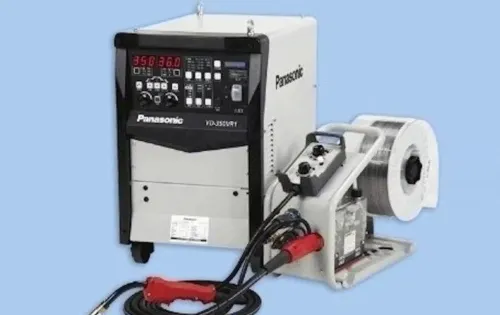

A rented Panasonic welding machine does not normally receive cylinder pressure directly: the regulator mounts on the gas cylinder, reduces pressure, and supplies shielding gas through the hose and torch. You will be able to specify the correct gas service, connection, flow arrangement, rental terms, and inspection checks before accepting the equipment.
Key takeaways
- Connect the regulator to the cylinder valve, then route gas through the hose and flowmeter.
- Use the flowmeter scale and welding procedure; do not guess gas flow from pressure.
- Reject mismatched gas service, cylinder connection, hose thread, or damaged seals.
- Request two-stage control when cylinder-pressure changes could affect critical weld quality.
What the Panasonic regulator connects to on a rented welding setup
The regulator belongs on the gas cylinder, not on the welding machine. It attaches to the cylinder valve and reduces cylinder pressure before gas travels through the hose to the machine’s gas inlet, usually through a solenoid valve and a flowmeter or flowmeter-regulator.
A complete rental setup therefore includes the cylinder, regulator, gas hose, connection fittings, and the Panasonic power source or wire feeder.
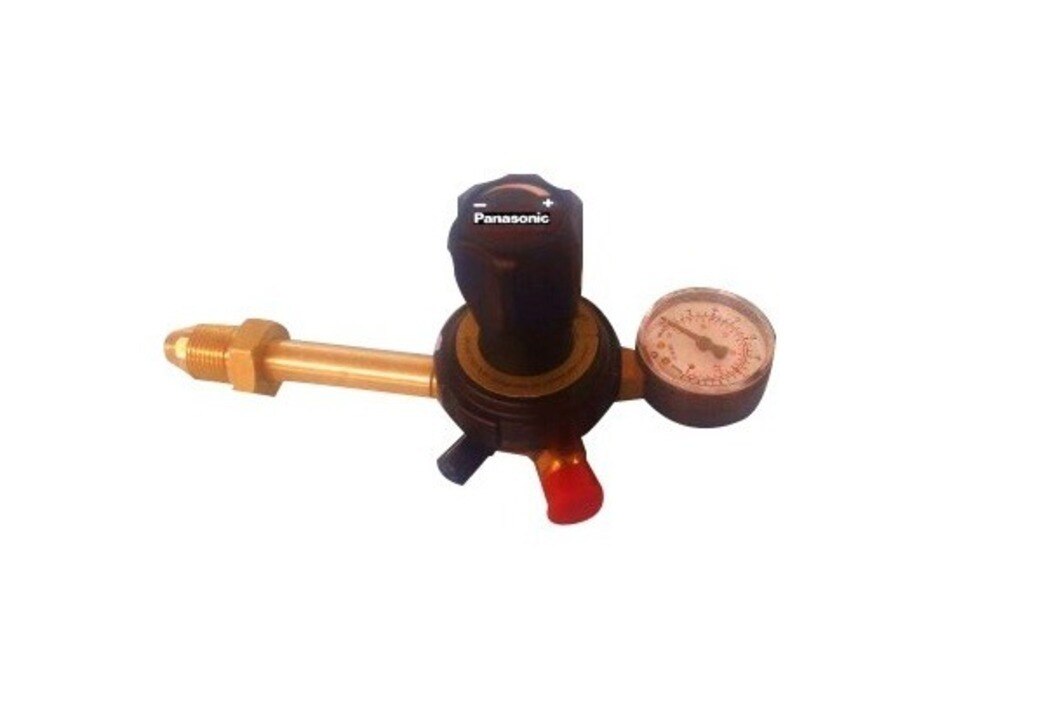
The phrase “Panasonic single stage pressure for welding machine on rent basis” describes this rental configuration, not a pressure setting built into the power source. A panasonic pressure regulator can be either pressure-only or a flowmeter-regulator.
| Type | Operator reads or sets | Use |
|---|---|---|
| Pressure-only regulator | Pressure at the outlet | When separate flow control is installed |
| Flowmeter-regulator | Shielding-gas flow in L/min | Normally preferred for MIG or MAG rental work |
One gauge indicates cylinder pressure, which helps you estimate remaining gas. The other indicates regulated outlet pressure. Neither reading proves the gas flow at the torch: hose restrictions, couplers, leaks, solenoid valves, and torch design change delivery.
Before requesting an accessory, identify:
- The exact Panasonic power source or wire feeder.
- The process, torch, gas hose, and gas connection.
- Whether you need pressure indication or adjustable L/min flow.
- The shielding gas and the cylinder-valve connection.
A pressure reading alone cannot confirm correct shielding at the arc.
How to set shielding-gas flow when the regulator rating is incomplete
A stated 3–30 L/min range does not prove that a regulator suits a rented Panasonic machine. Confirm whether it is an adjustable delivery-flow range, a nominal rating, or a value measured with a specified gas and inlet pressure.
Without the outlet-pressure range and adjustment method, flow range alone cannot select a safe rental welding gas regulator.
For many indoor GMAW setups, begin around 10–20 L/min; this is a practical starting point, not a Panasonic specification. Set the final flow for short-circuit MIG or MAG, TIG torch and nozzle size, wire diameter, joint geometry, gas blend, and outdoor wind exposure. Too little flow lets air enter the shielding envelope and causes porosity.
Too much flow creates turbulence that entrains air and also produces porosity.
1. Fit the actual torch, gas nozzle, hose, couplers, solenoid path, and workpiece arrangement before checking flow. Measure at the torch end, not only at the panasonic pressure regulator, because restrictions, leaks, and regulator droop alter delivery.
2. Record the selected L/min and observe the weld for porosity during a representative joint. Welding current does not independently determine regulator outlet pressure.
3. For a long rental shift, investigate a restricted hose, leaking connection, faulty solenoid, or damaged torch when flow falls. Do not increase pressure to compensate; higher pressure will not repair the underlying fault and can destabilize shielding.
Match gas service, cylinder valve, and hose before accepting the regulator
One Panasonic pressure regulator cannot be assumed suitable for argon, Ar-CO2, pure CO2, or another shielding gas. Name the gas on the rental request and verify that the rental welding gas regulator is approved for that service; listed model details do not establish suitability for pure CO2.
| Gas service | Check before acceptance | Main concern |
|---|---|---|
| Argon or Ar-CO2 | Approved gas service and correct cylinder connection | Stable flow through the specified hose and torch |
| Pure CO2 | CO2 approval and stated continuous-flow capability | High withdrawal can cause cooling and icing |
| Oxygen or fuel gas | Use only equipment specifically marked for that gas | Connections and materials are not interchangeable |
CO2 brings different withdrawal, cooling, and icing concerns at high continuous flow, so maximum gauge pressure alone is not enough. Compare the cylinder connection type, thread standard, valve outlet, sealing face, and required washer or seal with the regulator inlet. A fitting that screws on proves nothing about gas compatibility.
Before hiring, check these interfaces:
- Regulator outlet fitting to gas hose
- Hose rating and length to machine gas inlet
- Machine outlet or solenoid connection to torch
- Required flow units and continuous-flow rating
Reject improvised thread adapters unless the supplier has identified and approved the exact component. Ask whether a factory adapter is required and who supplies it. Confirm that the flowmeter ball moves freely and returns to zero or the specified shutoff indication before the cylinder is issued.
What to confirm in a rental quotation, handover, and return record
Ask for the regulator as a rental accessory with the Panasonic MIG, MAG, TIG, or inverter machine; do not assume it is supplied only for sale. State the rental duration, deposit, identification documents, purchase order, included hose, gauges, washers, and replacement terms.
A pressure regulator supplier should confirm the gas service and connection details in writing.
1. Require the quotation to name the exact Panasonic machine or wire feeder, shielding gas, target flow range, regulator type, inlet and outlet connection standards, rental period, inspection status, and damage liability. “Panasonic pressure regulator” alone is incomplete.
2. At handover, record the regulator serial number and photograph both gauge faces. Reject or quarantine it for a cracked lens, bent needle, unreadable scale, damaged thread, missing inlet seal, contamination, an outlet that will not shut off, or pressure creep without torch flow.
3. Inspect the cylinder valve, fit the correct seal or washer, and open the cylinder gradually. Pressurize the system and test every connection with approved leak-detection fluid or another approved method; never use a flame.
4. Before return, close the cylinder, relieve pressure from the hose and regulator, and report damage immediately. Confirm who pays for a failed gauge, damaged hose, missing washer, or replacement regulator.
For a single-stage pressure regulator in Hubballi, Weld Tech Corporation is worth considering only when the quote includes these checks and gas-specific terms. Ask for a rental welding gas regulator, not merely a sale quotation.
Related product
 | Single Stage Pressure Regulators Panasonic Single Stage Pressure Regulators Brand Panasonic Model YX-24AT1DAA Mounting Cylinder Mounted Gas Service Argon, Ar-CO2 mix Max Inlet Pressure 200 bar Nominal Flow Rate 3-30 LPM... View product → |
When a single-stage option is suitable—and when to request two-stage control
Single-stage means one pressure-reduction step; it does not mean accurate, universally compatible, or sufficient for a full rental shift. As cylinder pressure falls, outlet pressure can rise through creep or inlet-pressure effect, making delivery less stable than a two-stage regulator.
| Option | Delivery behaviour | Suitable use |
|---|---|---|
| Single-stage with flowmeter | Practical control for modest demand, but less stable as the cylinder depletes | Short welding jobs with matched gas, connections, and machine inlet conditions |
| Two-stage regulator | More consistent outlet pressure through cylinder depletion | Long shifts, high gas demand, repeated starts, or critical shielding consistency |
| Specified flowmeter-regulator | Sets and displays shielding gas flow in L/min | Jobs where torch-end flow must be set and checked rather than inferred from pressure |
Do not fit a higher-pressure regulator to cure poor flow. Find the restriction, leak, damaged torch, blocked nozzle, or incorrect machine inlet condition. A single-stage pressure regulator in Hubballi is suitable only after matching the gas and equipment.
Before signing, ask the pressure regulator supplier to confirm:
- Inlet-pressure rating, outlet-pressure range, flow units, gauge scale, relief protection, hose connection, gas-service approval, and inspection or calibration record
- A documented pre-dispatch leak test
- The replacement process and response time if the gauge or regulator fails during the rental
Check flow at the torch with the actual hose, nozzle, and workpiece arrangement. A pressure reading alone does not prove delivered flow.
Frequently asked questions
Where does a Panasonic regulator connect on a rented welding setup?
Connect it to the shielding-gas cylinder valve. Gas then passes through the hose, solenoid valve, and flowmeter or flowmeter-regulator before reaching the welding machine.
How do you set shielding-gas flow when the regulator rating is incomplete?
Do not infer flow from outlet pressure alone. Use a readable flowmeter scale, confirm the gas type, and set flow according to the welding procedure and torch arrangement.
What must match before accepting a rental welding gas regulator?
Match the regulator’s gas service, cylinder-valve connection, outlet fitting, hose thread, pressure range, seals, and condition. Check the markings and test for leaks before welding.
When should you request a two-stage regulator instead?
Request two-stage control when stable outlet pressure matters as cylinder pressure falls, especially for long welds, critical joints, or processes sensitive to shielding-gas variation.
What should a welding regulator rental record include?
Record the regulator model, gas service, cylinder connection, pressure or flow range, visible condition, accessories supplied, leak-test result, and condition at return.