The sensible choice depends less on the daily rental rate than on utilisation, site power, material, weld quality, and the cost of owning equipment that may sit idle. By comparing the job profile, process alternatives, pulse settings, machine capacity, and complete rental package, you can decide whether renting will reduce project cost and risk.
Key takeaways
- Rent when paid working days cannot recover ownership, storage, and maintenance costs.
- Use DC pulse TIG for controlled heat on stainless steel and thin sections.
- Match amperage, duty cycle, torch, gas controls, and power supply to the job.
- Run a complete-job test before accepting a rented TIG welding machine.
When renting costs less than buying a DC pulse TIG machine
Renting costs less than buying when the machine’s paid working days are too few to recover its purchase, financing, maintenance, and storage costs. A two-week field repair, prototype, shutdown, or one-off fabrication job rarely justifies ownership if the DC pulse capability will sit unused afterward.
Compare total delivered cost, not the advertised daily rate:
- Add rental days, transport to and from the Hubballi site, insurance or deposit charges, shielding gas, consumables, and any operator or setup cost.
- Include downtime exposure: a failed torch, gas solenoid, foot control, or power module can stop the job while a replacement is arranged.
- For ownership, add purchase price, interest or blocked working capital, preventive servicing, repairs, calibration, and the cost of keeping a TIG welding machine available between projects.
- Count utilisation by actual welding days, not the months the machine remains in your workshop.
Repeat work changes the decision. If stainless tubing or thin carbon-steel fabrication returns every month, buying can provide faster access and lower long-run rental expense. If the workload is intermittent, tig welding machine rental preserves cash flow and lets you select a specialist inverter only when pulse control is useful.
Inspect the rental machine before accepting it. Excessive tungsten stick-out, poor gas coverage, inadequate post-flow, worn cables, or a damaged torch can create contaminated welds and rework costs that erase the apparent saving.
Use the break-even point: divide the ownership cost by the complete rental cost per productive day, then compare that day count with your realistic annual use.
Match the process to the metal, joint, and job type
Choose a DC pulse TIG welding machine for controlled heat and a clean arc on stainless steel, mild steel, carbon steel, nickel alloys, or titanium. It suits thin sheet and tubing where distortion, burn-through, or visible weld quality matters; pulse adds the most value when the joint is narrow, heat-sensitive, or requires precise puddle control.
| Option | Best match | Limitation |
|---|---|---|
| DC pulse TIG | Stainless tubing, thin carbon-steel sheet, mild-steel root passes, small precise joints | Slower than MIG/MAG and unnecessary for thick, repetitive welds |
| Standard DC TIG | Clean carbon steel, mild steel, and stainless steel with steady thickness and uncomplicated joints | Gives less control over heat input than pulse |
| MMA | Outdoor carbon-steel or mild-steel repairs, thick plate, and work exposed to wind | Slag, more spatter, and a wider heat-affected area make thin sheet and neat stainless work harder |
| MIG/MAG | Long welds, production brackets, mild steel, and thicker sheet where speed matters | Less control for delicate tubing, thin stainless, and appearance-critical joints |
| AC/DC TIG | Aluminium and magnesium, plus DC metals when one machine must cover both processes | Costs more and adds functions you do not need for DC-only work |
1. Select DC pulse TIG when a standard DC TIG arc overheats the sheet, distorts tubing, or leaves an inconsistent bead. Pulse does not replace correct tungsten, shielding, cleaning, or travel speed.
2. Select AC/DC TIG for aluminium: its alternating current supplies oxide-cleaning action. A DC-only tig inverter welding machine, even with pulse, cannot provide that cleaning function.
3. Reject any process until you remove oil, paint, rust, moisture, and dirty filler; contamination causes porosity, inclusions, arc instability, and discoloured stainless welds.
Set pulse controls for penetration without excess heat
Choose peak current high enough to form a fluid puddle within one peak cycle, then reduce background current until the arc remains stable without reheating the joint. Pulse width is the percentage of each cycle spent at peak; travel speed still controls total heat, so moving slowly can defeat the benefit of pulsing.
| Application | Peak current | Background current | Frequency | Pulse width | Starting travel speed |
|---|---|---|---|---|---|
| Thin carbon-steel sheet, 0.8–1.2 mm | 35–60 A | 20–35% of peak | 1–3 Hz | 30–40% | 80–150 mm/min |
| Stainless sheet or tubing, 1–2 mm | 45–80 A | 25–40% of peak | 1–5 Hz | 35–45% | 50–100 mm/min |
| Heat-sensitive parts, 0.5–1.5 mm | 25–50 A | 15–30% of peak | 3–10 Hz | 20–35% | 100–180 mm/min |
These are setup ranges, not thickness formulas. If the puddle does not wet the sidewall, raise peak current or reduce travel speed; if the edges sag, turn down peak current, shorten pulse width, or move faster. Raise background current when the arc extinguishes between pulses, but avoid using it to compensate for excessive peak current.
A slower pulse frequency makes each pulse easier to coordinate with filler placement. Higher frequency smooths the arc and reduces visible ripple, but it does not automatically reduce heat.
Set DCEN, clean the joint and tungsten, and trial the settings on scrap before using rented tig welding equipment or a dc pulse tig welding machine on the part.
Check capacity, accessories, power, and machine condition before accepting a rental
A 200 A nameplate does not prove a machine will complete your weld. Check its duty-cycle rating at the current you need: 200 A at 60% means six welding minutes in a 10-minute period, not continuous operation.
- Match the maximum output to your material thickness, joint design, and weld length. Ask for the rated current at the expected amperage, not only the headline maximum.
- Strike an arc at the lowest required current and hold it for several minutes. Confirm stable low-current performance without wandering, sticking, or nuisance shutdowns.
- Check the electrode range. The machine, collets, and torch must suit your tungsten diameter, whether 1.6 mm, 2.4 mm, or 3.2 mm.
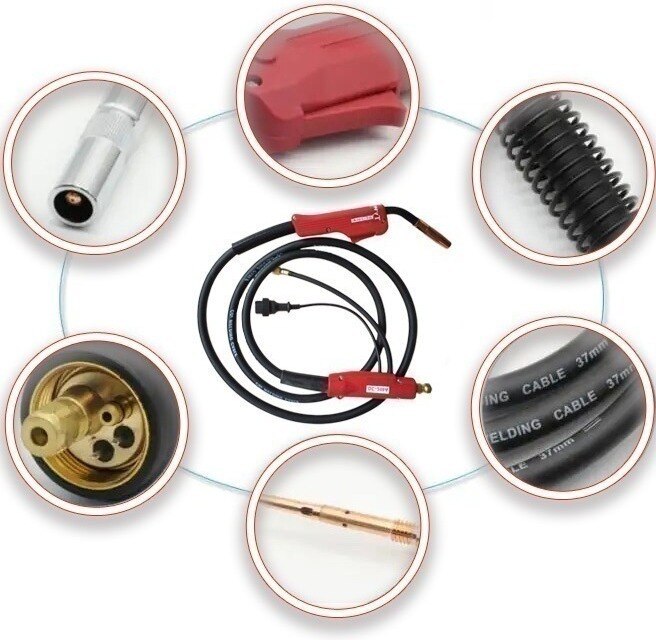
- Confirm the TIG torch rating exceeds your planned current and weld duration. A small air-cooled torch can overheat during long seams.
- Verify the site supply: single-phase or three-phase, rated voltage, plug and socket, breaker capacity, and protective earth. Do not defeat earthing or use an undersized extension lead; voltage drop can trigger protection trips.
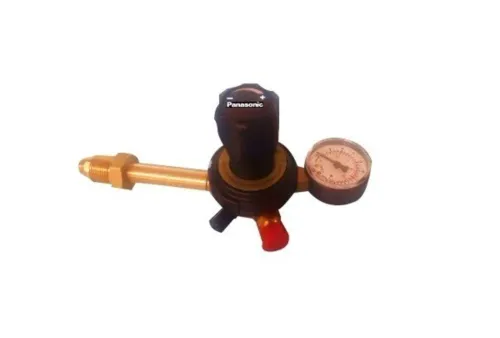
- Count the accessories: torch, work lead, gas hose, regulator or flowmeter, collets, cups, and foot pedal or hand control where pulse modulation requires it.
- Run a test weld using your actual metal, tungsten, gas cup, and filler. Inspect arc response, pulse control, gas coverage, post-flow, and thermal alarms.
Before accepting tig welding equipment, ask the rental provider to document the test and machine condition. Weld Tech Corporation can verify connector compatibility and demonstrate a tig inverter welding machine before dispatch, reducing surprises at a Hubballi site.
A tig welding machine rental is unsuitable if its torch, supply, or duty cycle fails your actual weld length.
Related products
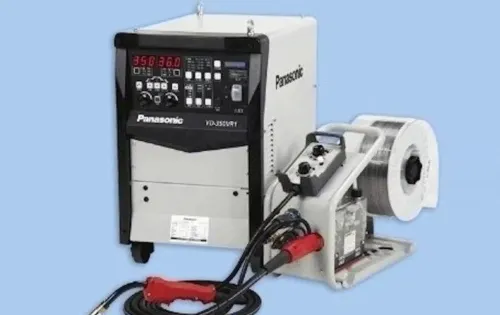
 | TIG Welding machine IGBT Controlled DC Pulse TIG Welding Power Source Suitable for TIG/MMA Welding Stable current output even at 5 AMP Sheet thickness even 0.5mm weldable Pulse Frequency upto 500 Hz Digital Display of... View product → |
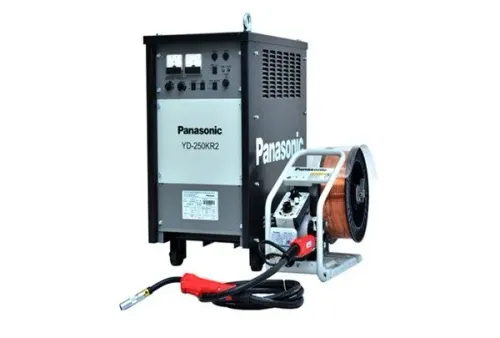
 | TIG Welding machine Panasonic TIG Welding Machines Model Number 300 TSP Welding Type TIG Welding Voltage 415V, +10% (Input Voltage) Output Current Range 5-300 A Brand Panasonic Frequency 50-60 Hz... View product → |
Use the complete-job test to make the final rental decision
Use the complete-job test: rent a DC pulse TIG welding machine when its total delivered cost is lower than buying or borrowing an equivalent unit, and its capability reduces rework. A low day rate proves little for a shutdown, field repair, prototype, overflow run, or one-off fabrication.
Add every cost before deciding:
- Rental charge, transport to and from the Hubballi site, deposit, insurance, repair fees, and downtime charges.
- Argon cylinder hire or refill, gas delivery, filler rod, tungsten electrodes, cups, collets, and other consumables.
- A compatible torch, regulator-flowmeter, gas hose, work lead, and foot pedal or hand control.
- Power setup, extension leads, return freight, and time spent collecting, installing, testing, and returning the TIG welding equipment.
Protect the schedule as carefully as the budget. Excessive tungsten stick-out, an undersized gas cup, poor shielding-gas flow, or inadequate post-flow oxidises the electrode and contaminates later welds. Assign an operator who can set gas coverage, clean the joint, select tungsten, control heat input, and identify an unstable arc before production begins.
Reject the rental if the supplier cannot demonstrate:
- Stable arc and gas flow at your working current.
- Working pulse, HF start, current display, and pedal response.
- Correct single-phase or three-phase input, plug, earthing, and cable rating.
- A replacement plan for torch, regulator, machine, or gas failure.
For intermittent work, rental usually wins when avoiding purchase, storage, maintenance, and idle capital outweighs these risks.
Frequently asked questions
When does renting a DC pulse TIG machine cost less than buying?
Rent when a short repair, prototype, shutdown, or one-off fabrication job will not provide enough paid working days to recover purchase, financing, maintenance, and storage costs.
Which metals and jobs suit a DC pulse TIG welding machine?
DC pulse TIG suits steel, stainless steel, and other ferrous metals when you need controlled heat, accurate starts, or reduced distortion. Match the process to the joint thickness and production pace.
How should you set pulse controls for penetration without excess heat?
Adjust peak current, background current, pulse frequency, and duty cycle together. Test on matching scrap until the arc penetrates the joint without excessive discoloration, distortion, or burn-through.
What should you check before accepting a TIG machine rental?
Confirm amperage, duty cycle, input power, torch, ground lead, gas regulator, flowmeter, consumables, cables, and machine condition. Weld a representative joint through the complete job before acceptance.
Related product
 | TIG Inverter Welding Machines Panasonic TIG Inverter Welding Machines Brand Panasonic MODEL YC-400TX3 INPUT SUPPLY 415 + - 10% PHASE/FREQUENCY THREE / 50-60 HZ RATED INPUT CAPACITY 13.9 KVA/13.2 KW RATED OUTPUT CURRENT... View product → |