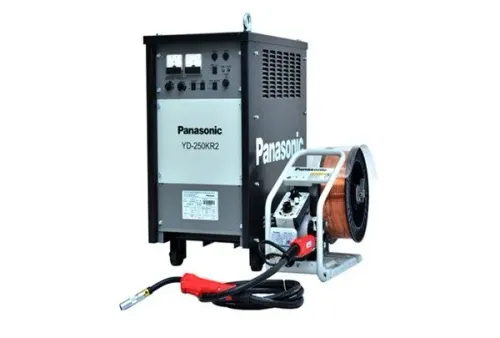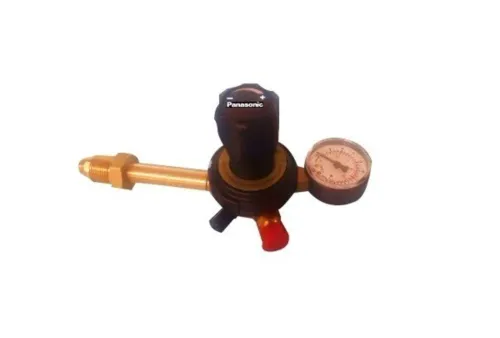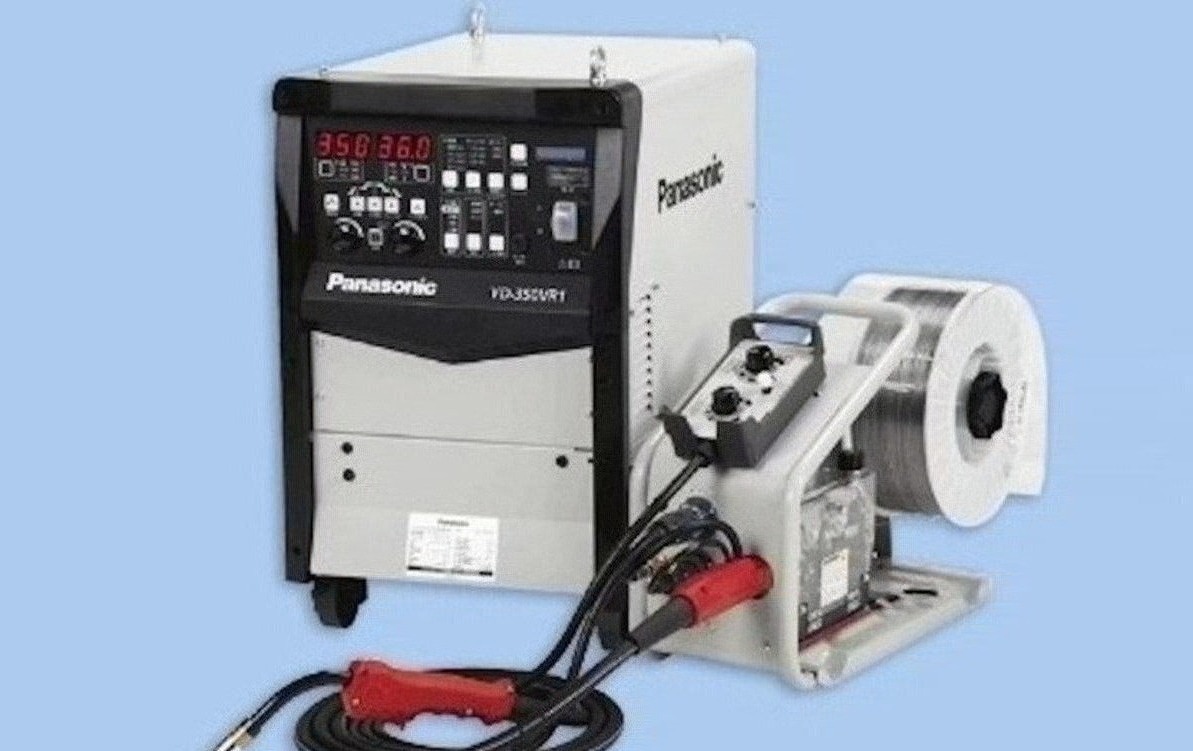
A body panel, aluminium component, stainless exhaust, and chassis section do not place the same demands on a welding machine. By comparing material, thickness, joint type, heat control, power supply, and production speed, you can choose a practical setup instead of buying on maximum amperage alone.
Key takeaways
- Use short-circuit MIG for faster mild-steel bodywork and plug welds.
- Choose DC TIG for clean stainless repairs and controlled precision work.
- Choose AC/DC TIG for aluminium, but allow more setup and cleaning time.
- Check amperage, duty cycle, power supply and consumable support before buying.
Choose the welding process by repair, material, and production speed
| Process | Best-fit automotive repairs | Main limitation |
|---|---|---|
| Short-circuit MIG | Mild-steel body panels, plug welds, brackets and longer seams | Spatter and heat control can compromise visible aluminium or ultra-thin sheet |
| DC TIG | Visible stainless exhausts, controlled root passes, small precision repairs and clean, contamination-sensitive joints | Slow and intolerant of oil, paint, rust or zinc |
| AC/DC TIG | Aluminium and magnesium, plus steel and stainless with DC | AC oxide-cleaning action adds control but not production speed |
| MMA | Outdoor, thick-section or difficult-access repairs where portability matters | Poor fit for thin body sheet and finish-critical work |
Short-circuit MIG is usually the first choice for mild-steel repair because continuous wire feeding deposits metal faster than TIG’s separate filler rod. Choose TIG when weld placement, appearance, root control or low contamination risk matters more than deposition rate.
MIG becomes the wrong choice for visible precision aluminium, very thin sheet or minimal-spatter work; TIG becomes uneconomic on long, dirty, poorly fitted joints or high-volume production.
AC is essential for aluminium and magnesium because its alternating polarity breaks up the oxide layer; DC TIG cannot provide that cleaning action. MMA handles wind and awkward access, but its arc and slag make neat panel work difficult.
Use this shop-floor sequence:
- Identify the base metal and thickness.
- Check the joint type and welding position.
- Set the finish and distortion limit.
- Test the proposed process on a representative coupon.
This TIG and MIG welding machine comparison is the practical basis for choosing a TIG and MIG welding machine for automotive repair.
Size the machine for low-current bodywork, heavy sections, and your electrical supply
A 150–250 A machine is a strong starting band for body panels, brackets, exhaust repairs, and general light fabrication. In a small bay, a 250 A unit with a stable low-current arc can outperform a 400 A or 500 A machine when most welds are short, thin, and limited by the electrical supply.
| Machine range | Practical workload | Important caution |
|---|---|---|
| 150–250 A | Body panels, brackets, exhausts, light fabrication | Prioritise low-current stability and short-circuit control |
| Above 250 A | Repeated frame, suspension, and thick-section repairs | Size it for joint design and the vehicle manufacturer’s procedure |
| 400–500 A | High-volume or heavy-section production | Headline output may bring higher input demand and low duty cycle |
Current alone does not guarantee a maximum material thickness. Joint design, preparation, position, pass sequence, shielding, and the manufacturer’s repair procedure determine whether the weld is suitable.
Duty cycle is the percentage of a stated test period—commonly 10 minutes—during which the machine can weld at its rated current at the manufacturer’s stated ambient temperature.
A 60% rating at 250 A is not the same comparison as 60% at 400 A. Automotive stitch welds often use far less than rated current, so low-current stability matters more than the headline figure.
Before buying or renting automotive welding equipment, confirm:
- Single-phase or three-phase compatibility
- Input current, breaker rating, cable size, and plug configuration
- Extension-cable voltage drop and generator suitability
- A stable low-current arc, adjustable inductance or arc dynamics, burn-back, crater fill, stitch or spot modes, pre- and post-flow, and parameter memory
Test every function on representative coupons, including a tig welding power source where TIG work is planned.
Match wire, gas, polarity, and TIG controls to the metal
| Metal | MIG configuration | TIG configuration |
|---|---|---|
| Mild steel | ER70S-6, DCEP, 0.6–0.8 mm wire; 75% argon/25% carbon dioxide for useful penetration | DCEN, 2% thoriated or lanthanated tungsten, ER70S-2 or ER70S-6 rod |
| Galvanised steel | Small-diameter solid wire, DCEP, short-circuit transfer; remove zinc locally and control fumes | DCEN with matching steel rod; zinc removal and extraction remain essential |
| Aluminium | 4043 or 5356 wire, 100% argon, pulse where available | AC/DC machine, matching 4043 or 5356 rod; AC supplies oxide cleaning |
| High-strength steel | OEM-approved matching wire, gas, heat input and transfer program; do not substitute ER70S-6 automatically | DCEN with the filler and procedure specified by the vehicle maker |
| Stainless steel | ER308L for 304, ER316L for 316; argon-rich stainless mix and DCEP | DCEN, lanthanated tungsten and matching stainless rod |
Solid ER70S-6 with an argon/carbon-dioxide mix suits clean indoor body repairs. A 75/25 blend gives useful penetration; higher argon reduces spatter and heat on thin sheet. Match gas, wire and diameter to the machine’s synergic program. Self-shielded flux-cored wire tolerates outdoor wind, but creates slag, fumes and cleanup, making it poor for thin, finish-critical panels.
Use short-circuit for sheet and pulsed MIG for controlled heat.
Aluminium’s soft wire needs a spool gun or push-pull feeder, aluminium liner and correctly sized contact tip. Flux-cored polarity varies by wire data; do not guess.
A TIG welding power source should provide DCEN for steel and stainless. A dc pulse tig welding power source can start test coupons at 35–60 A peak, 20–40% background, 1–3 Hz and 30–50% peak time; increase frequency for a tighter arc.
For aluminium, use AC: frequency changes arc width and penetration, balance changes cleaning, and waveform affects distortion. Confirm every setting on the actual alloy and thickness.
Control distortion, fumes, and weld quality on automotive structures
A sound repair starts with preparation, not maximum output from your automotive welding equipment. Remove paint, oil, rust, and zinc locally; make the gap consistent; clamp the panel securely; and use copper backing or a heat sink where the joint and access permit it.
- Follow the vehicle manufacturer’s sectioning locations, plug-weld size and spacing, and approved joint procedure. Prepare butt joints, lap joints, plug welds, and fillets exactly as specified; silicon-bronze MIG brazing is acceptable only when the OEM permits it.
- Control heat with short tacks, staggered stitch or skip welds, alternating sides, steady travel speed, and limited dwell. Excessive voltage, wire feed, or dwell causes burn-through and distortion in thin sheet.
- Treat galvanised steel as a fume hazard. Remove the coating locally, use effective local exhaust ventilation, and apply the site’s respiratory-protection and hot-work controls; TIG does not make zinc welding intrinsically safe.
- Remove or protect fuel, vapour, battery, and cavity fire hazards. Isolate sensitive electronic systems according to the manufacturer’s welding instructions, including required grounding and battery-disconnection steps.
- Do not apply mild-steel settings to AHSS or UHSS. OEM instructions can restrict weld locations, heat input, straightening, sectioning, or welding altogether; replacement may be required.
Inspect every repair visually for lack of fusion, porosity, undercut, burn-through, excessive penetration, and distortion. Use destructive coupons or suitable non-destructive testing when structural risk, access, or the OEM procedure demands evidence beyond visual inspection.
Compare ownership cost, changeover time, and supplier support before buying
A combined TIG-and-MIG power source is economical when welding is intermittent: one cabinet saves floor space and capital. Separate dedicated machines cost more but avoid torch, feeder, gas, and parameter changes when two operators run simultaneous jobs.
Compare total ownership cost, not maximum amperage: gas flow and leaks, wire and tungsten use, contact-tip replacement, liner cleaning, calibration, electricity, downtime, and operator changeover time all matter.
| Option | Ownership advantage | Operational trade-off |
|---|---|---|
| Combined source | Lower capital and floor-space cost | Changeover can consume labour time and interrupt jobs |
| Separate machines | Faster simultaneous work and fewer setup errors | Higher purchase, service, cable, and floor-space cost |
| Rental or backup | Limits capital tied up in occasional capacity | Confirm input supply, availability, condition, and repair response |
Before committing, verify:
- Physical compatibility: MIG torch, feeder, spool gun or push-pull system, regulator, hose, earth clamp, contact tips, liners, TIG torch, foot pedal, remote control, gas cups, tungstens, and filler rods. Ask which accessories are included; do not assume the package contains them.
- Demonstration performance: arc starts, burn-back, inductance, crater fill, spot and stitch modes, synergic programs, waveform controls, low-current stability, aluminium feeding, and representative coupons.
- Buying support: local service, spare parts, torch and feeder compatibility, warranty, repairability, parameter memory, operator training, and rental or backup access.
For a Hubballi-area shop, Weld Tech Corporation can help check Panasonic availability, consumables, spare parts, gas-control hardware, and backup options against actual repair workload.
Related products
 | MIG Welding Machines Digital + Inverter IGBT-Controlled MIG/MAG Welding Machine Available in 250 AMP, 400 AMP & 500 AMP options Energy Saving & High Reliability Soft Arc (Thin Metal) & Hard Arc (Thick Metal) Characterisitcs... View product → |
 | ac/dc tig welding machine Full Digital AC/DC TIG Welding Machine A variety of waveforms ensures superior welding for aluminum and a wide range of metals. View product → |
Frequently asked questions
Which welding process suits common automotive repairs?
Use short-circuit MIG for mild-steel panels, plug welds, brackets and longer seams. Use DC TIG for visible stainless, clean root passes and precision repairs. Choose AC/DC TIG for aluminium and magnesium.
How do you size a welding machine for an automotive repair shop?
Check the minimum stable current for thin body panels, the output and duty cycle needed for heavy sections, and whether the machine matches your available single-phase or three-phase supply.
Which wire, shielding gas and polarity should you use?
Match the wire and gas to the base metal and thickness. Set MIG polarity for the selected wire, and use DC TIG for steel and stainless or AC TIG for aluminium.
What should you compare beyond the machine purchase price?
Compare consumable cost, torch and wire changeover time, service access, spare-parts availability, warranty terms, rental options and supplier support.
Related products
 | MIG Welding Machines Fully Thyristorised MIG/MAG Welding System Available in 250 AMP, 400 AMP & 500 AMP options Six phase thyristorised system gives ripple-free DC output superior quality welding Synergic mode... View product → |
 | TIG Welding machine Panasonic TIG Welding Machines Model Number 300 TSP Welding Type TIG Welding Voltage 415V, +10% (Input Voltage) Output Current Range 5-300 A Brand Panasonic Frequency 50-60 Hz... View product → |
 | MIG Welding Machines Panasonic MIG Welding Machines Brand Panasonic MODEL YD-250KR 2 INPUT SUPPLY 415 +10% ,-10% PHASE/FREQUENCY THREE / 50-60 HZ POWER CONSUMPTION 9.5 KVA/7.9KW WELDING CURRENT RANGE... View product → |
 | MAG Welding Machines Full Digital Controlled Pulse MIG/MAG Welding Machine Root Welding control technology IBC (The Arc Ignition & Burn Back Control) Pulse Constant Arc Length Control, ALC (Arc Length Consistence) HL-Pulse... View product → |