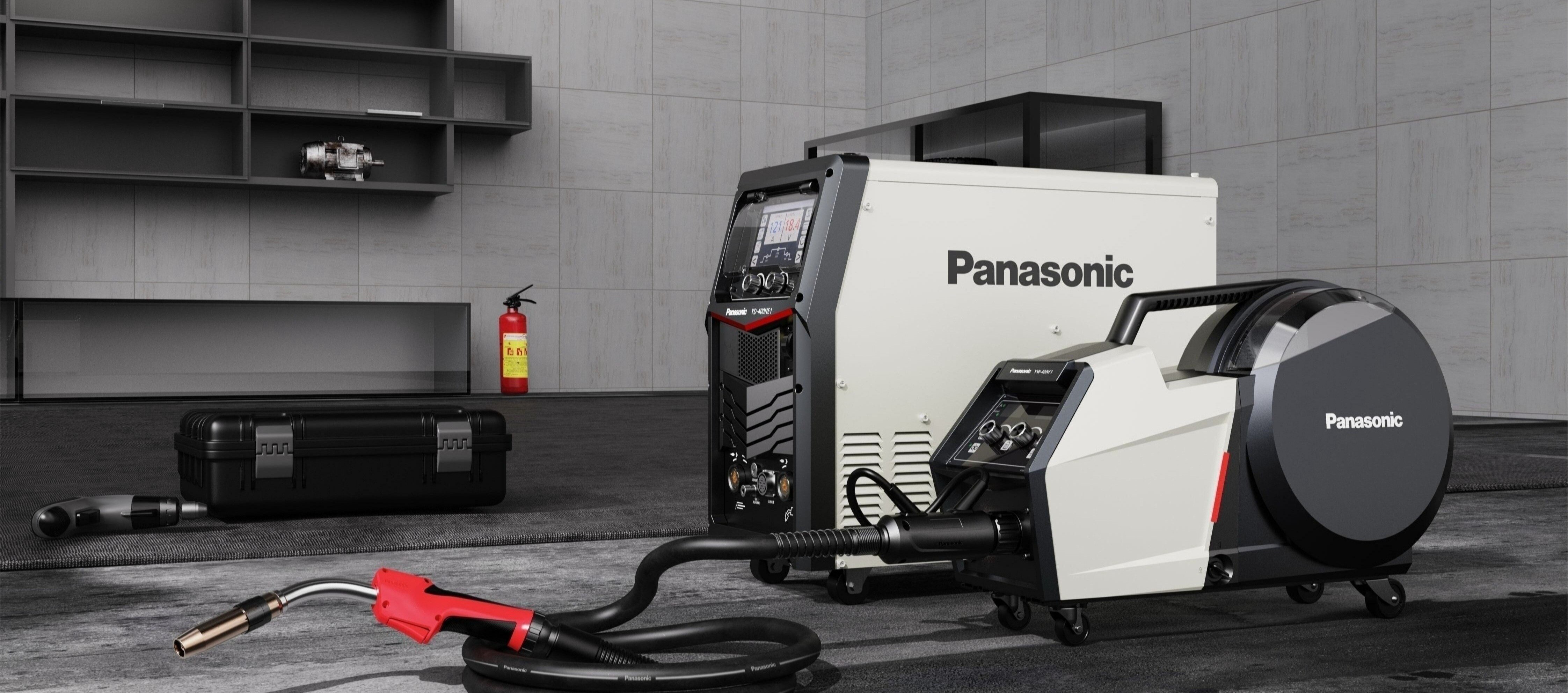
An unstable MIG arc does not automatically mean the power source has failed. By checking the work-return circuit, wire-delivery path, gas system, polarity and settings in the right order, you can decide whether to correct the fault, rent equipment for continuity, or replace the welder.
Key takeaways
- Test the return lead, torch, liner, tip, wire and gas before blaming the power source.
- Match shielding gas, polarity, wire size and voltage to the weld application.
- Choose a rental rated for your duty cycle, wire diameter and daily production hours.
- Replace the machine permanently when repeated hires cost more than reliable ownership.
Find out whether the arc fault is really in the machine
A failed power source remains suspect only after a known-good work return, torch, liner, contact tip, wire, gas supply and polarity still produce an unstable arc. Start by checking the cheaper external causes.
| Symptom or check | Likely external cause | Stronger machine warning |
|---|---|---|
| Arc cuts in and out while feeding | Worn tip, liner drag, loose drive-roll tension, spool-brake drag or kinked gun lead | Instability continues with a known-good torch and consumables |
| Arc is weak or erratic at the workpiece | Poor clamp contact, damaged work lead, paint, rust or incorrect polarity | Output remains wrong with a clean joint and sound return lead |
| Arc stops after several minutes | Thermal overload, blocked air passages, failed fan or excessive duty cycle | Repeated thermal trips at a verified rated load |
| Unloaded power-on test passes | This proves little; it will not reveal feeder slip or gas leaks | Test weld fails across multiple torches |
For CO2 welder hire for workshops, use this sequence before booking:
- Clean and clamp the work return directly to bright metal; inspect the lead and connections.
- Measure gas flow at the torch, check leaks, and confirm cylinder restraint and ventilation. CO2 can collect in low areas.
- Inspect the contact tip, liner, drive-roll groove and wire size; replace contaminated or worn parts.
- Set correct roll pressure without crushing the wire, then check feed at several speeds.
- Test representative material with the intended wire and gas, recording arc starts, actual voltage and current, fan operation and thermal cut-out behaviour.
A rental machine that passes only an unloaded power-on test has not passed acceptance.
Complete these checks before arranging a rental
Before arranging mig welding equipment rental, isolate the welder and remove the torch from the work area. Do not open covers or handle live terminals; call a qualified technician for internal electrical faults.
- Inspect the work-return clamp, cable and connection to clean base metal. A loose clamp or damaged lead creates a wandering arc that can resemble power-source failure.
- Secure the CO2 cylinder upright, check the regulator and hose for leaks, and confirm adequate ventilation. CO2 can collect in low areas and displace oxygen; higher flow will not fix a leak.
- With the cylinder valve open, measure gas flow at the torch outlet. Protect the arc from drafts, because forced air causes porosity and instability.
- Switch off power, then examine the contact tip, nozzle and liner. Replace a worn tip, blocked liner or incorrect tip size, and remove spatter from the nozzle.
- Check drive-roll grooves, wire size and feeder tension. Excess tension crushes wire; insufficient tension causes slip and irregular feeding.
- Confirm polarity, voltage, wire-feed speed and stick-out against the wire manufacturer’s settings. Clean oil, rust and paint from the test area.
- Test with known-good wire and shielding gas. If the arc remains unstable after these checks, test another torch if available and record thermal trips or output interruptions before hiring another CO2/MIG welder. Those results give the rental supplier evidence that the fault is in the machine, not the setup.
Use gas, polarity and settings that suit the weld
An arc can become unstable even when the power source is healthy if the gas, polarity or welding parameters do not match the wire and joint. A sputtering arc, excessive spatter and shallow penetration after changing wire or gas point first to setup, not automatic machine failure.
For solid-wire GMAW with pure CO2 or an argon/CO2 mixture, use electrode positive (DCEP) unless the wire manufacturer specifies otherwise. Reversed polarity produces an erratic arc, heavy spatter and poor penetration. Self-shielded flux-cored wire is a key exception: many grades require electrode negative (DCEN), so read the wire label before changing leads.
Pure CO2 produces a hotter, deeper-penetrating arc but more spatter and a rougher transfer. An argon/CO2 mixture can smooth the arc and reduce the current needed for spray transfer. Do not demand conventional spray transfer from pure CO2; use an argon-rich mixture and a machine capable of the required current.
Match voltage, wire-feed speed and contact-tip-to-work distance to the wire diameter, material thickness and transfer mode. Excessive stick-out reduces current at the joint; low gas flow, a leaking nozzle or drafts let air contaminate the arc. Dirty steel, mill scale and paint add another unstable path.
If the arc deteriorates after several minutes, check the thermal indicator, fan and air passages before blaming shielding gas. A thermal trip under a verified load indicates an overload or machine fault; a bad arc that disappears after correcting gas, polarity or settings does not.
Choose a rental that can carry the actual production load
A 250-amp label does not prove a rental suits your work. If you are sourcing a co2 MIG welding machine for rental in ahmedabad, specify wire diameter, base-metal thickness, required output, input supply, gas, cylinder connection and duty cycle before accepting a model.
A single-phase machine accepting 0.8-mm wire is a poor match for 1.2-mm wire, high deposition or three-phase production.
Give the supplier this acceptance checklist:
- Confirm the workshop supply: phase, voltage, breaker rating and extension-cable length.
- Match wire diameter, drive rolls, contact tip and liner to your intended wire.
- Check the rated duty cycle at its test period and output. A 60% rating on a 10-minute basis means 6 minutes welding and 4 minutes cooling, not six hours per shift.
- Test a representative joint using your base material, wire and gas.
- Record arc starts, wire-feed stability at several speeds, gas response, fan operation and thermal cut-out behaviour.
- Inspect the work lead, torch connection, cylinder restraint and gas leaks; assess ventilation because CO2 can collect in low areas.
| Requirement | Handover proof | Reject if |
|---|---|---|
| Input supply | Power-on test at your socket under load | Trips, overheats or needs an unsuitable supply |
| Production capacity | Continuous test at the planned current and wire speed | Thermal protection activates before the rated duty cycle |
| Arc and feeding | Test weld with known-good wire and gas | Stutter, feeder slip, liner drag or porous weld appears |
Weld Tech Corporation can help compare a rental against your wire size and supply rather than treating “CO2/MIG” as a sufficient specification.
Related products
 | CO2 welding machine Inverter IGBT-Controlled CO2/MAG Welding Machine Advanced arc stability for high-quality welds Flexible parameter settings for materials & thicknesses Robust build for long-term durability in... View product → |
 | MIG Welding Machines Digital + Inverter IGBT-Controlled MIG/MAG Welding Machine Available in 250 AMP, 400 AMP & 500 AMP options Energy Saving & High Reliability Soft Arc (Thin Metal) & Hard Arc (Thick Metal) Characterisitcs... View product → |
Know when temporary hire has become an industrial replacement decision
Rent immediately when an unstable arc is stopping production and the cause, repair time or replacement capacity is uncertain. Keep the hire temporary: it restores output while you confirm whether the fault is electrical or external. Do not use it to conceal contaminated wire, a poor work return, a leaking gas line or incorrect settings.
| Decision | Choose it when | Do not choose it when |
|---|---|---|
| Rent immediately | Production is critical, the unit trips or fails under load, and repair timing is unknown | The fault is clearly a loose clamp, worn tip, blocked liner or wrong parameter |
| Repair existing unit | A known-good gun, liner, tip, wire, gas supply, polarity and work return produce a fault that points to one repairable component | Output remains unstable across multiple torches or protection trips recur |
| Arrange an industrial CO2 welder replacement | The machine has damaged output cables, repeated thermal or electrical trips, intermittent feeding after consumable replacement, or fails its rated load test | A gas, grounding or consumable correction restores a stable arc |
Accept a rental only after a weld on representative material with the intended wire and gas. Record these handover checks:
- Stable wire feed at low, medium and high speeds
- Arc starts, actual voltage and current when instruments are available
- Work-lead condition, gas-flow response, fan operation and thermal cut-out
- Cylinder restraint, leak checks and ventilation for CO2 accumulation in low areas
If the rented machine passes but your original fails the same controlled test, stop repeated repairs and price the industrial CO2 welder replacement.
Frequently asked questions
How can you tell whether the MIG arc fault is in the machine?
Test with a known-good work return, torch, liner, contact tip, wire and gas supply. Confirm polarity and connections before treating the power source as faulty.
What checks should you complete before arranging a CO2 MIG welder rental?
Inspect the work clamp, torch cable, liner, contact tip, wire path, regulator, hose, gas cylinder, electrical supply and polarity. Remove contamination, damaged parts and feed restrictions first.
How do gas, polarity and settings affect MIG arc stability?
Use the gas, wire polarity, voltage, wire-feed speed and inductance suited to the wire and material. Solid wire normally uses direct-current electrode positive, while flux-cored wire requires the polarity specified on its label.
What should you compare when choosing MIG welding equipment rental?
Check output rating, duty cycle, input power, wire diameter range, torch length, feeder design, gas controls, included accessories and service support against the actual production load.
When does temporary hire become an industrial CO2 welder replacement decision?
Compare repeated rental charges, downtime, repair delays and production requirements with the cost of a dependable replacement. Frequent faults or long-term demand indicate that hiring is no longer a temporary solution.
Related products
 | MAG Welding Machines Full Digital Controlled Pulse MIG/MAG Welding Machine Root Welding control technology IBC (The Arc Ignition & Burn Back Control) Pulse Constant Arc Length Control, ALC (Arc Length Consistence) HL-Pulse... View product → |
 | MIG Welding Machines Fully Thyristorised MIG/MAG Welding System Available in 250 AMP, 400 AMP & 500 AMP options Six phase thyristorised system gives ripple-free DC output superior quality welding Synergic mode... View product → |
 | MIG Welding Machines Panasonic MIG Welding Machines Brand Panasonic MODEL YD-250KR 2 INPUT SUPPLY 415 +10% ,-10% PHASE/FREQUENCY THREE / 50-60 HZ POWER CONSUMPTION 9.5 KVA/7.9KW WELDING CURRENT RANGE... View product → |
 | MAG Welding Machines Panasonic MAG Welding Machines Brand Panasonic Model YD-350GZ4 Phase 3-Phase Current 350 A Voltage 380-415 V Dimension (L x B x H) 380x550x640 mm Product Type New Duty Cycle 60%... View product → |