Cold welding joins clean, ductile metal through pressure rather than melting, an arc, shielding gas, or filler metal. The right choice depends on your alloy, section size, joint geometry, production rate, allowable distortion, and ability to control tooling and alignment; by the end, you can compare the process with conventional options and specify equipment that can make a verified production joint.
Key takeaways
- Use cold welding for clean, ductile metals that tolerate high compressive force.
- Check material compatibility, die geometry, joint access and required upset before buying equipment.
- Choose MIG, TIG, resistance, laser or brazing when melting or filler improves the joint.
- Inspect surfaces, alignment, force and finished upset on every cold-welded joint.
What cold welding equipment actually does
Cold welding equipment creates a solid-state bond by forcing clean, ductile metal surfaces together under controlled pressure. Opposed dies, jaws, or swaging tools deform the workpiece, fracture or displace oxide films, and bring fresh metal into intimate contact. The joint does not melt and uses no arc, shielding gas, or filler wire.
Industrial cold welding options are defined by the workpiece geometry, not by a universal power source.
| Equipment type | Suitable workpiece | Joining action |
|---|---|---|
| Butt cold welder | Wire and rod | Compresses aligned ends between opposed dies |
| Rotary or orbital machine | Selected circular sections | Applies pressure around the circumference |
| Pressure-die system | Cable, strip, tube, and busbar | Shapes and compresses material through a matched die |
| Specialised cold-pressure machine | Defined production geometries | Uses application-specific tooling and force |
Do not confuse a mechanical cold-pressure welder with a water-cooling unit. A cooler removes heat from a conventional welding torch or power source; a cold welder applies joining force. Cold-weld repair compounds and adhesives are separate products and cannot provide the same metallic joint.
Cold welding for manufacturers is strongest with clean, ductile aluminium, copper, and selected ductile alloys. Remove oil, paint, scale, and other contamination before joining, then follow the approved oxide-removal method.
Brittle materials, heavily contaminated surfaces, and sections that cannot tolerate plastic compression are poor candidates because they can crack, buckle, or fail to form a continuous metallic bond.
Materials, tooling, force, and joint geometry determine feasibility
Feasibility starts with the material grade, incoming diameter or thickness, joint type, and required finished dimensions—not the press rating. A cold welding equipment comparison based only on nominal tonnage can select a machine that cannot form your joint, control its upset, or meet its final dimensions.
| Material or section | Preparation | Tooling and force implication |
|---|---|---|
| Copper wire, rod, or busbar | Remove oil, paint, and scale; use the specified scraping, brushing, or end-preparation method to break the oxide film. | Use the qualified die profile and controlled workholding; copper’s deformation response differs from aluminium. |
| Aluminium wire, rod, or strip | Remove contamination and strip the oxide using the procedure qualified for the alloy and section. Do not handle prepared faces. | Confirm the required upset and force separately; an aluminium die set is not automatically suitable for copper. |
| Butt, lap, or specialised section | Cut or form ends to the specified geometry and preserve the required finished dimensions. | Match the press or actuator, replaceable dies or jaws, and alignment components to that joint. |
For industrial cold welding options, ask the supplier to identify:
- The qualified material-and-size envelope, die profile, maximum upset or flash, allowable misalignment, die life, and die changeover method.
- Whether the machine uses measured hydraulic force or a mechanical or swaging mechanism limited to defined size ranges.
- Whether the package includes cutters, punches, jaws, alignment parts, stripping tools, and force-verification records.
- How the workpiece remains supported during pressure application; inadequate support lets the joint wander, buckle, or develop uneven upset.
- Whether the quoted die set has been qualified for your alloy and section, rather than only for one wire diameter.
How cold welding compares with MIG, TIG, resistance, laser, and brazing
Choose cold pressure welding when you need no arc, shielding gas, filler metal, or fusion heat-affected zone in a highly conductive copper or aluminium connection. Cold welding for manufacturers also avoids molten-pool porosity and limits thermal distortion, but it leaves cold-worked material, dimensional upset, and a flash or burr that may require trimming.
| Option | Main advantage | Main limitation |
|---|---|---|
| Cold pressure welding | Conductive copper or aluminium joints without melting, gas, or filler | Specific geometries; requires clean, ductile stock, force, dies, and alignment |
| MIG or GMAW | Consumable wire supports long seams, positional work, gap bridging, and irregular joints | Uses shielding gas, filler wire, and a molten pool |
| TIG or GTAW | Precise heat control and a narrow, visible weld | Introduces a thermal cycle and normally needs shielding gas |
| MMA or DC arc | Flux-coated electrodes suit field repairs and difficult access | Slag, arc heat, electrode changes, and less controlled finish |
| Resistance welding | Electrode force plus current provides rapid production joining | Needs electrical capacity; electrode wear affects consistency |
| Laser welding | Concentrated heat and small distortion | Requires expensive capital equipment and suitable joint access |
| Brazing | Joins without melting the base metals | Uses lower-melting filler and depends on clearance and wetting |
This cold welding equipment comparison should measure cycle time, operator skill, finish, access, inspection, consumable cost, and joint geometry—not just amperage or headline machine price. Verify tensile strength, electrical resistance, pull-out performance, and dimensions on actual production stock; a low-heat process does not remove the need for qualification.
The cold-welding operating sequence and checks that protect joint quality
Cold welding for manufacturers protects joint quality only when preparation, tooling, force, and inspection follow a qualified sequence. Treat surface preparation as a process control: contamination or oxide left between the faces can prevent intimate metal contact.
1. Identify the approved alloy, section size, die number, and target upset before setting the machine.
2. Cut both ends square. Remove oil and paint, then strip or abrade oxide using the qualified procedure. Do not touch the prepared faces.
3. Insert both parts fully into the die, set the stop or overlap, and check axial alignment before closing the jaws.
4. Apply the specified force or stroke in the controlled sequence. Do not replace a force or position setting with a visual estimate.
5. Inspect the flash or upset. It must form completely and evenly around the joint; an uneven ring signals poor preparation, alignment, or deformation.
6. Remove burrs only through the approved finishing operation. Aggressive grinding or dressing can reduce the effective section.
7. Verify dimensions, surface defects, and alignment. Test sample joints for tensile strength, pull-out performance, electrical resistance, or the application’s other acceptance criteria.
8. Record the alloy, diameter or thickness, surface preparation, die identification, force or stroke, operator, and test result. Repeat the sample test after a die change, material-lot change, or maintenance intervention.
These checks control trapped contamination, uneven deformation, work hardening, and tooling wear—the main causes of unreliable cold-pressure joints.
A practical equipment-selection method for Ahmedabad production floors
Specify the production joint before you name the machine. Your welding equipment selection in Ahmedabad should record alloy and grade, diameter or thickness, butt or lap geometry, daily volume, cycle time, tensile or electrical target, allowable distortion, and acceptable flash.
- Confirm three-phase or single-phase supply, compressed-air demand, hydraulic power, floor space, ventilation, operator access, and in-house maintenance capability.
- Ask the supplier to make sample joints from your actual stock, surface condition, die set, and intended production cycle.
- Keep the die identification, force or calibration record, dimensional measurements, and destructive or electrical test results with the quotation.
For rental equipment, treat dies, punches, jaws, cutters, alignment parts, and calibration or force-verification documents as part of the package. A press with enough nominal capacity remains useless if its tooling cannot produce your joint.
| Option | What it controls | Check before choosing |
|---|---|---|
| Cold-pressure welding | Mechanical force and plastic deformation without intentional heating | Qualified alloy-and-size envelope, die life, alignment, upset, and flash |
| MIG/MAG, TIG, or MMA | Arc heat, filler or electrode, and access to the joint | Gas or electrodes, thermal distortion, operator skill, and seam geometry |
| Resistance welding | Electrode force plus electrical current and interface heat | Three-phase capacity, electrode wear, cycle control, and access |
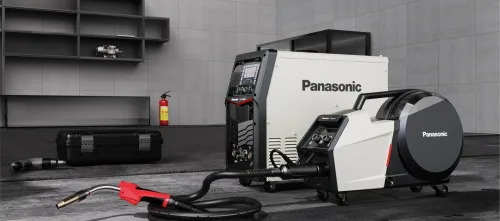
When comparing cold welding equipment in Ahmedabad, Weld Tech Corporation can help distinguish a true pressure welder from a torch cooler and compare Panasonic MIG/MAG, TIG, MMA, resistance, or other options against the same joint. Choose cold welding only when its qualified material-and-geometry envelope matches the job.
Frequently asked questions
What does cold welding equipment actually do?
It presses clean, ductile metal surfaces together until oxide films break or move and the fresh metal bonds without melting, an arc, shielding gas or filler wire.
Which factors determine whether cold welding will work?
Material ductility, surface cleanliness, tooling, applied force, workpiece size and joint geometry determine feasibility.
How does cold welding compare with MIG, TIG, resistance welding, laser welding and brazing?
Cold welding creates a solid-state bond without heat or filler; MIG, TIG, resistance and laser processes use heat, while brazing melts a separate filler metal.
What should you check before selecting cold welding equipment in Ahmedabad?
Confirm the alloy range, wire or component dimensions, die availability, required force, production rate, joint access, inspection method and local service support.