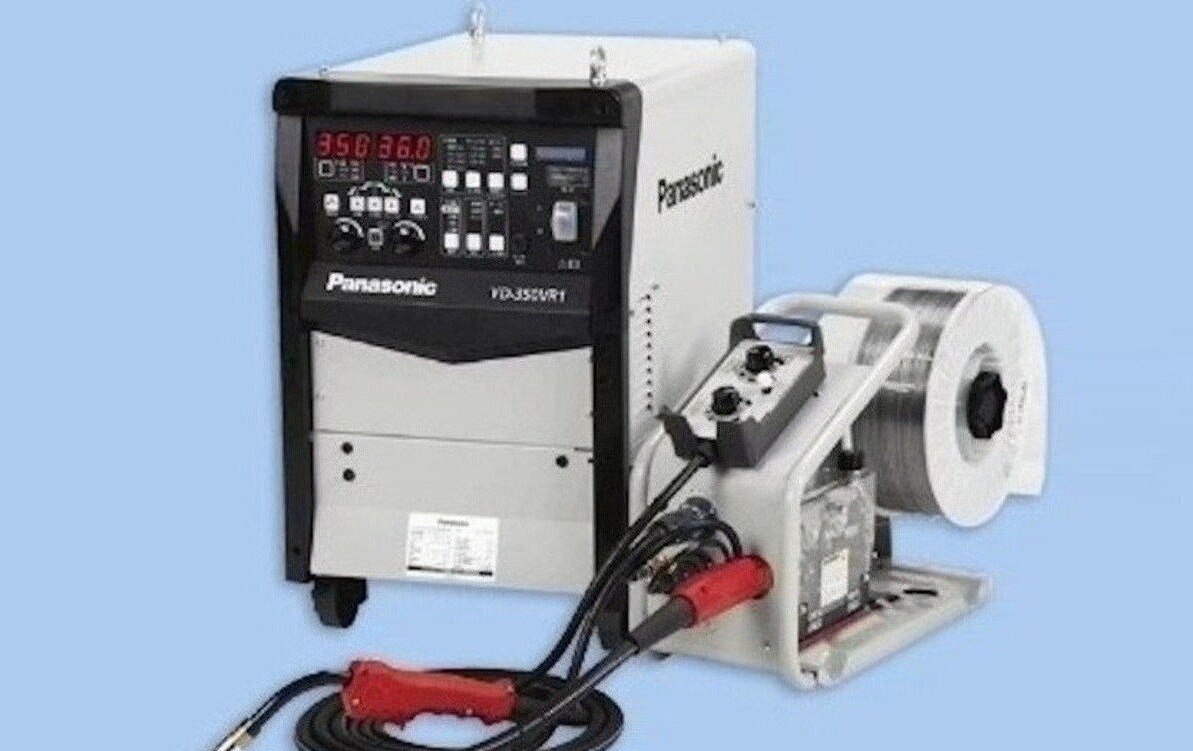
Choosing by maximum amperage alone leads to the wrong machine for thin body sheet, aluminium panels, or heat-sensitive repairs. You will be able to match TIG, MIG/MAG, pulse TIG, and pulse MIG capabilities to the material, joint, repair procedure, and workshop throughput you actually need.
Key takeaways
- Use DC TIG for steel and stainless steel; choose AC/DC TIG for aluminium.
- Prioritise stable low-current output for thin panels over maximum amperage.
- Compare setup time, heat input, and repair speed before choosing TIG or MIG.
- Confirm duty cycle, consumables, torch parts, and local service support.
Match the welding process to the automotive material and repair
A TIG and MIG welding machine for automotive repair is not automatically universal: verify whether its TIG function is DC-only or AC/DC. DC TIG suits steel and stainless steel; conventional aluminium TIG requires AC to break up the oxide film.
| Material or repair | Suitable process | Why and what to check |
|---|---|---|
| Mild-steel body panels | MIG/MAG; TIG for visible precision work | MIG is faster for butt joints and plug welds. TIG gives finer heat and filler control but deposits metal slowly. |
| Galvanised body steel | MIG/MAG | Remove coating locally for a steadier arc, then use local exhaust ventilation and controls for zinc fumes. |
| Chassis brackets | MIG/MAG, only where the OEM procedure permits welding | High-strength and ultra-high-strength steel can lose intended properties through excess heat. Follow the vehicle’s repair manual, including its sectioning and plug-weld limits. |
| Exhaust components | TIG for stainless; MIG for mild steel | TIG controls heat and appearance around thin tube. Clean stainless thoroughly and keep shielding effective. |
| Aluminium panels | AC TIG or pulse MIG | AC TIG handles the oxide layer and gives precise control. Pulse MIG reduces average heat while retaining faster deposition. |
| Cast aluminium | AC TIG after assessing repairability | Oil, oxide and porosity can contaminate the weld. Some castings are cracked or contaminated beyond a reliable repair. |
Pulse TIG only varies current during a DC or AC TIG arc; it does not give a DC-only machine aluminium capability. Pulse MIG can reduce heat input on thin sections, but it adds setup and tuning. Compare torch, feeder, polarity, gas-valve and consumable compatibility before choosing a dual-process unit.
Choose usable low-current performance, not maximum amperage
For thin automotive sheet, choose a machine that holds a stable arc around 30–90 A, not one advertised only by its 250 A maximum. Excess minimum output causes burn-through before you can control the puddle.
| Process | Useful output focus | Functions that matter |
|---|---|---|
| Short-circuit MIG/MAG | Approximately 30–180 A for body steel | Correct wire-size program, inductance or arc control, burnback, crater fill and low-voltage stability |
| TIG | Approximately 5–150 A for thin steel and stainless | Fine current adjustment, remote control, downslope, gas pre-flow and post-flow |
| AC pulse TIG | Approximately 5–200 A, with adjustable peak and background current | AC balance, AC frequency, pulse frequency and an AC/DC output stage |
For a thin steel panel, short-circuit MIG with 0.6 or 0.8 mm wire gives faster repairs and lower heat input than spray transfer. Ask whether the automotive welding power source keeps the arc stable at the low end; a wide headline range means little if the first usable setting is too hot.
TIG needs a controllable 5–10 A starting point for delicate edges, plus downslope and crater-fill control to prevent end cracks. Pulse TIG reduces average heat by alternating peak and background current, but “pulse” alone does not make a machine suitable for aluminium: conventional aluminium TIG requires AC, with adjustable balance and frequency.
Check three practical details before choosing:
- The rated current and duty cycle use the same test standard.
- High ambient heat, blocked airflow and voltage drop can reduce thermal performance.
- The machine accepts the torch, feeder, polarity and consumables your repair work requires.
Compare repair speed, setup time, and heat control
MIG is the better collision-shop choice for repeated mild-steel body repairs because setup is quick, welding is fast, and short-circuit transfer limits burn-through on thin sheet. TIG earns its slower throughput when appearance, aluminium or stainless steel, and precise heat placement matter more than completed metres per hour.
| Process | Setup and repair speed | Heat control and best use |
|---|---|---|
| MIG | Fit the wire, liner, contact tip, shielding gas and polarity; then weld quickly with little filler handling. | Short-circuit MIG suits thin panels and routine plug welds. Pulse MIG reduces average heat for some thinner sections but adds setup and control complexity. |
| TIG | Prepare a tungsten, connect argon, position the torch and filler, and control amperage with a pedal or hand control. Deposition is substantially slower. | Separate control of torch travel, filler and amperage helps prevent distortion on visible aluminium, stainless steel and precision repairs. |
| Pulse TIG | Setup remains TIG-like, with pulse parameters added to the control panel. It does not increase deposition speed. | Pulsing regulates current during the arc; it does not create AC aluminium capability. DC pulse TIG remains unsuitable for conventional aluminium TIG. |
Choose MIG when the job is a high-volume steel repair, the weld will be dressed or hidden, and rapid repositioning matters. A TIG and MIG welding machine for automotive repair must still provide practical torch and feeder changes, available contact tips and liners, and usable cable lengths; a proprietary failure can stop production.
Choose TIG when a visible aluminium panel, stainless component or delicate repair demands a narrow, controllable heat zone. Check the vehicle maker’s procedure first: high-strength steel restrictions on heat input, plug-weld locations or sectioning override a generic machine setting.
Understand what pulse TIG and pulse MIG actually change
Pulsing improves an automotive weld only when controlling heat or transfer solves a specific defect. Pulse TIG alternates high and low current, limiting average heat and helping you place small, repeatable beads on visible stainless steel or aluminium. It does not create AC: a DC pulse TIG machine remains unsuitable for conventional aluminium TIG.
| Option | What pulsing changes | When it applies |
|---|---|---|
| Pulse TIG | Cycles peak and background current during the arc | Thin, visible, precision welds where distortion or burn-through is the problem |
| Pulse MIG | Cycles peak and background current to approximate spray transfer at lower average heat | Aluminium, stainless, or thin steel sections where spatter, heat input, or positional control limits ordinary MIG |
| Conventional MIG or TIG | Uses steadier current and simpler settings | Repairs where speed, access, and a sound joint matter more than bead appearance or fine heat control |
For someone comparing a pulse TIG welding machine in Ahmedabad, “pulse” proves little by itself. Check AC/DC output, peak and background-current ranges, pulse-frequency range, AC balance, AC frequency, remote-current control, and available input supply. AC is required for conventional aluminium TIG.
Do not use pulsing to override the vehicle maker’s repair procedure. High-strength and ultra-high-strength steel repairs can restrict plug-weld locations, sectioning, heat input, or welding altogether; excess heat can alter the steel’s intended properties.
Choose the simpler process when:
- Ordinary MIG already delivers the required penetration and acceptable distortion.
- Pulse settings slow a high-volume repair without improving the joint.
- The extra controls, torch, feeder, or consumables are difficult to support locally.
Verify process capability, duty cycle, consumables, and service support
A machine’s name proves little. A tig and mig welding machine for automotive repair may contain two separate process circuits, not one universal setup, so verify what each process can actually do before you buy or rent.
1. Confirm TIG is AC/DC, not DC-only. DC TIG covers steel and stainless; conventional aluminium TIG needs AC, with balance and frequency controls. “Pulse TIG” only varies current and does not make a DC machine suitable for aluminium.
2. Check the input supply against your workshop. Record voltage, phase, frequency, fuse or breaker size, and plug type, then ask whether the quoted output requires a three-phase supply. A long or undersized extension lead causes voltage drop and reduces thermal performance.
3. Compare duty-cycle figures only when the test current and standard match. A rating of 40% at 200 A is not directly comparable with 100% at 150 A. Test the automotive welding power source on representative sheet, bracket, or exhaust material at the intended settings.
4. Inspect the complete operating system: interchangeable torch and feeder, polarity switching, gas-valve behaviour, cable length, liner, contact tips, collets, nozzles, and cylinder connections. A proprietary liner or unavailable control board can turn a cheap machine into expensive downtime.
5. Get support terms in writing. Ask Weld Tech Corporation which consumables, spare boards, torches, and contact tips are locally stocked, who performs repairs, and what response time applies. Test wire feeding, arc starting, remote control, and thermal recovery before accepting a rental or installation.
Related products
 | ac/dc tig welding machine Full Digital AC/DC TIG Welding Machine A variety of waveforms ensures superior welding for aluminum and a wide range of metals. View product → |
 | MIG Welding Machines Digital + Inverter IGBT-Controlled MIG/MAG Welding Machine Available in 250 AMP, 400 AMP & 500 AMP options Energy Saving & High Reliability Soft Arc (Thin Metal) & Hard Arc (Thick Metal) Characterisitcs... View product → |
Frequently asked questions
Which welding process suits different automotive repair materials?
Use MIG for fast repairs on steel and sheet metal, DC TIG for controlled steel or stainless steel work, and AC/DC TIG for conventional aluminium welding.
Why does low-current performance matter more than maximum amperage?
Automotive panels and brackets are often thin, so stable arc control at low current helps prevent burn-through and distortion.
What do pulse TIG and pulse MIG change?
Pulse TIG alternates peak and background current for heat control and precise beads. Pulse MIG varies welding current and wire transfer to reduce heat input and improve control.
What should you verify before buying an automotive welding power source?
Check process capability, DC or AC/DC TIG operation, low-current output, duty cycle, compatible torches and consumables, spare-part availability, and service support.
Related products
 | MIG Welding Machines Fully Thyristorised MIG/MAG Welding System Available in 250 AMP, 400 AMP & 500 AMP options Six phase thyristorised system gives ripple-free DC output superior quality welding Synergic mode... View product → |
 | MIG Welding Machines Panasonic MIG Welding Machines Brand Panasonic MODEL YD-250KR 2 INPUT SUPPLY 415 +10% ,-10% PHASE/FREQUENCY THREE / 50-60 HZ POWER CONSUMPTION 9.5 KVA/7.9KW WELDING CURRENT RANGE... View product → |
 | MAG Welding Machines Full Digital Controlled Pulse MIG/MAG Welding Machine Root Welding control technology IBC (The Arc Ignition & Burn Back Control) Pulse Constant Arc Length Control, ALC (Arc Length Consistence) HL-Pulse... View product → |
 | TIG Welding machine Panasonic TIG Welding Machines Model Number 300 TSP Welding Type TIG Welding Voltage 415V, +10% (Input Voltage) Output Current Range 5-300 A Brand Panasonic Frequency 50-60 Hz... View product → |