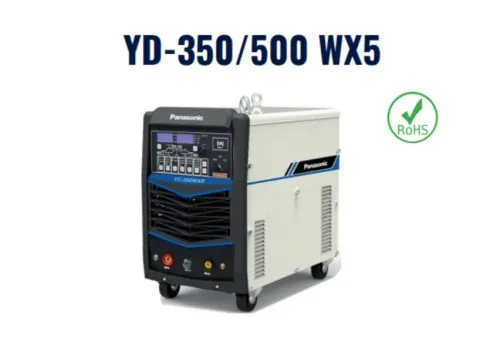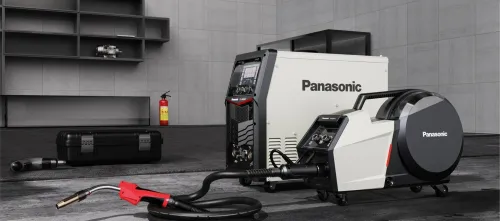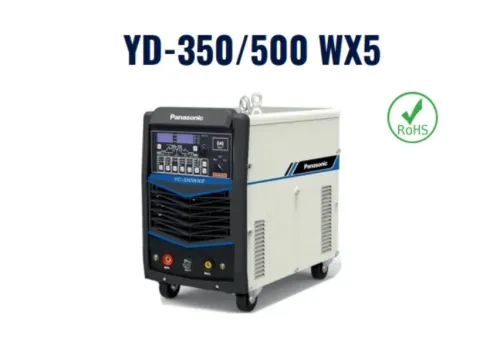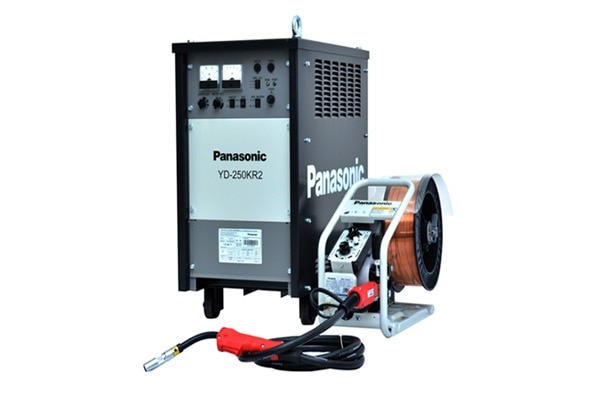
Automotive welders need more than a high amperage number: they need stable wire feeding, repeatable settings, suitable gas control and enough duty cycle for the actual production schedule. By the end, you can match a Panasonic MIG welding machine to automotive materials, joint types, workshop conditions and production demands without confusing MIG with every gas-shielded process.
Key takeaways
- Choose stable wire feeding and repeatable settings over maximum amperage alone.
- Match wire, shielding gas and transfer mode to the automotive material and joint.
- Check duty cycle, wire diameter range, torch reach and service access before purchase.
- Run production-like trials to verify arc starts, bead consistency and stoppage rates.
Where a Panasonic MIG Welding Machine Creates a Production Advantage
A Panasonic MIG welding machine creates a production advantage when its complete welding package delivers stable wire feeding, repeatable parameters and access to the joint—not merely a high maximum-ampere rating. On an automotive line, that means faster arc starts, fewer stoppages, consistent bead size and less rework from porosity, burnback or uneven penetration.
| Production factor | Practical benefit | Check before selection |
|---|---|---|
| Cycle time | Short-circuit MIG suits rapid welding of thin steel; pulse transfer reduces spatter on thicker sections and aluminium | Confirm the required process and program for the exact power source |
| Repeatability | Stored parameters and coordinated wire-feed control help operators reproduce welds across parts | Check minimum stable current, duty cycle and available synergic or pulse programs |
| Feeder reliability | Correct rolls, liner, contact tip and wire spool prevent bird-nesting and arc-length fluctuation | Match the feeder and torch consumables to 0.8 mm or 1.0 mm solid wire |
| Automation | An integrated robot, feeder, torch, power source and software package improves programmed access and cable management | Do not assume a standalone manual machine provides robotic repeatability |
These Panasonic MIG welding machine benefits disappear when the feeder is poorly maintained or galvanized steel is welded without controlled preparation and fume extraction. Specify torch rating, liner type and shielding gas alongside the power source, then validate the production procedure against its material, joint design, wire classification, parameter range and acceptance criteria.
For qualified production work, ISO 15614-1 addresses procedure qualification and ISO 3834 addresses welding quality requirements.
Automotive Jobs, Materials and Welding Processes to Match
MIG/MAG suits vehicle frames, chassis rails, brackets, exhaust parts, suspension components, body repairs, jigs and fixtures when production speed matters more than a perfect cosmetic finish.
For automotive MIG welding in Pune, start with 0.8 mm or 1.0 mm solid ER70S-6 wire, suitable shielding gas and short-circuit transfer on thin mild-steel sheet; excessive voltage or wire-feed speed can cause burn-through, undercut and distortion.
Useful mig machine applications include:
- Chassis and frame joints where accessible fillet welds provide fast deposition
- Brackets, mounts, suspension parts and fabricated fixtures
- Exhaust components, with settings matched to the alloy and thickness
- Body-panel repairs, provided heat input stays low
- Aluminium parts or thicker sections when the specific machine offers a suitable pulse program
| Process | Best automotive use | Choose it instead of MIG when |
|---|---|---|
| MIG/MAG | Mild-steel fabrication, repairs and repeatable production joints | You need fast deposition and controlled settings |
| TIG | Aluminium, stainless steel, thin visible panels and precise root control | Appearance, low spatter or fine heat control outweighs speed |
| Stick | Thick steel repairs, outdoor work and sites without shielding-gas protection | Wind, dirty surfaces or difficult access make gas-shielded welding unreliable |
| Spot welding | Overlapping sheet-metal panels in high-volume body production | You need fast, repeatable weld nuggets rather than continuous seams |
A standalone MIG machine does not replace a spot welder or TIG setup. For production parts, qualify the joint through a documented procedure covering material, wire, gas, parameters, acceptance criteria and inspection method; ISO 15614-1 addresses procedure qualification, while ISO 3834 addresses welding quality requirements.
How to Specify Machine Capacity Beyond Maximum Amps
A 350 A rating does not tell you whether a machine will weld thin automotive sheet cleanly. Select industrial welding machines by the complete welding package and by the joints you will run most frequently.
1. Check duty cycle at your real welding current, not only the headline maximum. A machine rated 350 A at 60% duty cycle may overheat during long production runs, while a lower-rated unit with adequate duty cycle may be the better choice.
2. Confirm the minimum stable current and arc control. Poor low-current performance creates burn-through on body panels even when the machine has ample maximum output.
3. Specify wire-feed equipment with the process. Confirm compatibility with 0.8 mm and 1.0 mm solid wire, the correct drive-roll grooves, liner type, torch rating, contact tips and spool size. A worn liner or excessive roll pressure causes bird-nesting, burnback and fluctuating arc length.
4. Confirm the exact programs available. Short-circuit transfer suits thin steel; pulse programs help control spatter and heat on thicker sections or aluminium. Pulse is not included on every Panasonic MIG welding machine, so verify the power-source model and welding software.
5. Treat synergic control as a repeatability aid, not an automatic weld setter. It coordinates wire type, diameter, gas and wire-feed speed, but you still tune inductance, burnback, gas flow and travel speed on the joint.
6. For robotic work, specify the coordinated robot, feeder, torch, power source and software together. That is where Panasonic MIG welding machine benefits such as repeatable locations and cleaner cable management arise—not from the power source alone.
Set Up MIG and MAG Welding for Pune Workshop Conditions
Use the supply conditions, gas delivery and extraction system as part of the weld setup, not as workshop background. A Panasonic MIG welding machine connected to the wrong phase or an unstable generator can trip breakers, damage its inverter or produce an inconsistent arc.
- Confirm whether the machine requires 230 V single-phase or 415 V three-phase input; check voltage tolerance, phase balance, earthing, breaker rating and cable size before installation.
- If you use a generator, verify its continuous capacity and voltage stability against the machine manual; a generator that sags under load will cause arc fluctuation.
- Match shielding gas to the procedure: solid steel wire commonly uses argon-rich MAG mixtures or carbon dioxide, while aluminium requires an argon-based gas. Leak-test the regulator, hose, connections and torch, then set flow according to the nozzle and WPS.
- Keep doors, fans and vehicle movement from blowing gas away; install local fume extraction at the arc. Galvanized panels need especially careful extraction because zinc oxide fume is hazardous.
For automotive MIG welding in Pune, inspect the feeder before each shift. Fit the correct drive-roll groove for 0.8 mm or 1.0 mm wire, set roll pressure without crushing the wire, and replace worn liners, blocked contact tips and damaged nozzles. Store wire dry, remove contaminated coils, and check torch cables for kinks.
These controls prevent bird-nesting, burnback, porosity and changing weld size.
Validate the Machine Before You Commit to Production
Do not approve a machine because it strikes an arc. Run a production trial using your actual material, joint design, wire diameter, shielding gas, welding position and duty cycle; otherwise, you are testing a demonstration rather than the machine’s fit for your mig machine applications.
1. Record bead width, penetration, spatter, arc starts and weld appearance on representative parts. Test short-circuit transfer for thin sheet and pulse only if the specific power source includes the required program.
2. Run repeated welds until the planned cycle time is reached. Watch for thermal trips, wire-feed surging, burnback, bird-nesting and changes in bead size. Check the drive-roll groove, liner, contact tip and torch reach during the trial.
3. Test the complete package, not just the power source. Confirm 0.8 mm and 1.0 mm wire compatibility, minimum stable current, duty cycle, torch rating, synergic settings and, for robotic work, communication between robot, feeder, torch and process software.
4. Verify your Pune facility’s incoming voltage, phase balance, earthing, breaker, cable size and generator compatibility. A 415 V three-phase machine is not a plug-in replacement for a 230 V unit.
Ask Weld Tech Corporation to document consumable availability, response time, technician coverage, warranty handling and loaner arrangements before you rent or buy. Compare those answers with the trial record, not with brochure claims for industrial welding machines.
Frequently asked questions
What benefits does a Panasonic MIG welding machine offer automotive businesses?
A complete Panasonic MIG package can improve arc-start consistency, wire feeding, bead uniformity and access to automotive joints. These gains reduce stoppages and rework from porosity, burnback and uneven penetration.
Which automotive jobs and materials suit MIG or MAG welding?
MIG and MAG suit many automotive fabrication and repair jobs, but you must match the process to the material, joint, wire and shielding gas. Steel commonly uses MAG with an active gas blend, while aluminium requires compatible wire feeding and shielding arrangements.
How should you specify a MIG machine beyond maximum amperage?
Check duty cycle at the working current, wire diameter range, wire-feed stability, torch length, control functions, power supply, cooling arrangement and access to service parts. Maximum amperage alone does not show whether the machine fits your production cycle.
How can a Pune workshop set up MIG or MAG welding reliably?
Control shielding-gas flow, protect the work area from drafts, keep wire and contact tips clean, and set voltage, wire-feed speed and gas selection for the joint. Confirm earth connection, torch access and maintenance routines before starting production.
What should you test before committing a MIG machine to production?
Run representative automotive joints using the intended material, wire, gas, thickness and duty cycle. Record arc starts, bead appearance, penetration, spatter, burnback, stoppages and operator access, then inspect the finished welds.