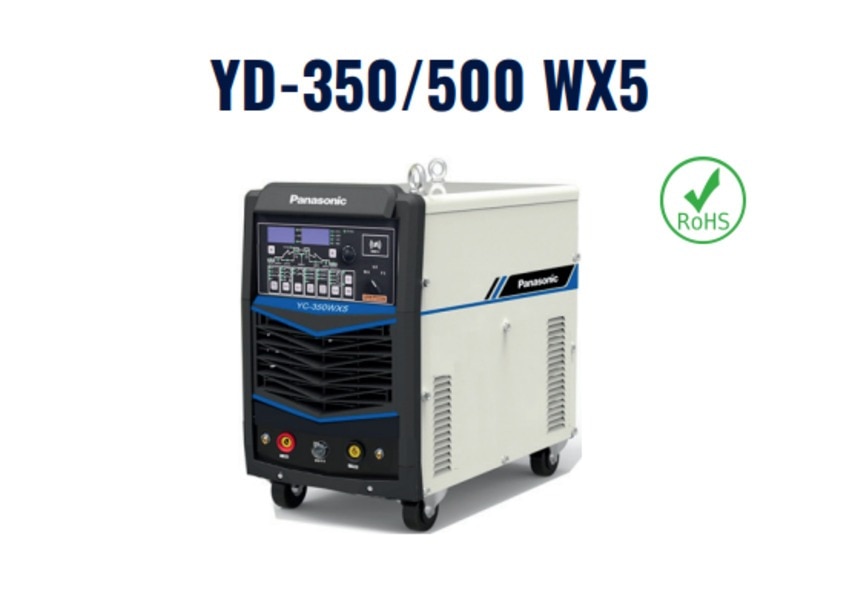
A TIG power source does more than display amperage: it converts and regulates incoming power while coordinating polarity, waveform, pulse timing and arc sequencing. By following the settings from joint preparation through inspection, you can build a stable AC or DCEN process and identify whether a defect comes from the machine, torch, gas system or operator technique.
Key takeaways
- Use AC for aluminium and magnesium; use DCEN for steel, stainless steel and titanium.
- Set AC balance to remove oxide without overheating the tungsten or workpiece.
- Record amperage, frequency, balance, pulse and gas settings with each approved weld procedure.
- Keep the tungsten pointed at the joint and shielding gas coverage uninterrupted until cooling ends.
How the Full Digital AC/DC TIG Welding Process Runs from Joint to Inspection
A sound weld begins before the arc: clean the joint, confirm fit-up, select the alloy’s polarity, and plan shielding. The full digital ac dc welding equipment process then coordinates current, waveform, pulse timing and slope functions while you control torch position and travel.
1. Prepare the joint. Remove oil, oxide, paint and moisture; fit and tack the parts, then install a purge for stainless steel, nickel alloys or titanium roots.
2. Connect the torch, work lead, shielding gas and remote control. Fit a correctly prepared tungsten, check hose connections, and verify gas flow before welding.
3. Choose DCEN for steels, stainless steel, nickel, copper and titanium. Choose AC for aluminium and magnesium, then set current, waveform, frequency, balance, pulse and pre-flow/post-flow to the qualified job procedure.
4. Start with high frequency without touching the tungsten. Establish the arc, hold a consistent arc length, and use the foot or torch control to manage heat.
5. Travel at a steady speed. Add filler at the leading edge of the molten pool, keeping the rod inside shielding gas; stop and clean if contamination occurs.
6. Fill the crater with downslope or brief filler additions, then extinguish the arc and maintain post-flow until the tungsten cools.
7. Inspect the bead, crater, root and surrounding heat-affected zone for cracks, porosity, oxidation, undercut and incomplete fusion. Record settings and observations for repeatable tig power source operation.
When to Use AC or DCEN for Each Engineering Alloy
Choose AC for aluminium and DCEN for stainless steel, mild steel, copper and nickel alloys in most TIG joints. In the AC DC TIG welding process, electrode-negative current puts more heat into the workpiece, producing a narrow, penetrating arc. AC adds electrode-positive time to disrupt aluminium oxide, but increases tungsten heating.
| Alloy | Default output | Why and what to watch |
|---|---|---|
| Aluminium | AC | Breaks the refractory oxide film while the negative portion of the cycle supplies penetration. Excessive positive time overheats and blunts the tungsten. |
| Stainless steel | DCEN | Gives a focused arc and controlled penetration. Protect the root with internal argon purge; oxidation can damage corrosion performance. |
| Mild steel | DCEN | Produces stable penetration and efficient heat transfer. Use joint fit-up and travel speed to control burn-through. |
| Copper | DCEN | Concentrates heat in the high-conductivity workpiece. Preheat thick sections when needed; AC does not replace adequate heat input. |
| Nickel alloys | DCEN | Supports a stable, penetrating arc with low tungsten loading. Maintain clean surfaces and purge the root where the joint requires it. |
For heavy engineering TIG welding, polarity cannot correct a contaminated joint, poor fit-up or lost purge. Choose AC for oxide removal on aluminium; choose DCEN when penetration and tungsten endurance matter.
How AC Waveform, Frequency and Balance Change the Arc
A square-dominant waveform gives rapid polarity changes, a firm arc and strong directional control. A sine component softens the arc and changes its sound and heat distribution; a triangular component reduces time at peak current and can limit heat input.
Mixed modes let you trade arc force against smoothness, but verify the result on a test coupon because labels do not predict every alloy or joint.
- Waveform: choose square-dominant for a crisp arc and concentrated action on narrow aluminium joints. Choose sine or mixed settings when a softer arc and smoother puddle matter. Use triangular content when controlling heat is more important than maximum penetration.
- AC frequency: raise it for a tighter, more directional arc on fillets and narrow joints; lower it for a broader arc and wider coverage. Frequency changes arc shape, not amperage, so do not use it as a substitute for current adjustment.
- AC balance: increase electrode-negative time for more penetration and a cooler tungsten. Increase electrode-positive time when the oxide film needs more cleaning, accepting a hotter tungsten, reduced penetration and possible balling.
Set one control at a time in the ac dc tig welding process. Digital TIG welding equipment makes this repeatable: record waveform, frequency and balance alongside current, travel speed and tungsten size. A stable arc and clean fusion matter more than a factory preset.
How to Set Current, Pulse Timing, Slopes and TIG Sequence Controls
Start at 35–45 A per millimetre of joint thickness for DCEN stainless or mild steel, then tune the bead with travel speed and torch control. Aluminium often needs 40–50 A/mm. Begin near the lower end for a tight joint and increase current until the puddle wets both toes without collapsing.
Set peak current to that starting amperage. Set background current at 30–50% of peak; raise it when the puddle freezes between pulses, and lower it when the joint overheats. Pulse frequency and peak-time percentage control rhythm, not penetration alone.
| Pulse choice | Starting setting | Use |
|---|---|---|
| No pulse | 100% peak | Uniform, thicker joints |
| Low pulse | 1–2 Hz, 30–50% peak time | Manual filler timing |
| Faster pulse | 5–10 Hz, 30–40% peak time | Smaller, steadier puddle |
Use 0.5–1 second pre-flow to fill the cup before a high-frequency start. Set post-flow at roughly 1 second per 10 A, then confirm the tungsten stays bright rather than oxidising. In TIG power source operation, use 1–3 seconds of upslope to prevent a starting crater and 2–5 seconds of downslope to fill the end crater.
The full digital AC/DC welding equipment process stores these timings as a sequence. Digital TIG welding equipment should use high-frequency start without tungsten contact; on AC, retain HF stabilisation if the arc needs support through polarity reversal.
How Torch Geometry and Shielding Gas Prevent TIG Defects
A clean, correctly ground tungsten is the starting point for a stable arc. Grind it lengthwise, not around its circumference, and keep the tip free from filler or workpiece contact; grooves and contamination make the arc wander and increase tungsten inclusions. For DCEN work, a consistent pointed or lightly truncated tip gives a narrow arc.
Follow the electrode manufacturer’s tip geometry for AC operation.
Use these torch and gas controls:
- Keep the tungsten-to-work distance close to the electrode diameter. A long arc spreads heat, admits air and encourages porosity; a short arc risks contact and contamination.
- Hold the torch about 10–15 degrees from vertical, with the cup leading the weld pool. Excessive angle pulls shielding away from the molten metal.
- Select a larger cup or gas lens when joint access permits, especially for stainless steel, nickel alloys and titanium. It supports longer electrode extension without exposing the arc.
- Set gas flow high enough to displace air, but not so high that turbulence draws air into the shield. Check hoses, fittings and the internal purge for leaks.
In heavy engineering TIG welding, poor root purge can oxidise stainless steel or titanium even when the face bead looks sound. Pre-flow protects the arc at ignition; post-flow keeps hot tungsten and the crater shielded, extending tungsten life. The AC/DC TIG welding process needs uninterrupted shielding until both have cooled.
How to Make Digital TIG Settings Repeatable in Heavy Engineering
A recalled program is only one part of repeatability. In heavy engineering TIG welding, qualify the complete thermal and mechanical operation: joint fit-up, purge quality, tungsten geometry, torch movement, filler addition and interpass temperature. Record actual arc voltage and travel speed, then estimate heat input with Q = ηVI/v; amperage alone cannot define the weld.
- Freeze the joint details: material grade, thickness, bevel angle, root gap, land, cleanliness and tack-weld method. A changing root gap alters penetration even when the program is identical.
- Control shielding: verify gas identity, flow at the torch, hose condition and internal purge pressure. Lost purge on stainless steel, nickel alloy or titanium can leave heavy root oxidation beneath an acceptable-looking face bead.
- Standardise torch variables: tungsten diameter and grind, electrode stick-out, cup, torch angle, arc length and travel direction. Include filler diameter, alloy, addition rate and wire angle in the procedure.
- Record peak current, background current, pulse frequency and peak-time percentage separately. Pulsing changes pool size and average heat input; it does not guarantee penetration.
- Measure interpass temperature and travel speed at defined points, then inspect the root and face against the acceptance criteria.
Digital TIG welding equipment makes these controls easier to store, not unnecessary. If recalled values differ from measured output, Weld Tech Corporation can help separate machine calibration from operator or setup variation in the full digital AC/DC welding equipment process.
Related products
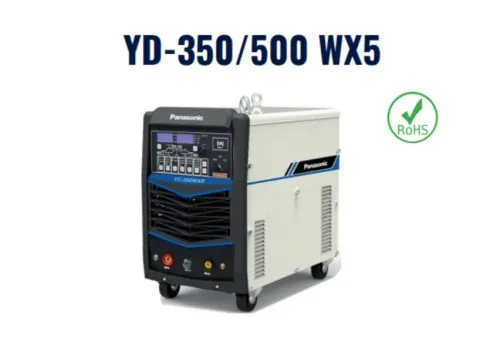
 | ac/dc tig welding machine Full Digital AC/DC TIG Welding Machine A variety of waveforms ensures superior welding for aluminum and a wide range of metals. View product → |
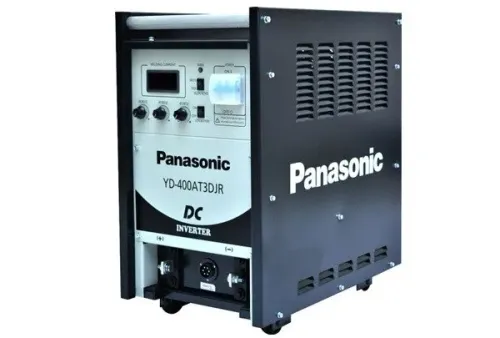
 | DC ARC Welding machine Inverter Controlled DC ARC Welding MODEL YD-400AT3 DJR INPUT SUPPLY 415 + - 20% PHASE / FREQUENCY THREE / 50-60 HZ POWER CONSUMPTION 17.6 KVA/16.7 KW WELDING CURRENT RANGE 20-400AMP... View product → |
Frequently asked questions
When should you use AC or DCEN in TIG welding?
Use AC for aluminium and magnesium because its oxide-cleaning action supports fusion. Use DCEN for steel, stainless steel, titanium, copper and nickel alloys when oxide cleaning is not required.
How do AC frequency and balance affect a TIG arc?
Higher AC frequency produces a tighter, more focused arc. Increasing electrode-negative time improves penetration and reduces tungsten heating, while increasing electrode-positive time strengthens oxide cleaning but adds heat to the tungsten.
Which digital TIG settings need to be recorded for repeatable welds?
Record polarity, peak and base current, AC frequency, AC balance, pulse frequency and duty cycle, pre-flow and post-flow, start and end currents, upslope and downslope times, and gas-flow rate.
How does torch geometry prevent TIG defects?
Keep the tungsten centred over the joint, maintain a consistent arc length, direct the torch at the travel angle specified by the procedure, and keep the gas cup close enough for full shielding without touching the work.