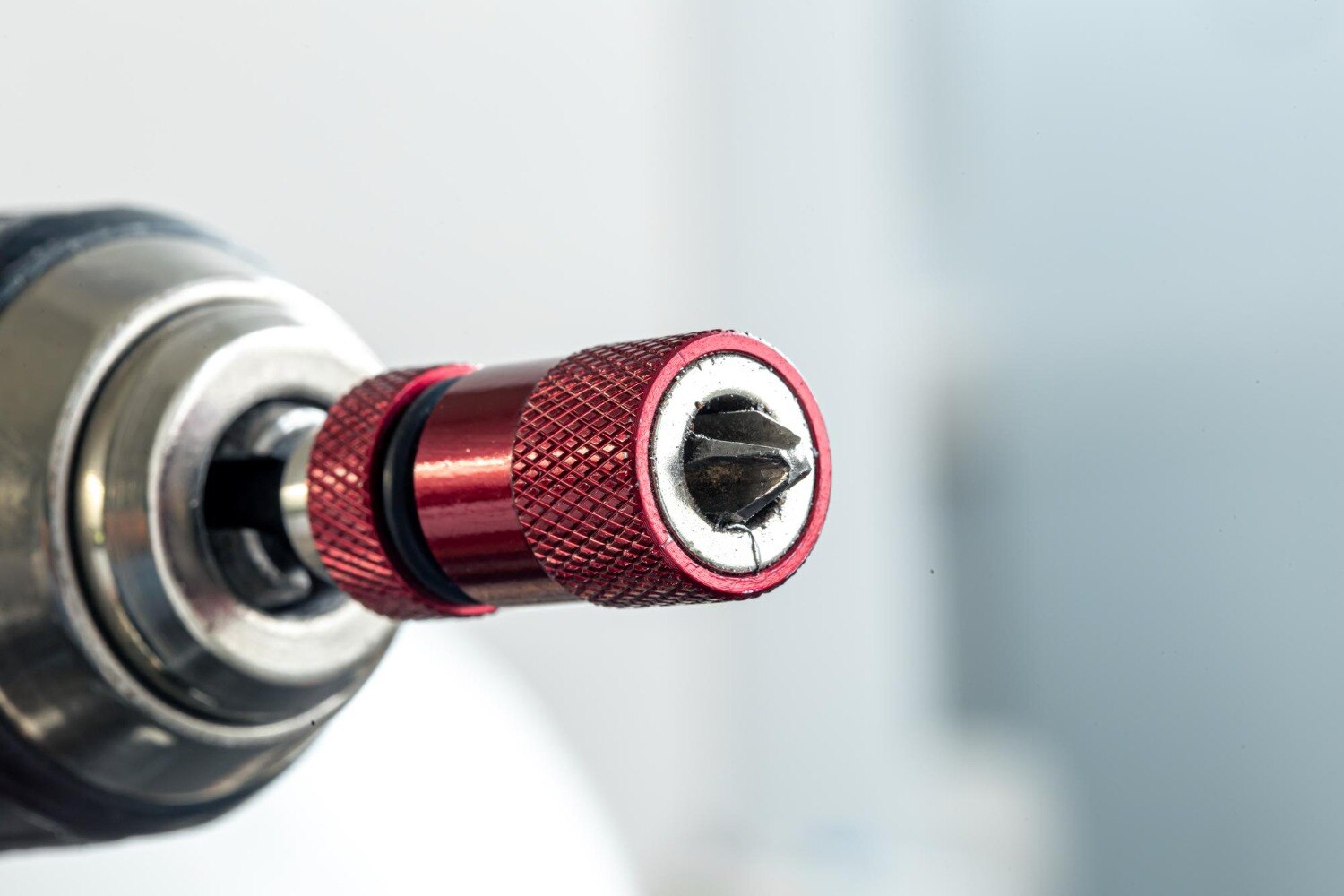
A conical nozzle can improve torch access in narrow fillets and recessed joints, but it is not a universal upgrade and cannot compensate for poor gas flow or an incompatible diffuser. By checking the torch, joint geometry, failure pattern and downtime cost, you can decide whether to buy one, trial it or stay with a wider nozzle.
Key takeaways
- Choose a conical nozzle when access, spatter, and shielding performance justify its cost.
- Match the nozzle to the Panasonic torch, diffuser, thread, and contact-tip geometry.
- Replace blocked or damaged nozzles and test gas flow before changing settings.
- Run a controlled trial on weld quality, downtime, cleaning time, and nozzle life.
What a conical nozzle does on a MIG or MAG torch
The nozzle sits at the front of a MIG or MAG torch, around the contact tip and diffuser, also called the gas distributor. It may slide over or thread onto the diffuser and is held by a retaining nut, collar or snap ring.
Insulating parts keep the metal nozzle electrically isolated from the live tip and torch neck.
A conical nozzle for welding directs shielding gas around the arc, shields the contact tip and diffuser from spatter, and gives you a clearer view and better access to the joint. Its narrow mouth reaches into corners, narrow fillets and recessed welds.
The same small opening leaves less clearance around the contact tip, so spatter can bridge the outlet, disturb gas coverage and force more frequent cleaning.
| Shape | Practical advantage | Main drawback |
|---|---|---|
| Conical | Reaches corners, narrow fillets and recessed welds; improves joint visibility | Less tip clearance; greater risk of spatter bridging the mouth |
| Cylindrical | Gives broad, even coverage and more tolerance around open joints | Bulkier near corners and can obstruct the operator’s view |
| Tapered | Balances access and clearance through a gradual reduction in bore | Performance depends on the exact taper and diffuser pairing |
| Straight | Maintains a constant opening and predictable clearance | Offers less access than a narrow conical design |
Nozzle shape does not increase penetration or deposition rate. Current, voltage, wire size, travel speed, joint preparation and shielding-gas settings control those results. Choose the shape for access, gas protection and spatter tolerance, not for extra welding output.
When a conical nozzle is worth the cost in a Hyderabad workshop
A conical nozzle is worth buying when narrow access cuts torch-positioning time, the installed Panasonic torch is designed for it, or a bulky cylindrical nozzle is slowing work on recessed joints. The gain comes from access, not from higher penetration or deposition.
Use a wider nozzle instead for open fillets and butt welds, high-spatter short-circuit welding, frequent torch collisions, or operators who need more clearance around the contact tip. Its larger opening gives spatter more room before it bridges the outlet and tolerates rough handling better.
Calculate the workshop result from actual operating conditions:
- Weld volume: count joints or arc-on hours where improved access saves positioning time.
- Spatter level and transfer mode: short-circuit work can consume a narrow nozzle faster than pulsed transfer.
- Duty cycle, wire, gas and current: these affect heat, deposits and service life.
- Replacement frequency: record nozzle changes per shift rather than accepting a fixed interval.
- Rejected welds: include porosity, inadequate access and rework linked to poor nozzle condition.
- Technician time: include cleaning, inspection, fitting and troubleshooting.
- Emergency freight and cell downtime: price the production loss when the correct nozzle is unavailable in Hyderabad.
There is no defensible universal replacement interval. Replace the nozzle when its condition affects gas coverage, access or weld quality; service life depends on transfer mode, wire, gas, current, collision frequency and cleaning practice.
Buy the conical design when measured access savings exceed those costs. Stay with a cylindrical or wider design when clearance, spatter tolerance and collision resistance matter more.
How to verify the correct Panasonic nozzle before ordering
Before ordering, verify the complete nozzle-to-torch combination; a Panasonic label does not prove interchangeability.
- Exact torch or gun model, plus the robot model where applicable
- Panasonic part number and supplier part-number traceability
- Nozzle thread or seating arrangement
- Nozzle length, bore and outside diameter
- Contact-tip position and required stick-out
- Diffuser or gas-distributor type
- Retaining hardware and insulating components
Photograph the installed torch from the side and front, including the nozzle, contact tip and neck. If markings are missing, compare the removed nozzle against a dimensional drawing or catalogue reference, not against appearance alone.
| Evidence | Confirms | Does not confirm |
|---|---|---|
| Part number and drawing | Correct geometry and revision | A Panasonic label alone |
| Thread or seating match | Mechanical fit and gas sealing | Matching the outside diameter |
| Tip and diffuser match | Correct alignment and shielding | Buying a “Panasonic-type” item |
A nozzle that slides onto the torch can still leave the contact tip too far inside, sit off-centre or leak shielding gas. Check the nozzle, contact tip, diffuser, insulation and retaining parts as one consumable set.
When evaluating Panasonic spare parts in Hyderabad, ask Weld Tech Corporation for traceability, dimensional confirmation and one trial piece fitted to your installed torch. The same checks apply to any industrial welding spare parts supplier comparing a Panasonic conical nozzle in Hyderabad with an unverified substitute.
Related product
 | Welding Spare Parts We are Manufacturer, Distributor, Supplier of Welding Spare Parts View product → |
How to replace the nozzle and diagnose poor shielding
A safe welding nozzle replacement starts with isolation, not with twisting the hot nozzle.
- Switch off welding power, close the shielding-gas supply, and allow the torch to cool completely.
- Remove the old nozzle by hand or with the correct tool; do not load the torch neck sideways or force a seized part.
- Inspect the diffuser or gas distributor, contact tip, insulation, threads, and nozzle seating face. Remove spatter without damaging the gas outlets.
- Fit the specified nozzle and tighten it to the torch manufacturer’s instruction. Confirm that it seats squarely and that the contact tip remains concentric with the bore.
- Test gas coverage with a short trigger run or approved flow check before releasing the torch for production. Look for an even gas discharge and listen for leaks.
Replace the nozzle if you find:
- A distorted or ovalised mouth
- Cracks or burn damage
- Blocked gas outlets
- Spatter bridging the outlet
- Loose threads
- A nozzle that no longer sits concentrically
Do not reshape it with pliers or grinding tools; altered geometry can create turbulence while appearing serviceable.
For porosity or an unstable arc, inspect the nozzle alongside the regulator, hose, solenoid, torch connection, diffuser, and nozzle seat. A cylinder flowmeter reading does not prove torch-end flow. If gas delivery is sound, check wire, liner, drive rolls, contact-tip wear, polarity, ground connection, cables, and machine settings; those faults point away from the nozzle.
A trial-and-standardisation test for the final buying decision
Trial one or two Panasonic conical nozzles on the actual torch before ordering bulk stock. Compare bore finish, insulation, dimensions, seating depth, contact-tip alignment, gas coverage, spatter accumulation, access to the target joint, and hours or shifts before replacement. Inspect the supplier’s part-number traceability, not just the appearance of a Panasonic conical nozzle in Hyderabad.
Record each result against the current nozzle:
- Rejected welds and visible porosity
- Cleaning interventions and minutes spent
- Nozzle changes, replacement hours or shifts
- Torch-related downtime and emergency stoppages
- Spatter at the bore, tip and diffuser
- Joint access and operator repositioning time
For robotic systems, run collision checks, verify the nozzle-change routine, and confirm TCP or tool-centre-point accuracy. A different nozzle length or seating depth changes torch geometry and can shift the weld path.
| Acceptance check | Pass rule | Reject trigger |
|---|---|---|
| Fit and dimensions | Seats squarely; tip remains concentric | Loose, tilted or mismatched seating |
| Weld quality | No increase in rejected welds or shielding faults | Porosity, unstable arc or poor coverage |
| Operating cost | Lower total cost than the current nozzle | More cleaning, changes or downtime |
| Robot readiness | Collision-free and TCP confirmed | Contact risk or altered tool point |
Buy the conical nozzle when access or an approved torch design produces measurable value. Stay with a cylindrical or wider design when clearance and spatter tolerance matter more.
Frequently asked questions
What does a conical nozzle do on a MIG or MAG torch?
It directs shielding gas around the contact tip and arc, helping protect the weld pool from atmospheric contamination.
When is a Panasonic conical nozzle worth buying in Hyderabad?
It is worth testing when your workshop faces frequent spatter, restricted access, nozzle damage, or inconsistent shielding that a different nozzle shape could address.
How do you verify the correct Panasonic nozzle before ordering?
Check the torch model, diffuser or gas-distributor design, mounting method, thread or bore dimensions, contact-tip clearance, and the supplier's part reference.
How do you diagnose poor shielding after replacing a welding nozzle?
Inspect the nozzle for spatter or dents, confirm it is seated correctly, check gas-hose connections and flow, and look for drafts or leaks around the torch.
How can a workshop test whether a conical nozzle is worth standardising?
Compare it with the current nozzle using the same welding settings, recording weld defects, cleaning time, nozzle life, gas use, and unplanned stoppages.