
The lowest daily rental rate is not always the lowest project cost: transport, accessories, power limitations, downtime and consumables can change the result. You will be able to compare renting with buying, repair and subcontracting, select a machine that fits the work, verify site readiness, and accept and return the equipment with fewer surprises.
Key takeaways
- Compare total rental cost per productive hour, not the daily rate.
- Match the machine to process, material, thickness, duty cycle and output.
- Confirm site power, ventilation, access, grounding and cable length before delivery.
- List accessories, consumables, damage terms and return checks in the rental agreement.
When Does Renting Cost Less Than Buying, Repairing or Subcontracting?
Calculate the welding machine rental cost per productive hour, then compare it with the alternatives for the same usable output. Total rental cost divided by productive welding hours is the key figure, not the advertised daily rate.
Add these rental-related costs:
- Hire charge, minimum-period charge, tax and extension or overtime fees
- Delivery, collection, installation and damage-waiver charges
- Shielding gas, electrodes, wire, cleaning and replacement of lost accessories
- Downtime caused by a failed machine or delayed replacement
Exclude a refundable deposit from the final cost. Include it if the agreement allows the supplier to retain it. Divide the result by hours when the machine is powered, set up and actually welding.
| Option | Calculation | Include |
|---|---|---|
| Rent | Rental total ÷ productive hours | Fees, consumables, transport and downtime |
| Buy | (Purchase price − resale value) ÷ expected project hours | Finance, maintenance, storage and idle time |
| Repair | Repair invoice ÷ recovered productive hours | Parts, testing, transport and waiting time |
| Subcontract | Welding subcontractor cost ÷ accepted output | Mobilisation, supervision, inspection and rework |
For rent versus buy welding machine decisions, renting usually wins when the job is short, uncertain or needs a specialised process. Buying becomes stronger when repeated projects keep the machine productive and spread ownership costs over many hours.
For repair versus rental, compare the repair quote and turnaround delay with immediate rental. Request measured output under load, safety-test results, error codes and calibration status; “serviced” alone does not prove usable performance.
How Do You Match the Machine to the Welding Job?
Start with the welding process, not the machine’s advertised amperage. Match electrode or wire diameter, base metal, thickness, polarity, input voltage and available phase power before choosing a rental unit.
| Machine capacity | Practical fit | Accessories and workload check |
|---|---|---|
| 250 A welding machine | SMAW repairs, light fabrication and thinner sections | Electrode holder, work clamp and suitable leads; confirm the electrode diameter and duty cycle cover your planned weld length |
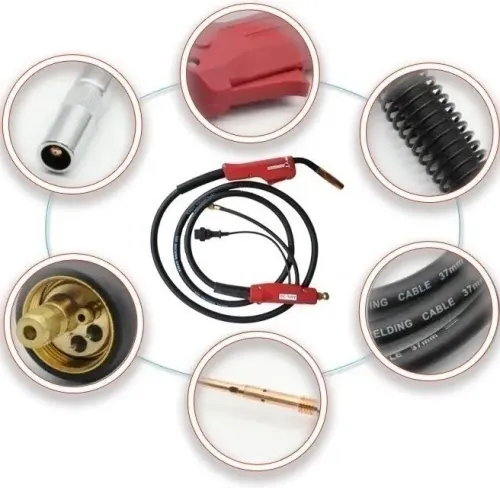
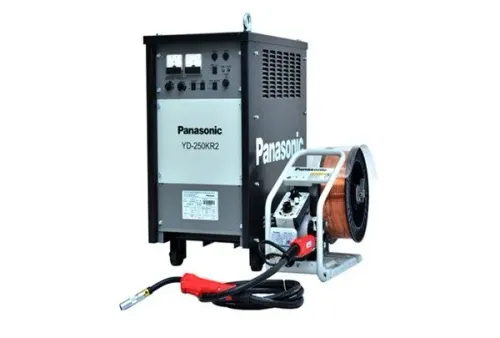
| 350 A welding machine | Heavier SMAW work, moderate FCAW or GMAW fabrication | Add the correct wire feeder, gun, liner, drive rollers, shielding-gas regulator or flux system; check continuous operating time |
| 400 A welding machine | Thick sections and longer production welds | Verify feeder compatibility, cable size, cooling requirements and duty cycle at your actual output, not the maximum rating |
| 500 A welding machine | High-deposition FCAW or GMAW and demanding multi-shift work | Budget for a heavy-duty feeder, water-cooled torch where specified, larger cables, gas equipment and adequate generator or mains capacity |
For GTAW, select a machine with the required high-frequency start, pulse controls, torch, foot pedal, shielding-gas flowmeter and water cooler if the torch requires one. A unit suited to SMAW does not automatically support stable wire feeding or high-duty-cycle production.
Estimate productive welding hours, arc-on time and rest periods. A 350 A machine that handles short repairs can overheat or trip its thermal protection during continuous fabrication. Test the rented machine with its actual torch, feeder, cables, clamp and consumables before acceptance; power-on status alone proves little.
Can Your Site Power and Work Area Support the Rented Machine?
Measure the site supply and work area before accepting the machine. A rating in amperes is not enough: confirm the measured voltage, phase, breaker capacity, earthing arrangement, cable route, ventilation and available space against the rental specification.
1. Record voltage and phase at the connection point, not only on the distribution board. A three-phase 415 V welding machine is not automatically suitable for 230 V, 208 V, 460 V or single-phase power; input current, fusing and conductor size change with the supply.
2. Match the breaker, plug, isolator and supply conductors to the machine’s input requirements. If you need a generator for welding machine use, check its continuous output, phase, voltage regulation and starting capacity; an undersized generator can trip or produce an unstable arc.
3. Inspect electrode and work leads for correct length, conductor cross-section, sound lugs and undamaged insulation. Calculate welding cable voltage drop across the full circuit, including the work-return path; extending only the electrode lead will not fix a small or poorly connected return lead.
4. Read the welding machine duty cycle at the stated current and a 10-minute period. A 60% rating means about six minutes welding and four minutes cooling, not continuous output; heat, low input voltage and blocked airflow reduce that margin.
5. Function-test the actual accessories: polarity, process mode, wire feed, remote, fan, gas solenoid, contactor, earth-return continuity and cable insulation. Ground the machine frame and exposed conductive parts through the supply system; the work clamp is not a substitute.
What Should the Rental Enquiry, Handover and Return Include?
Give the supplier your process, base metal, thickness, electrode or wire diameter, required output, input voltage and phase, site location, cable lengths, rental dates, delivery or collection preference, and accessories required.
Ask the quotation to separate machine hire, rental deposit, transport, consumables, gas, cleaning, damage waiver, operator charges, taxes, minimum hire period, extensions, late return and repair downtime.
Use this welding machine inspection checklist at dispatch and acceptance:
- Record the make, model, serial number, hour-meter reading, service date, error codes, calibration or verification status, and photographs of every side.
- Function-test the machine with its actual leads, torch, feeder, remote, earth clamp and gas connection: select the correct process and polarity, run wire feed, confirm the fan and gas solenoid, check earth-return continuity and inspect cable insulation.
- Measure output under load and record the result; a machine that powers on can still have a failed contactor, unstable wire feed or high-resistance work connection.
- At installation, record measured site voltage and phase, cable connections, gas leaks, cooling flow where fitted, test-weld results and any alarms. Weld Tech Corporation can provide a useful handover record when these readings accompany the equipment, rather than relying on a “serviced” sticker.
At collection, photograph the machine and accessories, record operating hours and reported faults, and obtain both parties’ signatures. At return, count every item, note cleanliness, new dents, burnt cables, missing parts and unresolved faults; complete the rental damage inspection against the dispatch photographs before releasing or disputing the deposit.
Which Accessories, Consumables and Safety Controls Affect the Real Cost?
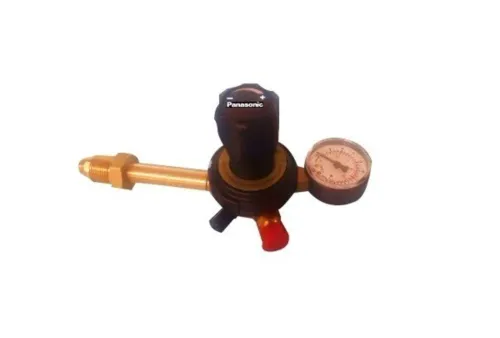
The real cost is the price of a productive welding hour, not the machine’s daily rate. Include every item that lets the selected process run continuously: a shielding gas regulator and flowmeter, correct hose and fittings, cylinder restraint, wind screen, electrode holder or torch, work clamp, leads, and suitable extension cables.
Excessive gas flow wastes cylinders and can pull air into the weld; outdoor drafts need a screen.
- For SMAW, price low-hydrogen electrodes, sealed storage, exposure tracking, and rebaking or reconditioning when the electrode manufacturer and welding procedure require it. Moisture increases hydrogen-cracking risk in susceptible steels and restrained joints.
- For high-current or long-duty work, include a water-cooled torch, chiller, coolant, hoses, and leak check. A failed cooling circuit can stop production and damage the torch.
- Function-test the machine with these accessories: polarity, contactor, wire feed, gas solenoid, fan, remote control, earth-return continuity, cable insulation, and work-clamp connection.
- Confirm machine-frame grounding and supply grounding; the work clamp does not replace either. Provide screens, welding curtains, ventilation, suitable extinguishers, combustible-material protection, and a hot-work fire watch where sparks or heat can reach hidden or adjacent combustibles.
| Package | Include | Cost if omitted |
|---|---|---|
| SMAW | Holder, leads, clamp, low-hydrogen electrodes, storage | Rejected welds, cracking, rework |
| GMAW or FCAW | Regulator, gas hose, wire, liner, tips, nozzle | Gas loss, unstable feeding, downtime |
| High-duty torch | Chiller, coolant, hoses, leak test | Overheating and torch failure |
Frequently asked questions
When does renting a welding machine cost less than buying?
Renting can cost less when the project is short, machine utilisation is low, or buying would add financing, maintenance, storage and depreciation costs. Compare total rental cost per productive hour with ownership, repair and subcontracting costs for the same usable output.
How do you match a rented welding machine to the job?
Specify the welding process, base material, thickness, joint position, required output, duty cycle and available shielding gas. Then confirm the machine’s amperage range, wire or electrode compatibility and torch or cable connection.
What site conditions must be checked before renting?
Check the supply voltage, phase, breaker capacity, generator compatibility, earthing, ventilation, lighting, floor space and access route. Confirm that the cable and hose lengths reach the work area without unsafe extensions.
What belongs in a welding machine rental handover document?
Record the machine model, serial number, condition, accessories, meter readings, cables, torches, regulators, consumables, safety controls, rental period, damage terms and return condition. Photograph existing damage before accepting delivery.
Which extras can increase the real cost of a welding machine rental?
Account for delivery, pickup, setup, gas cylinders, regulators, hoses, torches, earth clamps, wire feeders, electrodes, wire, contact tips, nozzles, grinding supplies, fuel and operator safety equipment. Ask whether consumables are included or billed separately.