Precision fabrication depends on controlled heat input, accurate bead placement, repeatable penetration and dimensional stability—not simply a machine’s maximum amperage. You will be able to match TIG or MIG to the material and joint, specify the controls that matter, test equipment with representative coupons and identify when plasma cutting must be evaluated as a separate process.
Key takeaways
- Use TIG for thin sections, root passes and visible precision welds.
- Choose MIG for faster, repeatable production on suitable joint designs.
- Specify pulse controls, heat-input limits and dimensional acceptance criteria.
- Prove performance with test welds, measurements and documented machine settings.
What counts as precision, and can TIG or MIG achieve it?
Precision means controlling heat input, bead placement, penetration, distortion, repeatability and dimensional tolerance—not merely producing a shiny weld. TIG usually creates the smallest weld pool and gives the tightest manual control, making it suited to thin sections, root passes, heat-sensitive assemblies and visible welds.
MIG deposits filler faster, so it usually wins on long seams and repeated production runs.
A precision welding machine cannot compensate for poor process control. Check these factors before blaming the power source:
- Match joint fit-up and root gap to the welding procedure.
- Hold torch angle, travel speed and electrode or wire stick-out consistently.
- Place the work clamp close enough for a stable current path.
- Maintain shielding coverage without drafts or excessive gas turbulence.
- Remove oil, oxide, moisture and other contamination before welding.
Industrial TIG welding equipment can deliver excellent results, but the operator, fixture and preparation determine whether that capability reaches the joint. The same applies to MIG.
A clean appearance does not prove compliance with a welding procedure specification. Depending on the risk and specification, acceptance can include visual inspection, dimensional checks, macro-etching, leak testing, dye penetrant testing or radiography. ISO 3834 addresses documented quality requirements for fusion welding; ISO 9606-1 covers qualification testing of welders for fusion welding of steels.
Which process suits your material, joint and production pattern?
Choose TIG for thin sheet, stainless steel, dissimilar-metal joints, tack welding and visible welds where pool control and appearance matter more than deposition rate. Choose MIG for long seams and repetitive production, where speed and consistent wire feeding outweigh the tighter manual control of TIG.
| Option | Control and speed | Access, setup cost and skill |
|---|---|---|
| Manual TIG | Highest pool control; slow | Excellent access; low equipment setup, high operator skill |
| Standard non-pulsed TIG | Stable, precise heat; slow | Suits visible joints and thin sections; skilled setup |
| Short-circuit MIG | Fast, but too little current causes cold lap, spatter and lack of fusion | Good positional access; moderate setup and skill |
| Pulse MIG | Lower average heat and spatter than spray transfer; fast | Requires correct gas, wire diameter and waveform tuning |
| Robotic welding | Repeatable and fast | High fixture, programming and capital cost; limited access |
| Resistance welding | Extremely fast for overlapping sheet | Needs electrode access and dedicated tooling |
| Laser welding | Narrow heat-affected zone and high speed | Highest setup cost; strict fit-up and safety controls |
For aluminium or magnesium, a precision welding machine normally needs AC. Electrode-negative increases penetration; electrode-positive removes oxide but heats tungsten. AC balance shifts cleaning versus penetration, while frequency affects arc width and tungsten loading.
For stainless and mild steel, use the procedure’s specified DC polarity, clean dedicated tools, correct filler and preheat only when required. Restrain distortion with fit-up, clamps and balanced weld sequencing.
Pulsed TIG controls peak and background current on thin or heat-sensitive work; it does not guarantee quality. Pulse MIG needs a compatible power source and careful tuning, unlike ordinary short-circuit MIG. Industrial tig welding equipment still depends on joint fit-up, travel speed and operator control.
Which controls make a low-heat weld repeatable?
Repeatable low-heat welding starts with a stable minimum current: set it just above the point where the TIG arc wanders or extinguishes, then tune peak current, background current, pulse frequency and pulse duty cycle to thickness, joint gap and travel speed.
An IGBT controlled DC pulse TIG welding power source is an inverter architecture, not a precision guarantee. Incorrect settings cause undercut, overlap, incomplete fusion or visible banding; control arc-start behaviour, crater fill and torch cooling as well.
| Control | TIG | MIG |
|---|---|---|
| Heat and transfer | Set peak/background current and pulse timing for the joint | Select short-circuit or pulse transfer; pulse MIG can reduce average heat and spatter |
| Arc and feed | Control start response, travel speed and torch angle | Stabilise wire feed, stick-out, burnback, contact tip, liner, drive-roll pressure and wire diameter |
| Shielding | Use sufficient argon without turbulence | Match argon-rich gas to pulse or spray transfer and check regulator, hose and torch condition |
Do not lower short-circuit MIG current until transfer becomes unstable: cold lap, lack of fusion and spatter are the result. Prevent drafts and excessive TIG gas flow, which draws air into the shield.
Keep joint fit-up, work-clamp placement and fixture restraint consistent, clean surfaces with dedicated tools, and separate stainless or aluminium preparation equipment from carbon-steel contamination. Operator torch angle and travel speed still decide whether the settings repeat.
How do you specify and prove a machine before purchase?
Reject any precision welding machine whose brochure gives only maximum amperage. Compare the usable low-current range, current resolution, arc-start repeatability and controls against your welding procedure.
| Specification | Ask for | Why it matters |
|---|---|---|
| Control | Minimum stable current, maximum current, current resolution, pulse-frequency and pulse-duty ranges, waveform controls, arc-start repeatability | Reveals whether thin sections and heat-sensitive joints are controllable |
| MIG system | Wire size, wire-feed resolution, compatible torches, feeders, remotes, software and material programmes | Prevents an unsuitable feeder or unrepeatable wire delivery |
| Thermal capacity | Duty cycle at your working amperage and ambient temperature, plus thermal derating | A 60% rating at a different load or temperature can cause stoppages |
| Installation | Three-phase 415 V input, IP21S enclosure, 136 kg weight, floor protection and mobility requirements | Determines electrical work, placement, lifting and thermal planning |
Run a coupon using the actual alloy, thickness, joint design, fit-up, filler metal, shielding gas, gas-flow setting, travel speed and production position. A showroom arc proves little.
Accept the machine only against recorded bead dimensions, penetration, macro-etch results, porosity, distortion, leak performance, dimensional tolerance and repeatability across operators or runs.
IEC 60974 conformity addresses specified electrical and welding-equipment safety requirements; it does not prove your weld procedure, low-current stability or finished-weld acceptance. Request inspection, calibration, maintenance and repair records. An IGBT controlled DC pulse TIG welding power source remains an inverter architecture, not proof of precision.
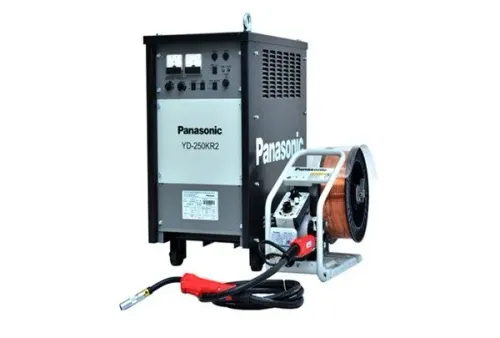
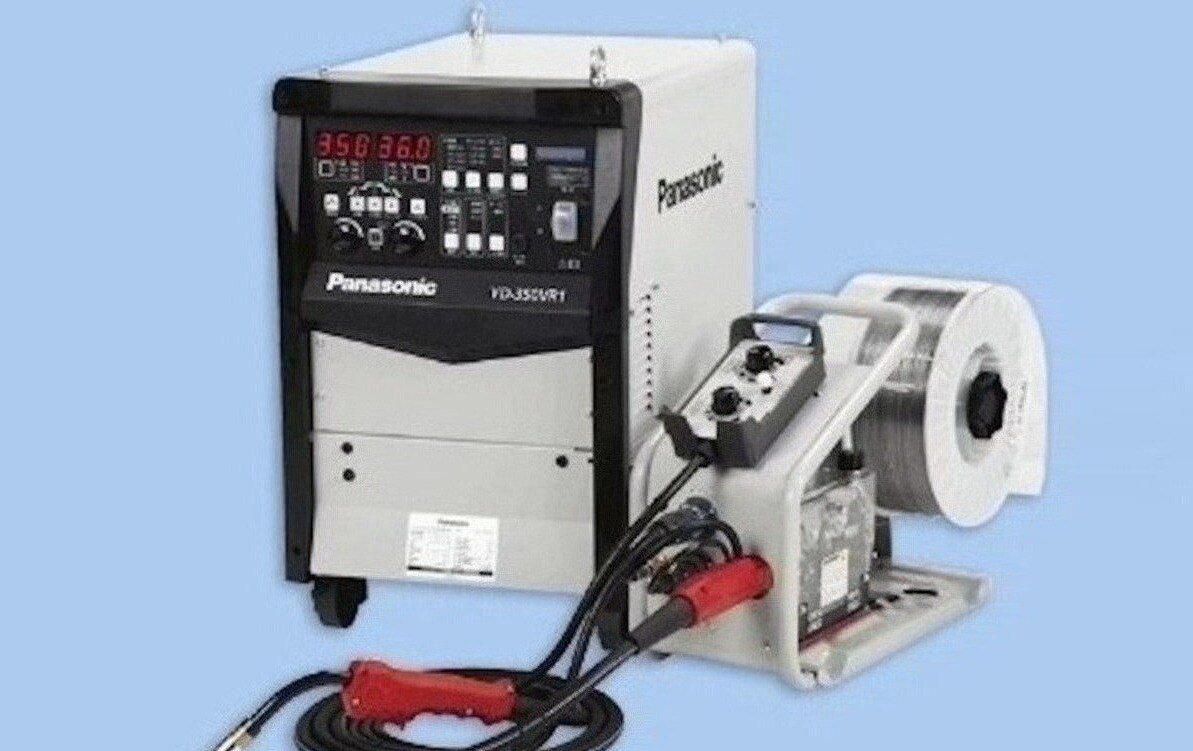
Weld Tech Corporation can help compare Panasonic systems, compatible torches, feeders and consumables through a rental trial on representative coupons.
Related products
 | ac/dc tig welding machine Full Digital AC/DC TIG Welding Machine A variety of waveforms ensures superior welding for aluminum and a wide range of metals. View product → |
 | MAG Welding Machines Full Digital Controlled Pulse MIG/MAG Welding Machine Root Welding control technology IBC (The Arc Ignition & Burn Back Control) Pulse Constant Arc Length Control, ALC (Arc Length Consistence) HL-Pulse... View product → |
How do consumables, plasma cutting and running conditions affect precision?
TIG and MIG welding machines with plasma cutting consumables do not become plasma cutters. Plasma cutting requires a dedicated, or explicitly certified multiprocess, power source, torch, gas-control system and consumable set.
Plasma cutting consumables for fabrication are planned wear items, not optional accessories. Electrode, nozzle, shield cap, swirl ring and retaining-part wear reduce arc constriction and disturb gas flow, causing angled kerfs, dross, poor holes and dimensional drift.
Amperage, travel speed, standoff, gas pressure, gas purity and plate thickness determine whether the cut remains accurate; a worn nozzle can hide underside bevel beneath an acceptable top edge.
- Price shielding gas, cylinder capacity, tungsten, filler rod, MIG wire, contact tips, liners and plasma nozzles against electricity, calibration, downtime and rework. Replace parts by measured wear and cut quality, not only when cutting stops.
- Check porosity for oil, moisture, leaks or gas turbulence; check arc wandering for damaged tungsten or a poor work clamp; check burn-through for excessive heat or poor fit-up.
- Treat unstable starts as setup or power-source faults, and excessive distortion as a heat-distribution or fixturing problem. Verify MIG liners, drive rolls and contact tips before blaming the power source.
- Provide ventilation and fume extraction, sound earthing, electrical protection, torch cooling and task-appropriate operator PPE before production begins.
Frequently asked questions
Can TIG and MIG welding machines handle precision fabrication work?
Yes. TIG offers tighter manual control and a smaller weld pool, while MIG suits repeatable production when joint design, wire feed and settings are controlled.
Which welding process suits different materials and production patterns?
Choose TIG for thin, heat-sensitive or highly visible work. Choose MIG when production speed, deposition rate and repeatability matter more than fine manual control.
Which machine controls make low-heat welding repeatable?
Look for stable arc control, pulse settings, adjustable peak and background current, controlled wire feed, gas pre-flow and post-flow, and stored programs.
How do you prove a precision welding machine before purchase?
Run representative test welds, record settings, inspect bead placement and penetration, measure distortion and dimensions, and compare results against your acceptance criteria.
How do consumables, plasma cutting and running conditions affect precision?
Match filler metal, tungsten, shielding gas and plasma cutting consumables to the material, then control cleanliness, gas flow, torch position, fit-up and electrical supply.
Related products
 | TIG Welding machine Panasonic TIG Welding Machines Model Number 300 TSP Welding Type TIG Welding Voltage 415V, +10% (Input Voltage) Output Current Range 5-300 A Brand Panasonic Frequency 50-60 Hz... View product → |
 | MIG Welding Machines Digital + Inverter IGBT-Controlled MIG/MAG Welding Machine Available in 250 AMP, 400 AMP & 500 AMP options Energy Saving & High Reliability Soft Arc (Thin Metal) & Hard Arc (Thick Metal) Characterisitcs... View product → |
 | MIG Welding Machines Fully Thyristorised MIG/MAG Welding System Available in 250 AMP, 400 AMP & 500 AMP options Six phase thyristorised system gives ripple-free DC output superior quality welding Synergic mode... View product → |
 | TIG Welding machine IGBT Controlled DC Pulse TIG Welding Power Source Suitable for TIG/MMA Welding Stable current output even at 5 AMP Sheet thickness even 0.5mm weldable Pulse Frequency upto 500 Hz Digital Display of... View product → |