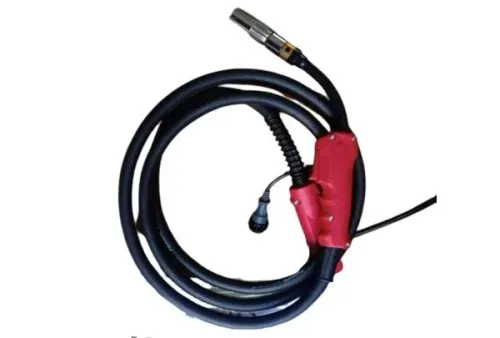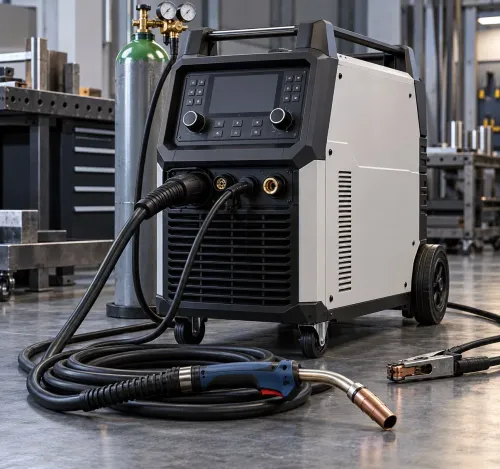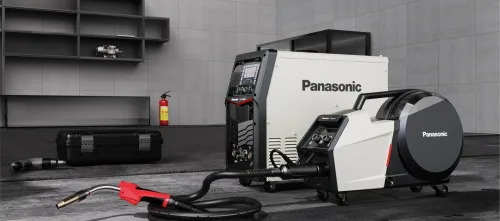
A conical nozzle affects shielding-gas coverage, joint access, arc visibility and the amount of rework caused by porosity or spatter. By the end, you will be able to confirm torch compatibility, choose the right nozzle geometry and judge whether a quoted part is economical for your workshop.
Key takeaways
- Match the nozzle to torch model, thread, seating and contact-tip position.
- Choose bore size around joint access, wire size and required gas flow.
- Clean spatter before it distorts gas flow or narrows the opening.
- Compare price with service life, downtime and local replacement availability.
How a conical nozzle controls gas coverage and joint access
A conical nozzle narrows the gas path around the contact tip and directs shielding gas toward the arc and molten pool in MIG and MAG welding. That focused opening suits fillet welds, narrow grooves and restricted joints, where a wide nozzle cannot enter easily.
For a welding nozzle for industrial workshop use, nozzle-to-work distance and contact-tip stick-out matter as much as the shape.
| Option | Gas and access behaviour | Best application |
|---|---|---|
| Conical | Focused coverage, compact profile, less clearance and faster spatter blockage | Fillets, narrow grooves and restricted joints |
| Cylindrical | More uniform clearance and a wider field of view | General welding where access and visibility matter |
| Tapered | Balances a narrower nose with more internal room than a conical design | Mixed-access joints and moderate deposition |
| Gas diffuser design | Breaks up and distributes gas before it exits the nozzle; performance depends on diffuser and nozzle geometry | Controlled coverage where the torch and procedure specify a diffuser |
A wider cylindrical or compatible wide-mouth nozzle can be the better choice for spray transfer and high-deposition welding because it gives the operator more visibility and keeps the nozzle clear of a large weld pool. Excessive stand-off weakens coverage; too little lets the nozzle touch the pool, workpiece or spatter.
A conical nozzle cannot prevent porosity when any of these conditions exists:
- A gas leak, draft or obstructed bore disturbs shielding.
- Incorrect or excessive flow exposes the arc or creates turbulence that draws in air.
- Contaminated steel releases gas into the weld pool.
- Spatter changes the opening or the nozzle sits too far from the joint.
Check flow at the torch when practical, and clean the nozzle without enlarging its bore.
Which torch details confirm a Panasonic nozzle will fit
Do not order from a photograph or the Panasonic name alone. Confirm the complete torch assembly: the Panasonic torch or robot model, gun-neck connection, nozzle thread or push-fit mounting method, gas diffuser thread, and contact-tip holder.
Request these details before approving a panasonic conical nozzle in ahmedabad:
- Manufacturer part number and whether it is Panasonic-labeled or third-party compatible
- Nozzle length, bore or internal diameter, and material
- Contact-tip holder specification and the intended diffuser
- Drawing or dimensional sheet showing the mounting face and internal profile
- Compatible torch model, country of origin, stock status, and return terms
Original and compatible parts are not interchangeable by branding alone.
| Part type | What to verify | Ordering decision |
|---|---|---|
| Panasonic-labeled consumable | Part number, torch model, mounting interface, bore and length match the assembly | Accept only after dimensional confirmation |
| Third-party compatible nozzle | Supplier identifies the exact Panasonic assembly and provides dimensional data | Trial before production use |
| Unidentified nozzle | Photograph or “fits Panasonic” claim without thread, diffuser or tip details | Reject |
Fit the nozzle by hand before welding. It must seat fully without wobble, leave no visible gas path at the mounting face, and clear the diffuser and contact tip.
The contact tip must remain centred in the bore and finish at the specified position within the nozzle plane; an off-centre or recessed tip disturbs shielding and arc access. Check gas leakage and clearance on the actual torch, because a nominally matching part can still stop short, foul the neck, or expose the tip incorrectly.
How to select bore size for wire, gas flow and joint geometry
Select the bore and nozzle length from wire diameter, amperage, transfer mode, shielding-gas type, joint access and the welding procedure—not from outside appearance. For a welding nozzle for industrial workshop use, confirm that the opening gives the arc and pool adequate gas coverage without striking the joint.
| Transfer mode | Bore and length choice | Main check |
|---|---|---|
| Short-circuit | Use a compact bore and length that fit the joint and preserve visibility | Keep the tip centred and maintain the procedure’s stand-off |
| Spray or high deposition | Use a larger opening and sufficient length for the arc, pool and higher gas demand | Prevent the nozzle from restricting the spray plume |
| Narrow groove or fillet | Use the smallest bore that clears the wire, tip and joint walls | Check access without touching the work or pool |
Match the Panasonic conical nozzle to the complete torch assembly, including diffuser, contact-tip holder and mounting method. Wire size alone does not prove compatibility.
Set nozzle-to-work distance and contact-tip stick-out from the qualified procedure. Excessive stand-off weakens shielding and invites porosity; too little clearance lets the nozzle touch the pool, workpiece or spatter.
Set gas flow for the torch geometry and gas type, then check it at the torch with a flowmeter when practical. Too little flow exposes the arc. Too much flow creates turbulence that can draw air into the shielding envelope, so the highest reading is not the safest setting.
When cleaning or replacing the nozzle protects weld quality
Replace the nozzle when its bore is blocked, enlarged, oval or no longer concentric with the contact tip. Spatter buildup, dents, cracks, loose seating and gas leakage also justify replacement. A tip sitting off-centre or too far inside the nozzle reduces shielding coverage and makes the arc harder to see.
- Inspect after an arc strike, workpiece contact, robot collision or impact during programmed movement.
- Treat repeated cleaning as wear: it can alter the bore, seating face or diffuser threads even when the nozzle still looks usable.
- Replace a nozzle that leaves the contact tip visibly off-centre, allows movement at the mounting point or shows leakage around the seat.
- Check the nozzle-to-work distance; excessive stand-off weakens shielding, while too little invites contact with the pool, plate or spatter.
| Condition | Action | Likely consequence |
|---|---|---|
| Clean, round bore with light spatter | Brush or use a nozzle-cleaning tool gently; remove residue without forcing the tool | Restored arc visibility without changing gas coverage |
| Hardened spatter restricting the opening | Replace the nozzle if careful cleaning does not clear it | Obstructed flow, porosity, unstable arc and extra spatter |
| Enlarged bore, ovality, dent, crack or damaged seat | Replace; do not ream or scrape aggressively | Turbulent or leaking shielding, contact-tip damage and rework |
| Loose seating or off-centre tip | Stop welding and correct the fit or replace the nozzle | Uneven coverage, arc strikes and inconsistent bead placement |
A conical nozzle does not cure incorrect gas flow, drafts or contaminated steel. Confirm its condition alongside arc visibility, porosity, spatter rate and contact-tip wear; unexplained changes in any of these make replacement cheaper than repeated rework.
How to compare Panasonic nozzle price and workshop value in Ahmedabad
The lowest quote is not automatically the lowest-cost nozzle. A meaningful Panasonic nozzle price in Ahmedabad must identify the exact part number, bore, length, material, genuine or compatible construction, pack quantity, GST, freight, stock status and country of origin.
| Quotation item | Check before comparing | Why it changes value |
|---|---|---|
| Part and dimensions | Manufacturer part number, bore, length and drawing | Similar photographs can hide different fits |
| Construction | Genuine Panasonic or compatible; material specification | Variation can affect seating, wear and spatter life |
| Commercial terms | Pack quantity, GST, freight and country of origin | A low piece price can become expensive after delivery |
| Availability | Ready stock, lead time and return terms | Waiting for a replacement can stop production |
Ask each conical nozzle supplier in Ahmedabad for:
- Dimensional data or a drawing showing bore, length and mounting details
- The compatible Panasonic torch or robot model, gun-neck connection and diffuser or contact-tip holder
- Material specification, country of origin and whether the part is genuine or third-party compatible
- Available stock, delivery date, warranty and return terms for incorrect fit or damage
A photograph or “Panasonic compatible” label does not prove interchangeability. Weld Tech Corporation is one local supplier to consult for this specification-led comparison, but treat its quotation, or any supplier’s quotation, as unconfirmed until the nozzle seats correctly on your complete torch assembly.
Run a short production trial before approval. Check arc starts, gas leakage, bead consistency, spatter accumulation and the bore, seating face and concentricity after use. Compare the result per productive welding hour, including gas loss, rework, contact-tip damage and stoppage—not only the invoice price.
Related product
 | Welding Spare Parts We are Manufacturer, Distributor, Supplier of Welding Spare Parts View product → |
Frequently asked questions
How does a conical nozzle control gas coverage and joint access?
Its tapered bore directs shielding gas toward the arc and molten pool while fitting into fillet welds, narrow grooves and restricted joints. A damaged or heavily spattered bore disrupts coverage.
Which torch details confirm a Panasonic nozzle will fit?
Check the Panasonic torch model, nozzle mounting method, thread or push-fit dimensions, seating depth and contact-tip position. Do not rely on outside diameter alone.
How should you select conical nozzle bore size?
Select a bore that clears the contact tip and wire while entering the joint geometry. Balance the opening against wire size, shielding-gas flow and access; an undersized bore restricts coverage, while an oversized bore reduces access.
When should you clean or replace a welding nozzle?
Clean spatter when it narrows the bore, changes the gas path or touches the contact tip. Replace the nozzle when it is cracked, badly distorted, blocked or no longer seats concentrically.
How can you compare Panasonic nozzle price in Ahmedabad?
Compare the complete cost: unit price, expected service life, cleaning time, weld-repair risk, stock availability and delivery time. A conical nozzle supplier in Ahmedabad that confirms compatibility can reduce fitting errors and downtime.