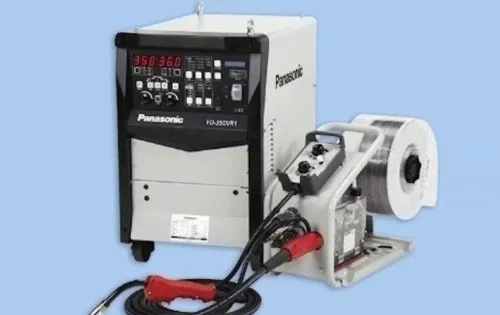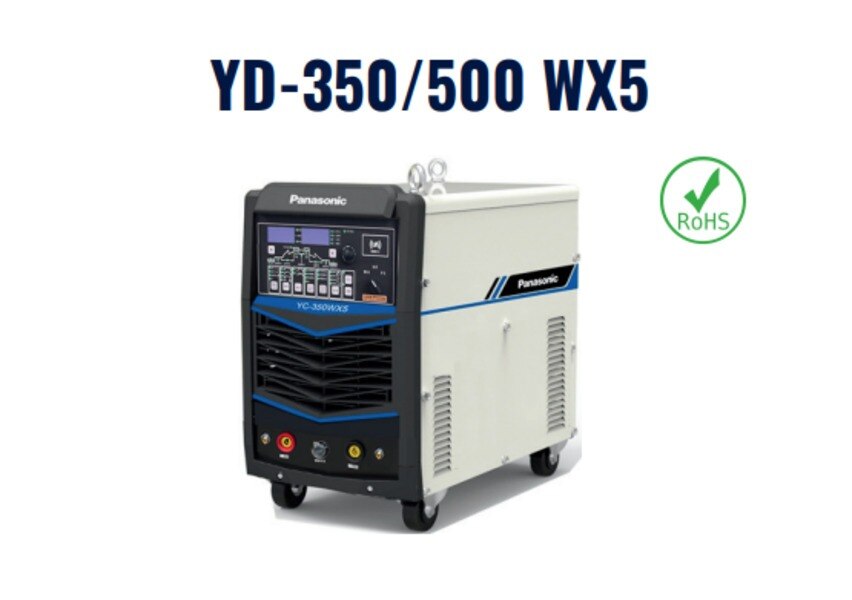
Heavy engineering welds demand more than a high amperage number: you must match the process, polarity, duty cycle, torch, shielding and power supply to the joint. By the end, you can decide where a Panasonic TIG inverter belongs in a production plan, where MIG/MAG, MMA or submerged arc welding is faster, and what to verify before buying or renting a machine.
Key takeaways
- Use TIG for clean, controlled roots, stainless pipe and non-ferrous joints.
- Match inverter output and duty cycle to thickness, alloy and production hours.
- Specify torch cooling, gas flow and tungsten setup before comparing machines.
- Trial the joint design and inspect weld quality before committing to production.
Where TIG earns its place in heavy engineering
The strongest tig inverter welding machine applications are high-integrity root passes, stainless-steel pipe, thin-to-medium sections, non-ferrous alloy joints and controlled repair welds. TIG gives you a clean, slag-free arc with low spatter, so root penetration and inspection access improve while post-weld cleaning falls.
Heavy engineering tig welding becomes expensive when TIG remains on the job for every pass. Compare deposition rate and arc-on time, not only the machine’s maximum amperage.
| Job or pass | Why TIG helps | Better production plan |
|---|---|---|
| Pressure-vessel or pipe root | Precise penetration and low inclusion risk | TIG root, then GMAW, SMAW or SAW fill and cap when the qualified procedure permits |
| Stainless pipe and heat-exchanger tubing | Clean welds protect corrosion performance | TIG for the joint, with controlled purge and filler selection |
| Aluminium fabrication | Good heat control and oxide management with AC TIG | TIG for critical joints; use a higher-deposition process for long, thick runs if qualified |
| Thick carbon-steel frame | TIG offers little productivity advantage on long welds | Use GMAW, FCAW, SMAW or SAW for most passes; reserve TIG for repairs or critical roots |
| Nickel-alloy or copper repair | Stable arc and precise heat input limit local damage | TIG where access and metallurgical control outweigh deposition speed |
For thick assemblies, combine TIG with a higher-deposition process after confirming the welding procedure specification, preheat and interpass limits, filler metals, inspection method and welder qualifications. ISO 15614-1 or ASME Section IX may govern the procedure, depending on the contract. A Panasonic inverter can support the plan; it does not replace that qualification.
Can the machine weld your material and joint design?
Material and polarity decide suitability before amperage does. Carbon steel, stainless steel, nickel alloys, titanium and copper use DC electrode-negative TIG; aluminium and magnesium require AC to break through their refractory oxide layer. A DC-only Panasonic TIG inverter cannot weld those aluminium or magnesium joints reliably, regardless of its advertised output.
| Material | Required TIG mode | Practical implication |
|---|---|---|
| Carbon steel, stainless, nickel, titanium | DCEN | High-integrity roots and controlled repair welds |
| Aluminium and magnesium | AC | Check AC balance, frequency and waveform controls |
| Copper | DCEN | Confirm current capacity, preheat and heat dissipation |
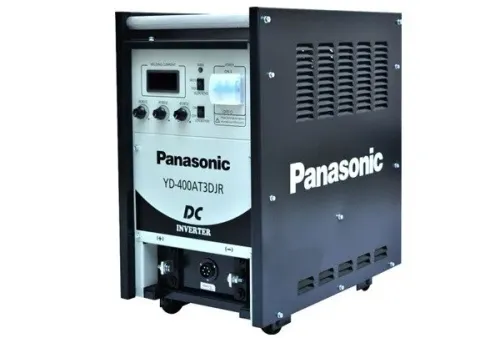
The YC-400TX3 must be checked by its exact nameplate and manual: it is a DC TIG model, not an AC/DC aluminium machine. Do not rely on the generic phrase “Panasonic TIG inverter” or assume every regional model has the same functions.
Match the current range to the joint, not just the thickest plate. The machine needs a stable low-current arc for thin tube or root work and enough sustained current for the specified wall thickness; a high maximum setting does not make TIG productive on thick fills.
Use GMAW, SMAW or SAW when deposition rate and arc-on time dominate the job.
Arc-start control affects contamination and access. High-frequency start protects tungsten-sensitive stainless, nickel and titanium from touch-start contamination; lift-arc is suitable where radio-frequency interference is restricted, but demands steadier operator control. For AC work, verify balance and frequency settings, then confirm the available 230 or 415 V, 50 Hz supply matches the exact model.
How to judge output, duty cycle and torch capacity
A 300 A nameplate does not mean 300 A continuously. Under the common ten-minute convention, a 60% duty cycle means six minutes welding at the stated current, followed by four minutes of cooling under test conditions.
- Match the rated current to your real weld schedule, not the maximum amperage. Compare duty cycle at the required output, input phase, input current and cooling method; a machine rated 250 A at 60% may overheat during repeated long seams.
- Treat current range as usable process capacity. Low-current stability matters for thin sheet and root work, while high current supports thicker joints; joint preparation, material thickness, travel speed and heat input still determine penetration.
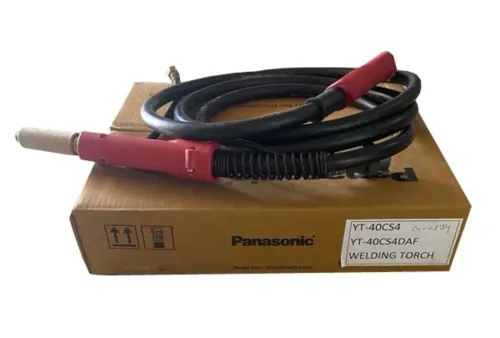
- Select the torch for the sustained amperage. Above roughly 200 A, or during long welds with large tungsten electrodes, use a water-cooled torch, cooler, hoses and adequate coolant flow. An air-cooled torch can become the thermal bottleneck before the power source reaches its rating.
- Verify the exact regional model rather than relying on the phrase panasonic tig inverter welding for machines. Check its 50 Hz input rating, 230/415 V compatibility, torch connection, consumable availability and calibration status.
Torch choice affects production time as well as comfort:
| Option | Practical limit | Equipment consequence |
|---|---|---|
| Air-cooled | Intermittent or lower-amperage welds | Torch can overheat during long runs |
| Water-cooled | Sustained high-amperage TIG | Requires cooler, hoses, coolant and flow checks |
Shielding gas and weld quality controls that decide the result
A contaminated tungsten can put inclusions through an otherwise sound heavy-engineering TIG weld. Use pure argon for most manual TIG work, normally around 8–15 L/min; set the actual flow by cup size, torch angle, joint access and draughts. Excessive flow creates turbulence and draws air into the arc.
| Control | Preferred choice | What it prevents | What to verify |
|---|---|---|---|
| Gas | Argon; helium blend only when the qualified procedure permits it | Porosity and unstable shielding | Cylinder identity, regulator setting, hose leaks and cup coverage |
| Purge | Argon back-purge for stainless steel, titanium, nickel alloys and corrosion-critical roots | Sugaring, oxidation and loss of corrosion resistance | Purge outlet, dam, flow stability and the procedure’s oxygen limit |
| Arc start | High-frequency start for contamination-sensitive work | Tungsten inclusions from contact starting | HF function, earth connection and radio-frequency restrictions |
| Alternative start | Lift-arc where HF is prohibited | Uncontrolled contamination from scratching | Controlled lift technique and clean work return |
Before striking, degrease the joint, remove mill scale and oxide, and use stainless-only brushes or abrasives. Keep filler wire, tungsten and gloves free of oil, copper and carbon-steel dust.
- Grind tungsten lengthwise, keep the point consistent and replace it after contact with the weld pool.
- Check purge and shielding gas before welding; a failed flowmeter or empty cylinder can ruin a long root pass.
- Record current, polarity, waveform, gas flow, preheat and interpass temperature against the qualified welding procedure.
A purchase and production decision for Mumbai workshops
Approve the machine against the qualified welding procedure, not its brand name or maximum amperage. Before a Mumbai workshop commits a Panasonic TIG machine in Mumbai to production, match the equipment, power supply and production plan against these checks:
1. Obtain the approved procedure specification. It must name the base and filler metals, joint preparation, polarity, waveform, shielding and purge arrangement, preheat and interpass limits, current and travel-speed ranges, and inspection method. Confirm whether ISO 15614-1, ISO 9606-1 or ASME Section IX governs the contract.
2. Confirm the exact regional model and its AC/DC capability. Aluminium and magnesium require AC TIG for oxide removal; do not infer this from a generic “Panasonic TIG inverter” listing. Check high-frequency or lift-arc starting against contamination limits and site radio-frequency restrictions.
3. Compare rated current at the required duty cycle, not the headline output. A 60% rating means six minutes welding and four minutes cooling in a ten-minute test cycle. Match torch rating, water cooling, input current and available 230 or 415 V, 50 Hz supply to the job.
4. Verify calibration records, local tungsten, torch and consumable availability, and the service response time. Ask Weld Tech Corporation to identify the exact model and document these points before purchase.
Use TIG for the qualified root or corrosion-critical surface when its control justifies slower deposition; use GMAW, SMAW or SAW for fill and cap passes when the procedure permits.
Related product
 | TIG Inverter Welding Machines Panasonic TIG Inverter Welding Machines Brand Panasonic MODEL YC-400TX3 INPUT SUPPLY 415 + - 10% PHASE/FREQUENCY THREE / 50-60 HZ RATED INPUT CAPACITY 13.9 KVA/13.2 KW RATED OUTPUT CURRENT... View product → |
Frequently asked questions
Where does TIG welding earn its place in heavy engineering?
TIG suits high-integrity root passes, stainless-steel pipe, thin-to-medium sections, non-ferrous alloys and controlled repair welds where clean, low-spatter results matter.
How do you check whether a Panasonic TIG inverter suits a joint?
Compare the machine’s current range and AC or DC capability with the workpiece material, thickness, joint access and required penetration. Test the actual joint design before production.
Why do output, duty cycle and torch capacity matter?
Output determines whether the arc can handle the material and thickness. Duty cycle indicates how long the machine can weld within a ten-minute period, while torch capacity must match current, cooling and operating time.
How do shielding gas controls affect TIG weld quality?
Set the correct shielding-gas flow, check hoses and regulators for leaks, use suitable tungsten preparation and protect the weld during post-flow and cooling.
What should a Mumbai workshop do before buying a Panasonic TIG machine?
Define the production duty, materials, joint designs and inspection requirements, then run representative trials and compare consumables, torch options, service access and rental or purchase costs.