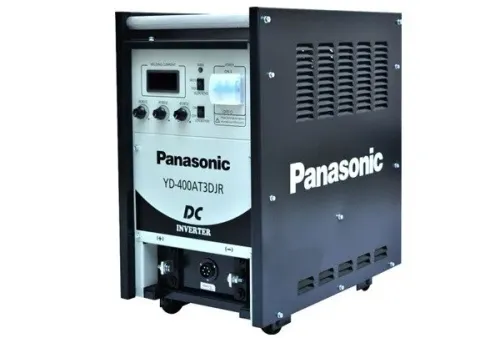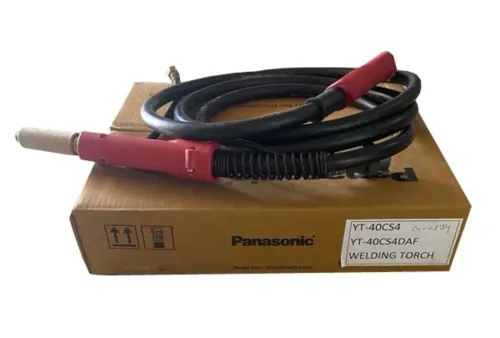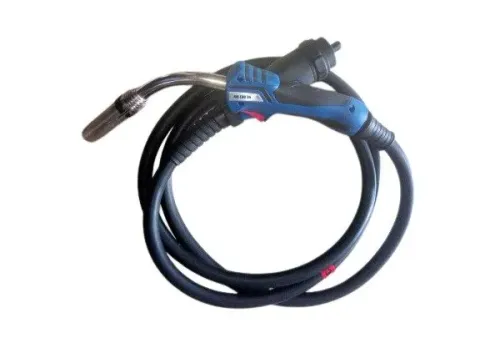

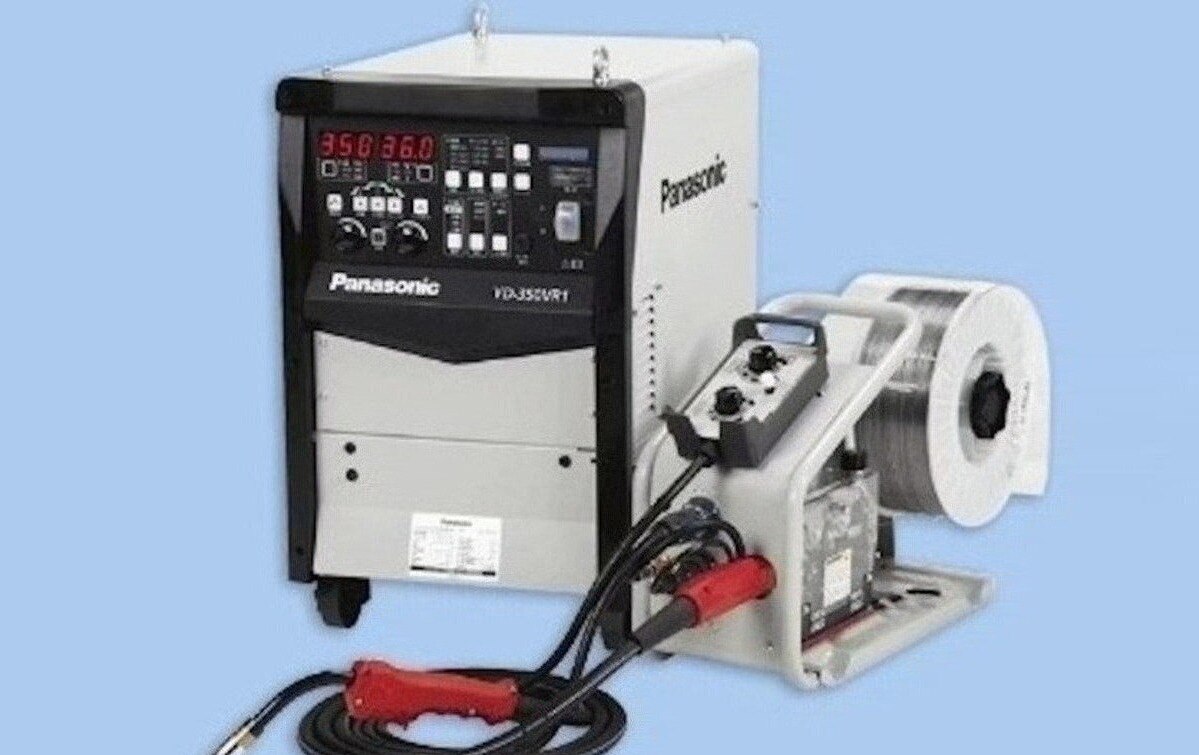
A welding machine’s nameplate price is only the first line of a production-maintenance budget. By separating machine class, duty cycle, accessories, installation, consumables and downtime, you can compare a complete operating cost and choose between TIG, MIG/MAG, thyristorised equipment, inverter technology, rental and purchase.
Key takeaways
- Budget ₹35,000–₹90,000 for a 160–250 A DC TIG inverter.
- Budget ₹75,000–₹1.8 lakh for a 250–350 A inverter MIG/MAG package.
- Compare duty cycle and workload, not amperage alone.
- Include gas, wire, accessories, power, labour and service in the purchase cost.
What a New TIG or MIG/MAG Machine Actually Costs in India
Budget on an ex-GST basis before requesting quotations: ₹35,000–₹90,000 for a 160–250 A DC TIG inverter, ₹1.5–₹4.5 lakh for a 300–400 A AC/DC TIG machine, ₹75,000–₹1.8 lakh for a 250–350 A inverter MIG/MAG package, and ₹1.5–₹4 lakh for a 400–600 A conventional thyristorised MIG/MAG system. These are indicative market bands, not guaranteed prices.
| Output class | Indicative new-machine price, ex-GST | Check before comparing |
|---|---|---|
| 160–250 A DC TIG | ₹35,000–₹90,000 | Torch, cables, foot control and duty cycle |
| 300–400 A AC/DC TIG | ₹1.5–₹4.5 lakh | AC balance, pulse, cooler and torch rating |
| 250–350 A inverter MIG/MAG | ₹75,000–₹1.8 lakh | Feeder, torch, wire diameter and pulse function |
| 400–600 A thyristorised MIG/MAG | ₹1.5–₹4 lakh | Feeder, interconnecting lead, cooler and warranty |
1. Ask whether the price includes the wire feeder, welding torch, earth-return cable and clamp, regulator-flowmeter, gas hose, trolley, water cooler, interconnecting cable, freight and commissioning. A low power-source price can become an expensive production package after these exclusions.
2. Compare rated current with duty cycle at the stated ambient temperature, input kVA, voltage tolerance, power factor, efficiency, wire-feed range and maximum spool size. A 400 A machine at 60% duty cycle is not equivalent to a 400 A machine at 100%.
That is the meaningful production welding machine buying cost—not simply the tig and mig welding machine cost printed beside the model number.
Compare 250 A, 350 A, 400 A and 500 A by Workload, Not Nameplate
A 250 A machine is not automatically cheaper to operate than a 500 A model. Match the source to actual arc-on minutes, material thickness and joint design; buying too small creates thermal trips, while buying too large ties up capital and increases electrical and installation demands.
| Current class | Workload fit | What to verify |
|---|---|---|
| 250 A | Light fabrication, repair work and shorter welds on thin or medium sections | TIG or MIG process, required wire size, duty cycle and cooling time |
| 350 A | Repeated production welds on medium sections with moderate arc-on time | 60% or higher duty cycle, feeder capacity, torch rating and input kVA |
| 400 A | Longer welds, heavier sections and frequent production cycles | Rated current at the stated ambient temperature, three-phase supply and thermal protection |
| 500 A | High-deposition work, thick plate, large fillet welds and long continuous joints | 100% duty cycle target, water-cooled torch, wire-feed range and available generator or transformer capacity |
Duty cycle uses a ten-minute period. A 60% rating means six minutes of welding and four minutes of cooling at the stated output; it does not mean continuous welding at 60% of rated current. Calculate arc-on minutes per shift, then compare that figure with the manufacturer’s rating.
Material and joint requirements can override amperage. Thick carbon steel, stainless steel or aluminium, deep grooves and large fillets need higher current, penetration and deposition capacity. Thin sheet, short intermittent welds and low heat input favour a smaller source.
Compare input kVA, voltage tolerance, power factor, efficiency and complete package price, because the production welding machine buying cost includes the feeder, torch, cables, cooler and commissioning.
Fully Thyristorised MIG/MAG Versus IGBT Inverter: The Real System Price
A fully thyristorised MIG/MAG system justifies its higher price when it will run long, repetitive weld cycles in a fixed fabrication bay, where rugged construction, familiar repairs and extended production life outweigh weight and electrical demand.
An IGBT inverter produces lower lifetime cost when electricity, floor space, transport and rapid process changes matter more than maximum durability.
| Technology | Indicative ex-GST source price | Lifetime-cost advantage | Main trade-off |
|---|---|---|---|
| Fully thyristorised MIG/MAG | ₹1.5–₹4 lakh for 400–600 A | Sustained shop-floor use; familiar SCR, feeder and contactor repairs | Higher input demand, transformer weight, installation and handling cost |
| IGBT inverter MIG/MAG | ₹75,000–₹1.8 lakh for 250–350 A | Lower power use, compact footprint and easier movement | Electronic boards require compatible spares and skilled diagnosis |
Treat the fully thyristorised MIG/MAG welding system price as the start of the comparison, not the total. Add feeder, torch, liner, earth cable, clamp, regulator, gas hose, trolley, cooler, interconnecting cable, freight, commissioning and likely spare parts. A low quotation becomes expensive if a failed feeder motor stops an otherwise healthy power source.
Choose the inverter when weld demand is intermittent, operators move between bays, or you need pulse, synergic control or aluminium capability. Choose thyristorised equipment when the process envelope is stable and a service team can stock control cards, contactors and feeder parts.
Compare recorded electricity use, downtime response and spare-part availability before judging tig and mig welding machine cost.
Build the Operating Cost: Accessories, Power, Gas, Wire and Labour
A TIG and MIG welding machine cost is only the starting line. Add every item required to produce a weld on the shop floor, or the production welding machine buying cost will look falsely low.
| Cost area | Add to the quotation | What goes wrong if omitted |
|---|---|---|
| Machine package | MIG wire feeder, torch, interconnecting cable, earth-return cable, clamp, trolley and water cooler | The power source cannot run the planned shift |
| Installation | Dedicated feeder, circuit protection, earthing, cable routing, ventilation, freight and commissioning | Voltage drop, overheating or unsafe operation causes downtime |
| Gas system | Cylinder deposit or rental, regulator, flowmeter, hose and correct shielding gas | Poor flow causes porosity; excessive flow wastes gas |
| Consumables | Wire or electrodes, contact tips, liners, nozzles, anti-spatter, grinding discs and cooling liquid | Small parts stop production before the machine fails |
| Labour and support | Operator hours, setup, training, preventive service, spare parts and repairs | A low purchase price becomes an expensive idle asset |
Calculate electricity from input kVA, operating hours, local tariff, duty cycle and the machine’s efficiency. Check generator kVA, voltage regulation and transient response separately; accepting three-phase input does not prove generator compatibility.
Request these figures in writing:
- Weld minutes per shift and wire consumption
- Shielding-gas flow rate and cylinder usage
- Installation, commissioning and warranty charges
- Expected rejected welds, rework hours and service response time
Add the cost of an unavailable machine during repair. That figure often changes the cheapest quotation.
Choose TIG, MIG/MAG, MMA, Rental or Local Service Support
Choose MIG/MAG for long production runs, MMA for immediate site repair, TIG for controlled finish, and rental when a breakdown threatens today’s schedule. TIG gives the cleanest result on thin stainless steel and aluminium but costs more labour time; MIG/MAG delivers higher deposition on carbon-steel fabrication.
Compare TIG and MIG welding machine cost with lost production hours, not the power source alone.
| Option | Best fit | Main trade-off |
|---|---|---|
| TIG | Thin sections, visible welds, stainless steel and aluminium | Slow deposition and greater operator skill |
| MIG/MAG | Repetitive fabrication and high weld length | Needs wire, shielding gas and a reliable feeder |
| MMA | Outdoor repair, dirty steel and quick intervention | Slower work, electrode changes and more cleanup |
| Rental | Temporary capacity or failed production machine | Availability, transport and unfamiliar controls |
| Local service support | High-hour departments where downtime is expensive | A higher quote can still reduce total loss |
Specify carbon steel, stainless steel or aluminium, wire diameter, transfer mode, plate thickness and positional work before accepting a MIG/MAG quote. Pulse or waveform control matters for thin sheet and aluminium; a basic short-circuit machine can produce an unsuitable arc.
- Response time, feeder-motor and control-board stock
- Torch, liner and contact-tip availability
- Output-current verification and breakdown escalation
- Loaner terms, warranty exclusions and commissioning scope
Weld Tech Corporation is worth comparing when those service terms matter as much as the machine price.
Related products
 | MIG Welding Machines Digital + Inverter IGBT-Controlled MIG/MAG Welding Machine Available in 250 AMP, 400 AMP & 500 AMP options Energy Saving & High Reliability Soft Arc (Thin Metal) & Hard Arc (Thick Metal) Characterisitcs... View product → |
 | TIG Welding machine Panasonic TIG Welding Machines Model Number 300 TSP Welding Type TIG Welding Voltage 415V, +10% (Input Voltage) Output Current Range 5-300 A Brand Panasonic Frequency 50-60 Hz... View product → |
Frequently asked questions
What does a new TIG welding machine cost in India?
A 160–250 A DC TIG inverter costs about ₹35,000–₹90,000 ex-GST. A 300–400 A AC/DC TIG machine costs about ₹1.5–₹4.5 lakh ex-GST.
What does a new MIG/MAG welding machine cost in India?
A 250–350 A inverter MIG/MAG package costs about ₹75,000–₹1.8 lakh ex-GST. A 400–600 A conventional thyristorised MIG/MAG system costs about ₹1.5–₹4 lakh ex-GST.
How should you compare 250 A, 350 A, 400 A and 500 A welding machines?
Compare duty cycle, wire size, duty hours, weld thickness, cooling requirements, consumable use and service support alongside the nameplate amperage.
What should you include in production welding machine buying cost?
Include the power source, torch or gun, cables, work clamp, regulator, gas flowmeter, wire feeder, shielding gas, wire or tungsten, electricity, labour, maintenance and downtime.
When is a fully thyristorised MIG/MAG system worth considering?
Compare its purchase price and robust serviceability with an IGBT inverter, then assess duty cycle, portability, power consumption, controls, repair access and the production workload.
Related products
 | ac/dc tig welding machine Full Digital AC/DC TIG Welding Machine A variety of waveforms ensures superior welding for aluminum and a wide range of metals. View product → |
 | MAG Welding Machines Full Digital Controlled Pulse MIG/MAG Welding Machine Root Welding control technology IBC (The Arc Ignition & Burn Back Control) Pulse Constant Arc Length Control, ALC (Arc Length Consistence) HL-Pulse... View product → |
 | MIG Welding Machines Panasonic MIG Welding Machines Brand Panasonic MODEL YD-250KR 2 INPUT SUPPLY 415 +10% ,-10% PHASE/FREQUENCY THREE / 50-60 HZ POWER CONSUMPTION 9.5 KVA/7.9KW WELDING CURRENT RANGE... View product → |
 | MIG Welding Machines Fully Thyristorised MIG/MAG Welding System Available in 250 AMP, 400 AMP & 500 AMP options Six phase thyristorised system gives ripple-free DC output superior quality welding Synergic mode... View product → |