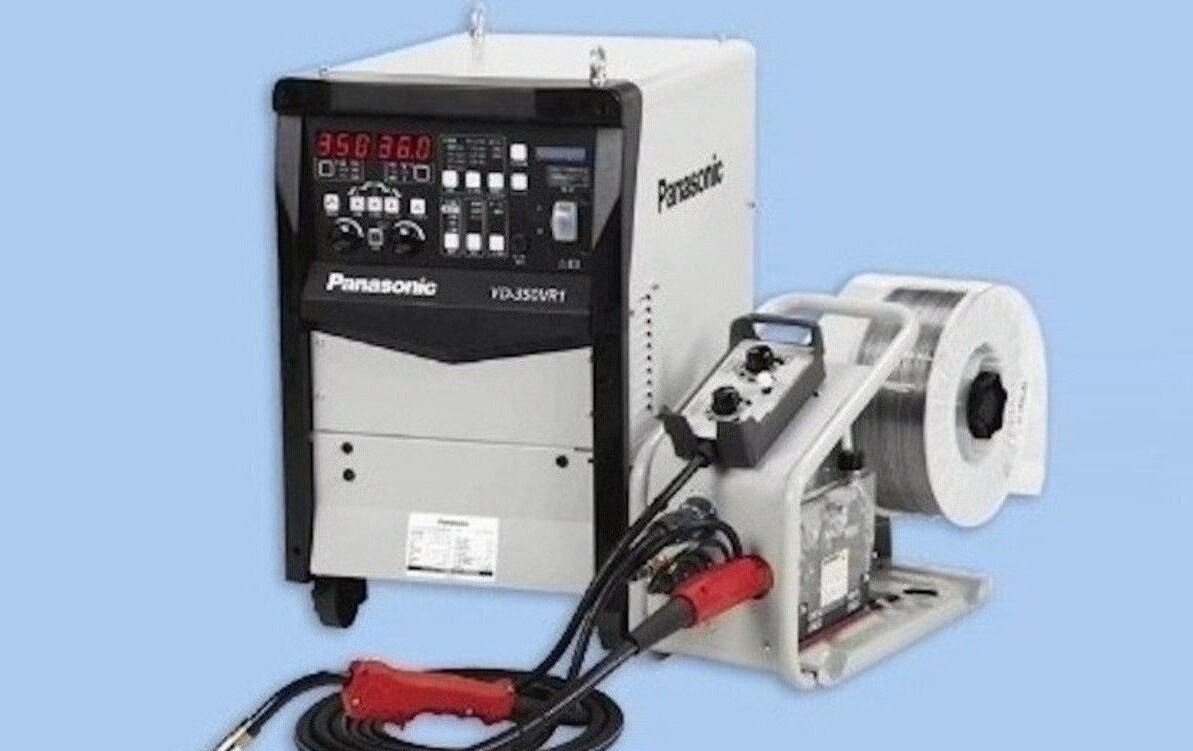
Automotive repair shops need different welding strengths for thin body panels, aluminium components, exhaust parts, brackets and structural repairs. By comparing process control, speed, heat management, consumables and workshop conditions, you can choose TIG, MIG or a dual-process setup without judging a machine by maximum amperage alone.
Key takeaways
- Use AC TIG for thin aluminium and visible stainless-steel repairs.
- Choose MIG for faster repairs on thicker steel and longer welds.
- Match shielding gas, wire, torch and controls to the repair metal.
- Check duty cycle, electrical supply and local equipment support before buying.
When TIG or MIG gives the better automotive repair result
Short, thin aluminium panels and visible stainless-steel repairs favour TIG because you control arc current, torch movement and filler separately. Use AC TIG for aluminium; DC-only TIG cannot remove the aluminium-oxide film during conventional welding.
TIG also suits stainless exhausts, trim, small brackets and restoration work where bead appearance and low distortion matter more than speed.
MIG is the practical choice for mild-steel body panels, longer seams, replacement brackets and approved chassis or suspension-related repairs. Continuous wire feeding covers more joint length with fewer stops, but short-circuit MIG produces more spatter and gives you a narrower burn-through margin on very thin sheet.
These are the main TIG and MIG welding machine benefits in repair work.
| Process | Best automotive jobs | Main trade-off |
|---|---|---|
| TIG | Aluminium panels, stainless exhausts, visible seams, restoration and precision brackets | Slower deposition; demands stronger control of fit-up, cleanliness and filler |
| MIG | Mild-steel body panels, longer repairs, routine brackets and approved structural work | Faster coverage; more spatter and greater burn-through risk on thin sheet |
| Dual-process | Shops handling collision repair, restoration and custom fabrication | Higher equipment, gas, torch and consumable cost |
Choose a dual-process setup when both thin visible work and repeated steel repairs justify separate strengths each week. Specify low-current arc stability, pulse control, repeatable parameter locking and an AC/DC source rather than buying on peak amperage alone.
Match the shielding gas and control fumes with local extraction; TIG is not automatically safer when coatings, stainless steel or contaminated metal are present.
Match the process to the metal, joint and repair risk
Choose the process after identifying the metal, joint and crash consequence. A neat weld does not prove that a high-strength steel or boron-containing press-hardened member still meets its required strength, so follow the vehicle manufacturer’s repair method for structural work.
1. Mild-steel body panels suit short-circuit MIG. Remove paint, rust and oil to bright metal, keep the gap tight, reduce current and use short tacks to limit burn-through and distortion.
2. Stainless steel rewards TIG when appearance, arc control and contamination control matter. Degrease it, use a dedicated stainless brush, protect the back of the joint with argon where access allows, and control heat to prevent distortion and a wide heat-affected zone.
3. Aluminium needs AC TIG for conventional TIG repair; the alternating cycle cleans its oxide film. Use a separate brush and clean filler. For aluminium MIG, choose a spool gun or push-pull system, the correct drive rolls, liner and contact tip to prevent bird-nesting.
4. Galvanised sheet requires the maker’s procedure and zinc control. Remove coating only from the weld zone, provide local exhaust ventilation and control fumes; never assume a short weld is harmless.
5. Strip paint, seam sealer and underseal from coated panels before welding. Keep fire controls ready and use respiratory protection when your risk assessment requires it.
The practical TIG and MIG welding machine benefits then become clear: TIG gives control on visible precision repairs, while MIG covers longer mild-steel joints faster.
What precision means when welding thin automotive sheet
Burn-through is controlled at the machine’s low-current end, not by its maximum amperage. A precision welding machine needs a stable arc start, genuinely adjustable minimum output, short-circuit protection and fine control of inductance or current response. Excessive minimum current can pierce a panel; poor control can leave a cold bead that bridges contaminated edges.
| Characteristic | TIG | MIG |
|---|---|---|
| Low-current control | Hand or foot amperage control gives precise heat adjustment | Stable short-circuit transfer and adjustable wire speed limit heat spikes |
| Arc starting | HF start avoids tungsten contact and accidental panel contamination | Controlled starts prevent wire stubbing, spatter and crater defects |
| Heat and distortion | Pulse current reduces average heat and panel warping | Pulse or carefully tuned short-circuit settings narrow the heat-affected zone |
| Bead appearance | Separate filler control produces clean, visible beads | Continuous wire gives faster coverage but demands accurate speed and voltage |
| Repeatability | Stored programs, post-flow and consistent torch movement matter | Independent voltage, wire-feed and inductance controls make repairs repeatable |
For repeatability, check whether the machine stores and recalls programs and whether its displayed output can be independently verified. TIG pulse frequency and amperage controls help manage thin sections; AC TIG frequency and balance are required for aluminium oxide cleaning, not just high-frequency starting.
Clean metal, a tight joint and correct wire or filler diameter still matter. A well-controlled machine cannot compensate for a large gap, excessive travel speed or a dirty galvanised panel.
Compare the complete TIG and MIG setup, not just the power source
Compare the whole welding circuit, because a capable power source cannot compensate for the wrong wire, gas or torch consumable. An IGBT TIG welding source is only an architecture; judge the precision welding machine by low-current stability, HF start, AC frequency and balance, post-flow, repeatable settings and output you can verify.
| Option | Filler and feed | Gas and torch hardware | Current, diameter and pulse |
|---|---|---|---|
| TIG | Select ER70S-2 for mild steel, ER308L for stainless and 4043 or 5356 for aluminium; feed rods by hand | Argon, a gas lens and a suitable tungsten support a clean torch; AC is required for aluminium oxide cleaning | Use low, independently adjustable current for thin sheet; no wire-feed setting or MIG pulse |
| MIG | Choose solid wire grade for the parent metal; match 0.6, 0.8 or 1.0 mm wire to thickness and machine capacity | Argon-CO2 mixtures suit steel; pure argon suits aluminium. Check liner, drive rolls, contact-tip bore and torch reach | Set voltage and wire speed separately. Pulse-MIG can lower average heat and spatter, but wrong programs, stick-out or shielding still cause porosity |
| Aluminium MIG | Use 0.8 or 1.0 mm wire with the correct drive-roll profile | Prefer a spool gun or push-pull gun; a long standard liner can bird-nest soft wire | Confirm spool-gun compatibility before buying; pulse helps thin sections but does not replace clean material and gas coverage |
Ask the supplier to specify replacement tip sizes, tungsten grades, liners, torch ratings and gas-regulator inclusion. Compare duty cycle, local service and consumable availability alongside peak amperage.
How Pune workshops should assess duty cycle, supply and equipment support
For automotive welding equipment in Pune, start with the busiest repair you expect, not the machine’s maximum amperage. Compare rated duty cycle at the stated ambient temperature and output: a source that overheats during repeated chassis or exhaust repairs creates more delay than a lower-rated unit that completes each job without thermal shutdown.
Confirm the workshop’s electrical supply before comparing models. Ask an electrician to verify single-phase or three-phase availability, circuit capacity, earthing, plug arrangement and voltage under load; a three-phase machine is not a practical choice where only single-phase power reaches the bay. Check whether the machine’s voltage tolerance suits local fluctuations.
Use this purchase checklist:
- Match duty cycle to the longest expected welding period, then allow for Pune’s heat, dust and restricted airflow around the power source.
- Specify torch, work-lead and cable lengths that reach a vehicle without strained connections or unnecessary extensions.
- Confirm local stock of the exact contact tips, liners, drive rolls, tungsten electrodes, collets and gas fittings the machine uses.
- Ask who handles diagnosis, calibration, board repair and loan equipment, and record response times before purchase.
For aluminium MIG, verify the spool gun or push-pull arrangement, liner and drive-roll profile; soft wire can bird-nest in a long unsuitable liner. When comparing Panasonic options, Weld Tech Corporation can help document input requirements, consumable references and service arrangements rather than leaving those details to a sales quotation.
A rental agreement must also state whether the regulator, flowmeter, torch and returnable consumables are included.
Related products
 | TIG Welding machine IGBT Controlled DC Pulse TIG Welding Power Source Suitable for TIG/MMA Welding Stable current output even at 5 AMP Sheet thickness even 0.5mm weldable Pulse Frequency upto 500 Hz Digital Display of... View product → |
 | TIG Welding machine Panasonic TIG Welding Machines Model Number 300 TSP Welding Type TIG Welding Voltage 415V, +10% (Input Voltage) Output Current Range 5-300 A Brand Panasonic Frequency 50-60 Hz... View product → |
Frequently asked questions
When is TIG better than MIG for automotive repairs?
TIG suits thin aluminium panels, visible stainless-steel repairs and joints where precise heat and filler control matter. Use AC TIG for aluminium because DC-only TIG cannot remove the oxide film during conventional welding.
When should an automotive repair shop choose MIG?
MIG is the practical choice for faster repairs on steel, longer welds and work where productivity matters more than the highest cosmetic finish.
What should you match before welding automotive sheet metal?
Match the process to the metal, joint design and repair risk, then select the correct polarity, shielding gas, filler metal, wire or rod, and heat range.
What should Pune workshops check before buying TIG or MIG equipment?
Check duty cycle at the stated amperage, available single- or three-phase supply, controls, torch and consumable availability, spare parts, and local technical support.
Related products
 | MIG Welding Machines Digital + Inverter IGBT-Controlled MIG/MAG Welding Machine Available in 250 AMP, 400 AMP & 500 AMP options Energy Saving & High Reliability Soft Arc (Thin Metal) & Hard Arc (Thick Metal) Characterisitcs... View product → |
 | MIG Welding Machines Fully Thyristorised MIG/MAG Welding System Available in 250 AMP, 400 AMP & 500 AMP options Six phase thyristorised system gives ripple-free DC output superior quality welding Synergic mode... View product → |
 | ac/dc tig welding machine Full Digital AC/DC TIG Welding Machine A variety of waveforms ensures superior welding for aluminum and a wide range of metals. View product → |
 | MAG Welding Machines Full Digital Controlled Pulse MIG/MAG Welding Machine Root Welding control technology IBC (The Arc Ignition & Burn Back Control) Pulse Constant Arc Length Control, ALC (Arc Length Consistence) HL-Pulse... View product → |