
Hyderabad’s monsoon creates two separate welding problems: moisture that can damage electrical equipment and moisture or wind that can ruin shielding and weld quality. By the end, you will be able to decide when TIG or MIG is suitable, prepare the work area safely, and select a machine that matches the process, supply, duty cycle and site conditions.
Key takeaways
- Stop welding when rain or spray can reach live equipment or wet work.
- Inspect leads, plugs, panels, holders and grounding before energising.
- Keep shielding gas, wire, electrodes and metal dry before welding.
- Choose TIG for control and MIG for faster production on prepared work.
When must you stop welding during Hyderabad rain?
Stop welding immediately if rain, spray or pooled water can reach any live electrical connection, wet glove, workpiece, torch, electrode holder, extension lead or control panel. Humid air under a properly protected roof is a different condition from active rain or wind-driven spray.
The tig mig machine weather question has a simple answer: use a canopy as a safety control, not a convenience. It must be noncombustible or flame-resistant, ventilated, and large enough to keep these items dry:
- The welding machine, control panel and extension lead.
- The torch, electrode holder, work clamp and workpiece.
- Gas cylinders, regulators, hoses and connections.
- The operator’s gloves, clothing and footwear.
Isolate power before moving or inspecting equipment. Do not rely on an IP label to permit exposed welding. Under IEC 60529, IPX4 means splash protection and IPX5 means water-jet protection during specified tests; neither rating covers shock through wet clothing, standing water or a wet workpiece.
A tig and MIG welding machine can still be dangerous when its enclosure remains intact.
Control wind at the arc with a screened enclosure rather than simply increasing gas flow. Treat about 5 mph (8 km/h) at the weld as a practical limit unless a suitable windbreak is installed; gusts can disturb shielding gas and cause porosity or oxidation.
If the canopy cannot keep the operator and equipment dry, do not energise the machine.
What should you inspect before energising monsoon welding equipment?
Isolate the power supply before touching monsoon welding equipment. Lock out the isolator where site procedure requires it, then follow this sequence:
1. Inspect the input plug, supply cable and protective-earth connection for cuts, loose pins, overheating or poor continuity. Test the site-required residual-current protection using its test control before energising.
2. Check for water inside Dinse connectors, corrosion on the work clamp and cracked insulation on the torch, electrode holder, work lead or extension lead. Replace damaged parts; do not dry and reuse compromised insulation.
3. Remove condensation before power-up. Move a cold TIG/MIG welder into a dry, ventilated area and let visible moisture evaporate; do not power it immediately inside a warm shed.
4. Confirm that gas fittings are dry, the regulator has no corrosion or damage, hose connections are tight and leak-free, and the cylinder valve and regulator remain protected from rain.
5. For MIG, inspect the wire spool for rust or dampness, check the liner for blockage and clean contamination from the drive rolls. Damp wire can cause feeding faults and porosity.
6. For TIG, inspect the torch, collet, ceramic cup, tungsten and filler rod for moisture, dirt or damage.
7. On water-cooled equipment, check the torch, hoses, fittings and reservoir for leaks, low level or wet connections.
8. Perform a process-specific dry run under load, not an open-circuit power-on test. Confirm stable wire feeding, gas flow, TIG arc start, torch and work-lead integrity, fan operation and thermal protection at the required current and duty cycle.
How do gas, wire and wet metal change weld quality?
A dry-looking plate can still hold condensation in a lap, crevice or backing material. At the arc, that water vaporises, causing porosity; moisture can also introduce hydrogen that contributes to cracking in susceptible high-strength steels.
1. Keep shielding-gas cylinders upright, restrained and capped during transport. Store them under cover, where rainwater cannot pool around the valve or regulator. Have a water-exposed regulator inspected, or replace it, if you find corrosion, contamination, leakage or unstable flow.
2. Use the correct gas hose, tighten every fitting and leak-test the connections before welding. Install a wind screen around the arc. Keep the nozzle close enough to protect the pool without touching the joint; excessive flow creates turbulence and can draw air into the shield.
3. Treat disturbed coverage as a defect risk, not a minor gas-setting problem. On TIG, contamination can foul the tungsten and cause oxidation or porosity. On MIG, it produces porosity and spatter, even when the tig mig welding machine appears to run normally.
4. Protect solid MIG wire from humidity. Discard wire with visible rust, flaking, wet packaging or feed damage instead of compensating with settings; damp wire can clog the liner, cause unstable starts, excess spatter and porosity.
5. Dry the base metal completely, remove condensation, oil, paint, rust and mill scale, and clean filler material. Follow the welding procedure for preheat and interpass temperature. A tig mig welder cannot correct wet metal or contaminated filler.
Should you choose TIG or MIG for the rainy-season job?
Choose TIG for thin stainless steel or aluminium sheet, short precision tacks, visible joints, root control, and repairs where low distortion and appearance matter more than speed. Choose solid-wire MIG for repetitive fabrication and long production welds when a dry, screened work area can maintain shielding gas.
| Process | Best fit | Monsoon decision |
|---|---|---|
| TIG | Thin sheet, visible joints, controlled roots and short welds | Accept the slower setup when heat input, appearance or defect control outweighs production speed |
| Solid-wire MIG | Repetitive fabrication and long welds | Use only with dry wire, stable gas flow and protection from wind; continuous wire and higher deposition reduce cleaning and manual filler work |
| Self-shielded FCAW | Exposed structural work | Consider it when gas shielding is impractical, but match polarity, wire and settings, then remove slag and manage fumes |
A tig and mig welding machine is not automatically a full TIG platform. Confirm whether it has AC TIG, HF start, aluminium balance and frequency controls; many units offer MIG plus DC lift-TIG only. A search for tig mig welding machine monsoon should not replace checking the actual process modes.
MIG becomes a poor choice when gusts can break the gas envelope or damp wire causes unstable feeding, spatter and porosity. Gas-shielded flux-cored wire has the same wind requirement. Before changing amperage, dry the joint, remove oil, paint, rust, mill scale and condensation, clean the filler, and install a wind screen.
Surface preparation and weather protection usually improve the weld more than a setting change alone.
Which machine specifications matter before you buy or rent?
Choose the process before the machine. A TIG/MIG machine weather plan must match the weld, power supply and covered work area, not the label on the front panel.
| Process | Confirm before hiring | Wrong assumption |
|---|---|---|
| MIG/GMAW | Solid wire, gas supply and thickness range | Every MIG setting suits damp wire |
| TIG/GTAW | DC or AC, HF or lift start, pulse and material | TIG/MIG means AC TIG |
| MMA | Electrode type, polarity and output | It replaces gas-shielded processes |
| FCAW | Self-shielded or gas-shielded wire, polarity and cleaning | All flux-cored wire works outdoors |
Use this acceptance checklist:
- Match rated output and ten-minute duty cycle to your actual current and ambient temperature. Blocked air inlets, wet dust or poor canopy ventilation can trigger thermal shutdown early.
- Confirm single- or three-phase input, voltage, generator compatibility, cable length, portability and access for service.
- Treat the enclosure or IP rating as installation information, not permission to weld in rain. Obtain the manufacturer’s exact operating limits and provide a dry, protected location.
- Ask for a process-specific loaded test: stable wire feeding, gas flow, TIG arc starting, sound torch and work-lead insulation, cooling operation and thermal protection.
- Reject a unit that fails its manual, welding procedure or site monsoon controls.
For a tig mig welder rental, Weld Tech Corporation can inspect the equipment, support repairs and match its reach to the covered work area. The acceptance decision remains yours. Confirm the tig mig machine weather plan before delivery, because monsoon welding equipment fails faster when ventilation and shelter are treated as afterthoughts.
Related products
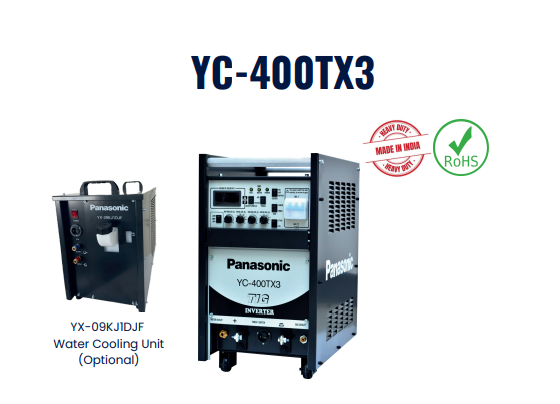 | TIG Welding machine IGBT Controlled DC Pulse TIG Welding Power Source Suitable for TIG/MMA Welding Stable current output even at 5 AMP Sheet thickness even 0.5mm weldable Pulse Frequency upto 500 Hz Digital Display of... View product → |
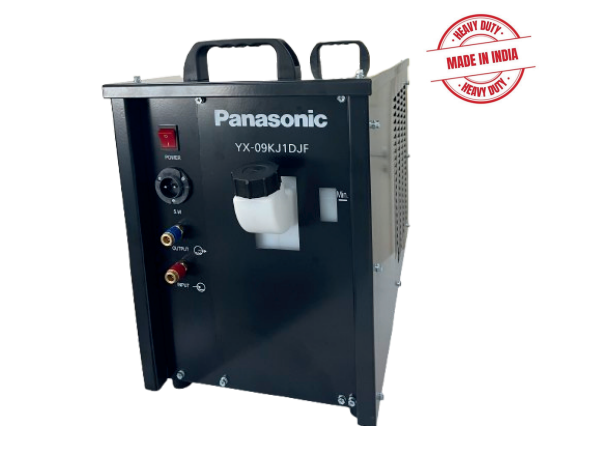 | Cold welding machine Panasonic CONNECT Panasonic SMARTER COOLING. SAFER WELDING. MAXIMUM EFFICIENCY. View product → |
Frequently asked questions
When must you stop welding during Hyderabad rain?
Stop immediately when rain, wind-driven spray or pooled water can reach live electrical connections, wet gloves, the workpiece, torch, electrode holder, extension lead or control panel. Humid air beneath a properly protected roof is different from active rain or spray.
What should you inspect before energising monsoon welding equipment?
Check that the machine, control panel, plugs, extension leads, torch, electrode holder and grounding connection are dry and undamaged. Remove equipment from service if insulation is cut, a connector is wet, or water has entered the machine.
How do gas, wire and wet metal change weld quality?
Moisture can contaminate shielding gas delivery, oxidise wire or electrodes, and introduce porosity, spatter or cracking risk through wet base metal. Store consumables sealed, check hoses and regulators, and dry and clean the joint before welding.
Should you choose TIG or MIG for the rainy-season job?
Choose TIG when precise heat control and clean, detailed welds matter. Choose MIG when production speed and longer continuous welds matter. Neither process is suitable when rain or spray can reach energised equipment or the weld area.
Which machine specifications matter before you buy or rent?
Compare duty cycle at the stated amperage, input voltage and phase, output range, IP protection rating, cable lengths, wire-feed control, gas compatibility and service access. Match the machine to your site power, material thickness and available weather protection.
Related products
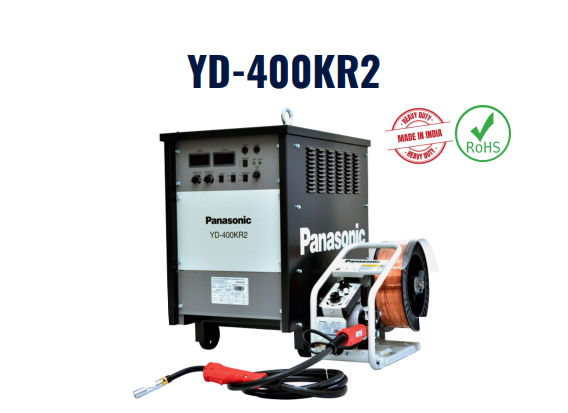 | MIG Welding Machines Fully Thyristorised MIG/MAG Welding System Available in 250 AMP, 400 AMP & 500 AMP options Six phase thyristorised system gives ripple-free DC output superior quality welding Synergic mode... View product → |
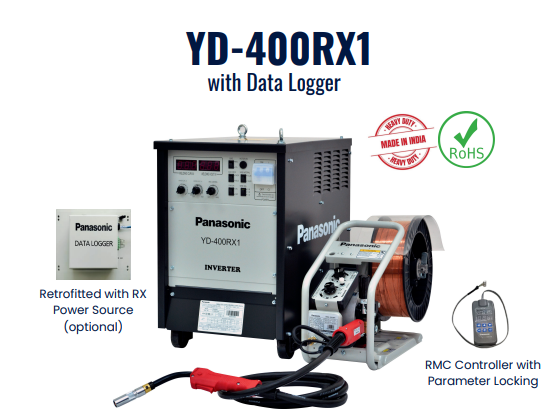 | MIG Welding Machines Digital + Inverter IGBT-Controlled MIG/MAG Welding Machine Available in 250 AMP, 400 AMP & 500 AMP options Energy Saving & High Reliability Soft Arc (Thin Metal) & Hard Arc (Thick Metal) Characterisitcs... View product → |
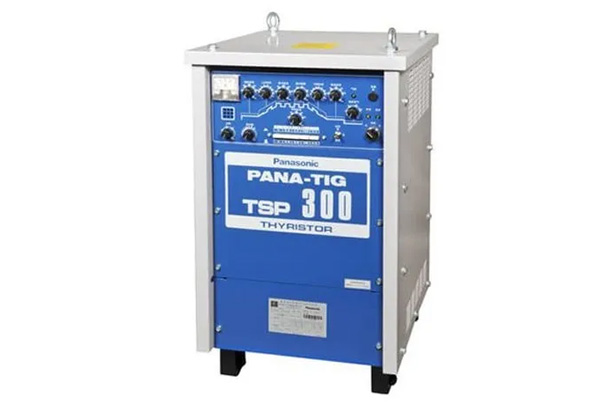 | TIG Welding machine Panasonic TIG Welding Machines Model Number 300 TSP Welding Type TIG Welding Voltage 415V, +10% (Input Voltage) Output Current Range 5-300 A Brand Panasonic Frequency 50-60 Hz... View product → |
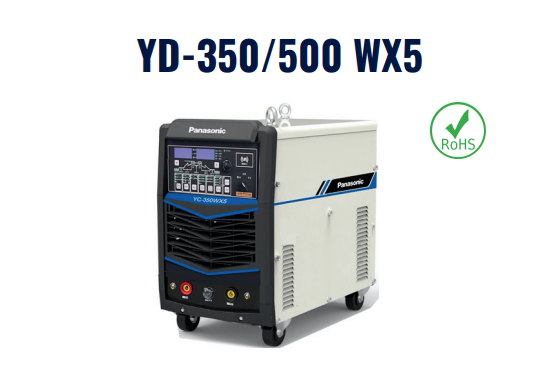 | ac/dc tig welding machine Full Digital AC/DC TIG Welding Machine A variety of waveforms ensures superior welding for aluminum and a wide range of metals. View product → |