
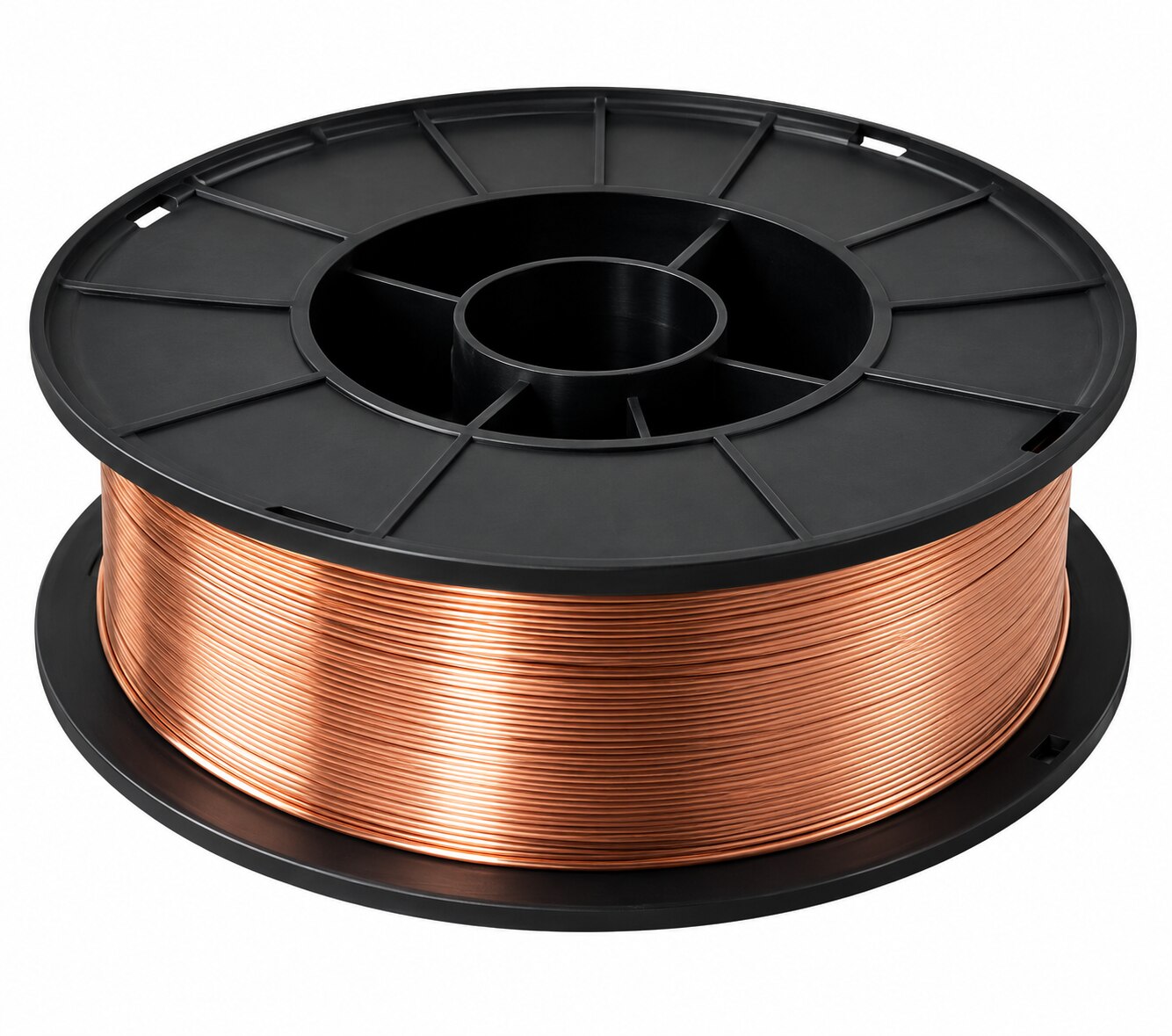
Rainwater, humid air and condensation can damage welding wire before it reaches the welding machine. By the end, you will have a room setup, packaging routine, inspection checklist and opened-spool procedure for keeping wire usable through Hyderabad’s monsoon season.
Key takeaways
- Keep the wire room at 20–25°C and below 60% relative humidity.
- Acclimatise sealed spools before opening them in the welding area.
- Reject deliveries with broken seals, corrosion, wet packaging or missing batch details.
- Specify manufacturer moisture limits and packaging requirements when buying wire.
Set Up a Dry, Controlled Wire Room
Keep the wire room at 20–25°C with relative humidity below 60% during Hyderabad’s monsoon. Use the wire manufacturer’s tighter limit when its product data specifies one; flux-cored and solid wires do not share identical moisture tolerance.
Treat industrial wire storage as a controlled space, not simply a room with a dehumidifier. Fit a calibrated temperature-and-humidity logger at rack height, check readings near the loading entrance, and record them daily.
- Run a dehumidifier or air conditioner sized for the room, then check condensate tanks, drainage and alarm status.
- Keep spools on pallets, racks or inside a dry cabinet, at least above the concrete floor and clear of walls that can sweat after rain.
- Keep doors shut and place strip curtains or an airlock at loading bays where outside air enters.
- Separate the room from wash areas, chemical stores, welding fumes and grinding operations.
- Remove standing water immediately and investigate any RH rise instead of merely resetting the equipment.
Protect welding wire from moisture by leaving unopened spools in the manufacturer’s original sealed packaging until use. Store opened spools in a vapour-barrier bag or sealed container with the specified desiccant; desiccant cannot remove water already condensed on rusty wire.
Keep the room clean because oil and abrasive dust can contaminate the liner, drive rolls, contact tip and wire surface.
Keep Sealed Spools Closed and Acclimatise Them Before Opening
Do not open a sealed spool merely because it has arrived at the store. The manufacturer’s original moisture-resistant packaging is part of the consumable’s protection; opening it early exposes the wire to Hyderabad’s humid monsoon air before you need it.
1. Keep each spool in its original sealed carton, bag or vapour-barrier package until the welding job is scheduled. Do not cut the bag to check the wire; use the package label and delivery records instead.
2. Move the closed package by supporting the spool’s flanges. Keep it upright, or use the orientation specified by the spool manufacturer. A dropped spool can deform its flange or disturb the winding, creating pay-off snags later.
3. Transfer the package on a dry trolley or pallet, away from rainwater, open doors, wash areas and wet floors. Never drag it across concrete or place it directly against a cold exterior wall.
4. Let the sealed spool reach the storage room’s temperature before opening it. A cool package carried into warm, humid air can collect condensation inside when opened immediately, wetting the wire and spool surfaces.
5. Open the package only after acclimatisation, then mark the opening date on the spool or bag. Use older opened spools first rather than repeatedly exposing partial rolls.
This procedure helps protect welding wire from moisture. If the outer seal is torn or water has entered the package, quarantine the spool for inspection instead of acclimatising and using it.
Inspect Every Delivery Before It Enters Stock
Do not load a spool until you have checked the wire, flanges, and moisture barrier under good lighting. A sound carton or drum does not prove the wire stayed dry; rainwater can enter through a puncture, and condensation can form inside an apparently closed package.
- Check the outer package for wet cardboard, water stains, softened corners, punctures, open seams, broken seals, or a missing moisture-barrier bag. Photograph the damage and move the spool to quarantine instead of opening it in the stock area.
- Inspect the wire through the package window, or after opening only when the package is already suspect. Reject or quarantine red rust, pitting, heavy black or green corrosion, dull deposits, and any visible moisture.
- Look across the spool face for crossed layers, loose loops, crushed flanges, cracks, or bent rims. Tangled wire can cause erratic feeding, bird-nesting at the drive rolls, and wasted setup time.
- Check for oil, grease, grinding dust, abrasive grit, or other foreign material on the wire and flange. Contamination can foul the contact tip, restrict the liner, create porosity, and change the weld appearance.
- Record the spool identification, wire classification, lot or batch number, delivery date, and inspection result before placing an accepted spool in industrial wire storage.
Do not sand rusty wire, wipe it with solvent, or dry a wet spool and return it to stock without the manufacturer’s instructions. Keep suspect material isolated, use clean gloves during welding wire handling, and ask the supplier for a disposition decision. Dry packaging does not make corroded wire suitable for production.
Control Exposure After Opening a Spool
An opened spool can remain exposed only during the active welding job and its short pauses. Do not leave it exposed overnight, through a weekend, or for an undefined number of days; Hyderabad’s humid monsoon air can affect the wire before visible rust appears.
The rule for MIG welding wire for storage monsoon in Hyderabad is simple: close it as soon as welding stops, then use it before opening a newer spool.
- Mark the opening date on the spool or bag and apply FIFO rotation. Consume the oldest opened spool first instead of creating several partly used rolls.
- During a pause, cover the spool with its moisture-barrier bag or the supplier’s resealable packaging. Push out excess air without bending or contaminating the wire.
- Secure the loose wire end in the spool’s retaining hole or holder. Never let it unwind onto a wet, dirty floor or remain threaded through a machine overnight.
- Add desiccant only when the packaging system calls for it. Replace a saturated packet; desiccant will not dry condensation or corrosion already on the wire.
If a cool spool moves from an air-conditioned room or vehicle into warm, humid air, keep it sealed until it reaches the store’s temperature. Opening it immediately can put moisture directly onto the wire. Good welding wire handling during monsoon wire storage means resealing between every job, not merely covering the spool at day’s end.
Specify Monsoon Storage Requirements When You Buy
Require written, spool-specific instructions before accepting a monsoon purchase; “store in a dry place” is not enough for mig welding wire for storage monsoon in hyderabad. Ask the supplier to provide:
- Wire classification and applicable standard, such as AWS A5.18 ER70S-6.
- Unopened-package temperature and relative-humidity limits, plus the required original packaging.
- The maximum exposure time after opening and the approved resealing method.
- Shelf life or recommended use-by period, linked to the lot or batch number.
- The manufacturer’s procedure for wet, rusted, contaminated, or damaged spools.
- A contact and document reference for deciding whether a quarantined spool can be released.
Weld Tech Corporation can help you verify that these instructions match the wire’s manufacturer documentation rather than relying on a generic warehouse label.
Quarantine a spool immediately if water entered the package, the wire is visibly wet, rusted, pitted, discoloured, oily, or coated with dust, or the moisture barrier is torn and the wire condition is uncertain. Mark it “HOLD—DO NOT USE,” isolate it from dry stock, photograph the damage, and record the lot number.
Do not bake or oven-dry it. Uncontrolled heat can alter lubricants, coatings, packaging, or the specified wire condition; obtain the manufacturer’s written disposition. If only the outside of a sealed package is cool or damp, leave it closed until it reaches the storage-room temperature, then inspect it under your industrial wire storage procedure.
Related product
 | MIG Welding Wires Brand Panasonic Usage / Application MS Welding Thickness 0.8 mm Wire Material Copper / Copper Alloy Grade ER70S-6 Yield Strength Greater-than or... View product → |
Frequently asked questions
What temperature and humidity suit monsoon wire storage in Hyderabad?
Keep the wire room at 20–25°C with relative humidity below 60%, unless the manufacturer specifies a tighter limit.
Should you open a sealed welding wire spool immediately after delivery?
No. Keep the spool sealed while it acclimatises to the controlled wire room before opening it.
What should you inspect when MIG welding wire arrives?
Check the seal, packaging, spool condition, wire surface, corrosion, moisture damage, batch number and product identification.
How do solid and flux-cored wires differ in moisture storage?
They do not share identical moisture tolerance, so follow the specific storage limit in each wire manufacturer’s product data.