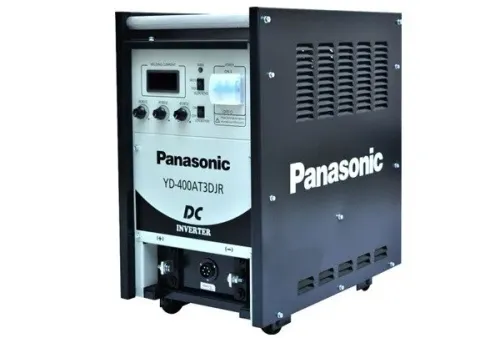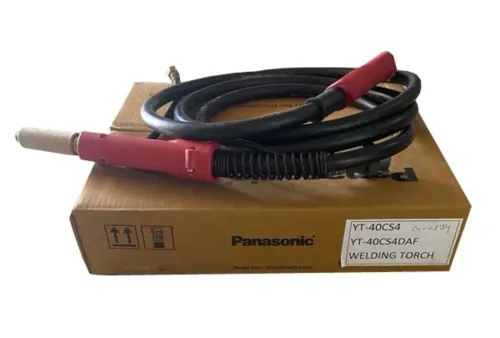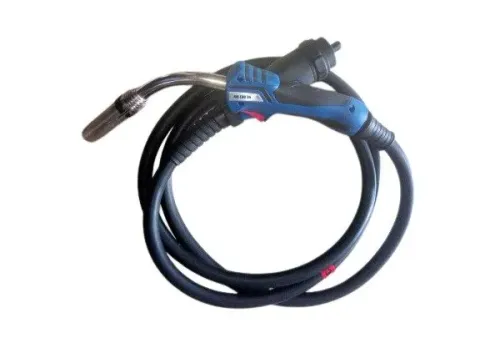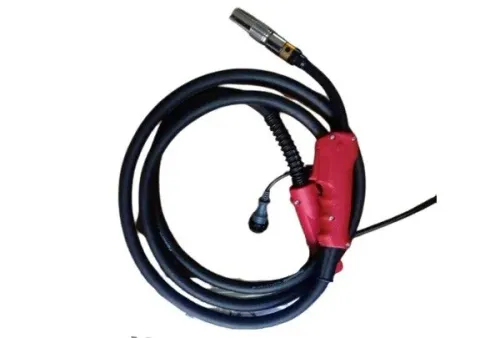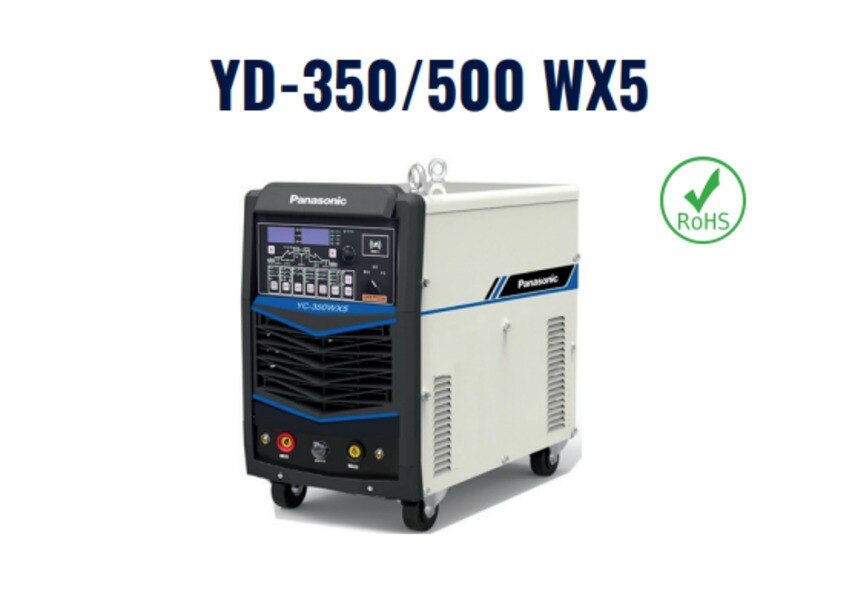
AC TIG and DCEN TIG solve different welding problems: AC breaks up the oxide film on aluminium and magnesium, while DCEN gives controlled penetration on steel, stainless steel, copper and titanium. By the end, you will be able to compare Panasonic models by process capability, digital controls, electrical requirements, torch package, duty cycle and real aluminium performance rather than by amperage or advertised price alone.
Key takeaways
- Choose AC/DC TIG for aluminium, magnesium and mixed-metal fabrication.
- Compare AC balance, frequency, pulse controls and waveform selection—not display size alone.
- Use clean tungsten, pure argon and oxide-free aluminium for stable AC welding.
- Prove fit with an aluminium weld test using your actual thickness and joint design.
When do you need AC/DC TIG instead of DC-only TIG or another welding process?
Choose AC/DC TIG when you weld aluminium or magnesium as well as steels and other DC materials. AC alternates electrode-negative and electrode-positive current, helping break up the tenacious oxide layer; DCEN TIG suits carbon steel, stainless steel, copper, titanium and nickel alloys. A DC-only machine cannot provide conventional AC oxide-cleaning action.
A Panasonic AC DC TIG welding machine is effectively two welding systems in one: AC TIG for aluminium and magnesium, and DCEN TIG for other listed alloys. Use HF start for clean, contact-free ignition; lift-arc reduces radio-frequency interference but can contaminate tungsten or mark the work if lifted too quickly.
| Process | Appearance and heat control | Deposition, skill and cost | Thin aluminium |
|---|---|---|---|
| AC/DC TIG | Cleanest, most controlled bead and adjustable oxide cleaning | Slow deposition, high operator skill; highest equipment cost | Excellent |
| DC-only TIG | Excellent control on steel and stainless; no AC cleaning | Slow, skilled operation; lower cost than AC/DC | Poor unless aluminium is exceptionally clean and suitable for the joint |
| MIG/MAG | Faster bead with less refined appearance and less heat precision | High deposition, moderate skill; productive equipment cost | Aluminium MIG is faster but less controlled |
| Stick | Rougher appearance and more spatter | Portable, low equipment cost, moderate skill | Unsuitable for thin aluminium |
Switch process when:
- Use AC TIG for aluminium or magnesium; use DCEN for steel, stainless, copper, titanium and nickel alloys.
- Choose MIG/MAG or aluminium MIG for long production seams and high deposition. Choose stick for portable outdoor work, but protect any process using shielding gas from wind.
- Avoid TIG on heavily contaminated material, where cleaning will not remove oil, moisture, paint or embedded dirt.
Which full digital TIG controls and AC specifications deserve comparison?
A full digital TIG machine is not defined by its display or menu. The phrase is not a performance standard, so confirm which settings the power source controls independently rather than accepting “digital control” as a specification.
Ask whether you can adjust each of these without changing another setting:
- Pre-flow and post-flow
- Start current, hot start and crater current
- Upslope and downslope
- Pulse frequency and pulse width
- HF arc start and lift-arc start
| Specification | Ask the supplier to state | Why it matters |
|---|---|---|
| Waveform | Square, sine, triangular and soft-square options | Waveform changes arc feel, cleaning action and heat distribution |
| AC frequency | Minimum and maximum frequency in hertz | Higher frequency tightens and directs the arc; lower frequency broadens heat |
| AC balance | Whether the setting is electrode-negative time or electrode-positive time | More electrode-positive time increases oxide cleaning but heats the tungsten and reduces penetration; more electrode-negative time improves penetration |
| Program memory | Whether settings can be saved, recalled and locked | Stored procedures reduce setup variation and prevent accidental changes |
Compare the actual frequency range, not just the word “adjustable.” A high-frequency setting can sharpen a fillet arc, while a low-frequency setting produces a wider heat pattern. Balance readings are easy to misinterpret: require the supplier to explain the percentage convention before comparing Panasonic full digital TIG models.
How do you set up and operate AC TIG on aluminium?
Choose an aluminum tig welding machine by matching alloy thickness and joint design to its current range, then select consumables. Thin sheet and tight fillets need precise low-current control; thick butt joints need adequate penetration and torch capacity. Degrease aluminium first, then mechanically clean it with a dedicated stainless-steel brush or pad.
Keep these tools away from steel: embedded iron causes porosity, black deposits and an unstable arc.
| Option | Setting | Effect |
|---|---|---|
| Higher AC frequency | Tighter, more directional arc | Precise fillets and narrow joints |
| Lower AC frequency | Broader arc and heat pattern | Wider coverage on open joints |
| More electrode-positive time | Stronger oxide cleaning | Less penetration and greater tungsten heating |
Start with a clean, dry joint, correct tungsten diameter, and an ER4043 or ER5356 filler rod matched to the alloy and service requirement. Use HF start, not tungsten contact.
Set argon flow with the cup size, gas lens, joint access and draught in mind: excessive flow causes turbulence, while too little flow produces grey oxidation and contamination.
- Hold the torch about 10–15 degrees from vertical, keep a short stable arc, and travel fast enough to avoid a wide, overheated pool.
- Add filler at the leading edge without touching the tungsten or molten pool; contact contaminates the electrode and destabilises the arc.
- Begin with moderate AC balance and no pulse, then add pulse only for heat control or thin sections.
- Choose water cooling for sustained high current or long aluminium welds; air cooling suits intermittent work, but the cooler, hoses and torch must be included in the package.
How should you compare Panasonic models, electrical requirements and Panasonic TIG machine price?
Compare an AC/DC TIG welding machine in Mumbai from the exact datasheet, not from a 300 A or 400 A headline. Verify input voltage, phase, voltage tolerance, input current, breaker size and generator compatibility; industrial models may need three-phase power while smaller units may use single-phase supply.
| Model factor | What to compare | Why it matters |
|---|---|---|
| Input supply | Voltage, phase, tolerance, input current and breaker size | A generator or workshop supply can fail even when output amperage looks suitable |
| Duty cycle | Welding current, ambient temperature and test standard | A high-current rating at a short duty cycle may deliver less production capacity |
| Welding functions | AC/DC range, HF start, pulse controls and saved programs | Two machines with the same maximum amperage may behave very differently |
| Torch and cooling | AC-service torch rating, air cooling or water cooler | Long aluminium welds can overheat an air-cooled torch |
| Support | Service response and local consumable availability | Downtime can cost more than a small Panasonic TIG machine price difference |
Make the quotation itemise these inclusions:
- Torch, work cable, water cooler, foot pedal or remote amperage control
- Regulator, flowmeter, gas hose, tungsten electrodes, collets and cups
- Taxes, commissioning, warranty and service support
Ask Weld Tech Corporation to mark every line as included, optional or separately rented. Also check the flowmeter range and regulator connection: excessive argon flow creates turbulence, while insufficient flow causes oxidation and tungsten contamination.
Related product
 | TIG Inverter Welding Machines Panasonic TIG Inverter Welding Machines Brand Panasonic MODEL YC-400TX3 INPUT SUPPLY 415 + - 10% PHASE/FREQUENCY THREE / 50-60 HZ RATED INPUT CAPACITY 13.9 KVA/13.2 KW RATED OUTPUT CURRENT... View product → |
What acceptance test proves that an AC/DC TIG machine suits your work?
A valid acceptance test is a production-representative aluminium weld, not a polished demonstration. Use your actual thickness, alloy, joint design, tungsten, filler rod, argon flow, cup or gas lens, and torch configuration on the Panasonic ac dc tig welding machine.
Record the result against a fixed checklist:
- Start the arc repeatedly with HF, noting failed starts and tungsten contamination.
- Set several currents and check repeatability, then operate the foot pedal through its range to assess response and control.
- Change AC balance and frequency, confirming that each setting changes the arc and cleaning pattern as expected.
- Select each available waveform and check arc stability.
- Verify post-flow timing after extinguishing the arc.
- Inspect bead appearance, penetration, porosity, oxide cleaning and tungsten heating.
- Measure torch temperature during the test and confirm that its AC current rating is adequate.
Continue welding long enough to expose duty-cycle behaviour. Watch for thermal alarms, output reduction, unstable arcs or forced pauses; a short bead on mild steel does not prove aluminium performance, and a no-load demonstration proves even less.
Before accepting or renting the machine, confirm local supply of replacement collets, cups, tungsten electrodes, gas-lens parts and hoses. Make the decision on repeatability, your operator’s skill, consumable access and service support—not maximum amperage and price alone.
Frequently asked questions
When do you need AC/DC TIG instead of DC-only TIG?
Choose AC/DC TIG for aluminium or magnesium because AC helps disrupt their tenacious oxide layer. DCEN TIG suits steel, stainless steel, copper, titanium and nickel alloys; a DC-only machine cannot provide conventional AC cleaning action.
Which full digital TIG controls should buyers compare?
Compare AC balance, AC frequency, waveform selection, pulse frequency and duty cycle, pre-flow and post-flow, start and end current, upslope and downslope, and crater-fill control. Confirm that the machine stores or repeats these settings consistently.
How do you set up AC TIG on aluminium?
Remove oil, paint and oxide, use a dedicated stainless-steel brush, fit a clean tungsten, connect high-purity argon, select AC and set balance, frequency, current and gas flow for the material thickness. Test the arc on a matching offcut before production welding.
How should you compare Panasonic TIG machine price and electrical requirements?
Compare the complete purchase cost with input voltage, phase, rated output, duty cycle, cooling method, torch, earth lead, regulator, warranty and installation needs. Ask for the exact model specification sheet and confirm your workshop supply before comparing Panasonic TIG machine price.
What acceptance test proves an AC/DC TIG machine suits your work?
Run test welds on your actual aluminium grade, thickness and joint design. Inspect bead profile, penetration, porosity, oxide cleaning and arc stability, then repeat the test at the machine’s intended duty cycle and record the settings.