
The buying decision depends on more than a machine’s maximum amperage: pulse control, material, duty cycle, electrical supply, accessories and operator time all affect the result. By the end, you will be able to decide whether to buy, rent or choose DC TIG, AC/DC TIG, MIG/MAG or MMA instead, and compare quotations on a like-for-like basis.
Key takeaways
- Choose DC pulse TIG for controlled heat on thin steel and stainless steel.
- Reject a quotation that omits duty cycle, accessories, warranty and service terms.
- Test rated output, arc stability and thermal protection during a trial weld.
- Compare electricity, consumables, downtime and repairs—not only the machine price.
What pulse control changes in a TIG weld
Pulse control changes how a TIG welding machine delivers heat, not whether the joint is prepared correctly. Peak current briefly raises penetration and enlarges the molten pool; background current keeps the arc established while letting the pool cool.
Pulse duration sets how long the arc stays at peak current, while pulse frequency sets how many peak-background cycles occur each second. At the same peak current, this lowers average heat input and can reduce burn-through, distortion and heat-affected-zone width in thin stainless steel or heat-sensitive assemblies.
It cannot correct poor fit-up, incorrect travel speed or inadequate shielding.
| Pulse frequency | Arc behaviour | Practical use |
|---|---|---|
| Low frequency | Visible peak and background cycles; slower arc rhythm | Helps regulate puddle size and coordinate travel |
| High frequency | Tighter arc character and sharper, different arc noise | Useful when the torch technique and joint benefit from a concentrated arc |
Low-frequency pulsing helps you time filler additions and travel; high-frequency pulsing does not automatically produce a better weld. The useful setting depends on material, thickness, joint type and torch technique, so a high maximum frequency alone is not a buying advantage.
The practical TIG welding machine benefits include a smaller puddle, controlled heat and more repeatable root passes. An IGBT pulse TIG welding machine also brings more setup decisions and a steeper learning curve: you must coordinate peak current, background current, frequency, duration and travel speed rather than rely on one preset.
When DC pulse is the right machine—and when it is not
DC pulse is the right choice for stainless steel, carbon steel, low-alloy steel, copper and many nickel alloys when you need a clean finish, low spatter, controlled penetration or careful repair work. It suits thin sheet, root passes and heat-sensitive assemblies, where the main TIG welding machine benefits are a smaller puddle and controlled heat.
| Option | Strength | Best fit and limitation |
|---|---|---|
| DC pulse TIG | Precise heat and penetration | Thin sections, roots and repairs; slower than MIG/MAG |
| Non-pulse DC TIG | Simpler controls | Stable manual work where pulsing adds little value |
| AC/DC TIG | Polarity balance cleans oxide | Aluminium and magnesium; assess AC balance, frequency and duty cycle |
| MIG/MAG | Higher deposition and speed | Long production seams; more spatter and less precise heat control |
| MMA | Fewer accessories | Outdoor or basic work; more slag, spatter and cleanup |
TIG demands cleaner joints, sharper tungsten preparation and greater operator control than these faster processes. DC pulse does not alternate electrode polarity, so it cannot create the electrode-negative/electrode-positive balance needed to break aluminium oxide.
If you weld aluminium, confirm an AC/DC pulse TIG machine, then compare AC balance, AC frequency and sustained duty cycle; a DC pulse-only IGBT pulse TIG welding machine is the wrong purchase.
How to test real capacity in a Pune workshop
A 200 A nameplate does not prove production capacity. Compare the complete duty-cycle table at the same output current, test temperature and stated standard: 60% at 200 A delivers more sustained output than 60% at 160 A.
| Rating | What to compare | Why it matters |
|---|---|---|
| 60% at 200 A | Same temperature and standard | Suitable for longer weld periods |
| 60% at 160 A | Same temperature and standard | Not equivalent to 60% at 200 A |
| Maximum current only | No duty-cycle context | Can hide thermal shutdowns |
Check the machine at your workshop’s measured supply, not an ideal catalogue voltage. Confirm 230 V single-phase or 415 V three-phase operation, maximum input current, protective-device size, cable length, voltage-fluctuation tolerance and generator compatibility. A long undersized cable can cause nuisance trips and lost output.
Request these functions before choosing a TIG welding machine: HF start, stable minimum current, upslope, downslope, crater fill, remote or foot-pedal compatibility, torch duty rating and procedure storage. For AC/DC models, verify AC balance and frequency.
Arrange an acceptance weld using the intended material and joint. Test:
- Cold starts, repeated starts and minimum-current stability
- Pulse operation, downslope and crater fill
- Operation at measured line voltage, including fan and thermal protection
- A sustained weld at the required current
- AC arc starting and aluminium weld quality separately on AC/DC models
IGBT construction delivers the compact size and lower weight benefits over a transformer-rectifier, but dust, moisture, blocked fans, unstable input power and unavailable replacement PCBs create service risk. These are tig welding machine benefits only when local repair support exists.
What a Pune quotation must include before you compare price
Compare tig welding machine price in Pune only after every seller quotes the same configuration.
The quotation must identify whether the IGBT pulse TIG welding machine is DC or AC/DC, its current range, duty cycle, torch model and length, foot pedal or remote control, argon regulator and flowmeter, earth clamp, electrode holder, cables, water cooler, warranty, installation, GST, delivery and service charges.
Ask each seller to separate these costs:
- Machine purchase price, listed separately from rental cost.
- Rental inclusions: the correct torch, pedal, cooler, regulator and delivery.
- Rental liability: damage charges, repair responsibility and billing during repair downtime.
- Service scope: response time, labour charges and replacement parts.
| Option | Easier to justify when | Main risk to check |
|---|---|---|
| Buying | Regular work, fixed procedures or costly unavailability | Ownership, maintenance and unused capacity |
| Renting | Intermittent TIG work, uncertain current or AC needs, trials or breakdown cover | Missing accessories, damage liability and repair downtime |
Do not treat headline amperage or a low package price as proof of value. Ask Weld Tech Corporation whether it can supply, rent, maintain or repair the exact configuration, and whether replacement fans, control boards, HF components and torch leads are available. Buying wins when availability and repeatability matter; rental wins when utilisation is uncertain.
Related product
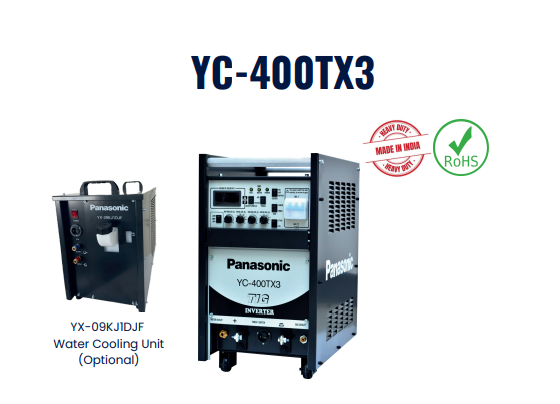 | TIG Welding machine IGBT Controlled DC Pulse TIG Welding Power Source Suitable for TIG/MMA Welding Stable current output even at 5 AMP Sheet thickness even 0.5mm weldable Pulse Frequency upto 500 Hz Digital Display of... View product → |
Calculate ownership cost and prove the setup on a trial weld
Run one paid trial weld before accepting the machine. Record this ownership-cost formula for 12 months: purchase or rental, argon, tungsten electrodes, collets, cups, gas lenses, filler rods, hoses, torch consumables, electricity, preventive cleaning, repairs and downtime. Include operator grinding time and filler waste; these costs can exceed electricity.
| Option | Compare | Decision use |
|---|---|---|
| Buy | Higher upfront cost, immediate availability, repeatable setup | Regular work and costly production interruptions |
| Rent | Lower commitment; confirm accessories, delivery, damage liability and repair downtime | Occasional work or uncertain current and AC needs |
| Another process | Faster MIG/MAG deposition or simpler MMA equipment | Long seams, speed-led production or rough-site work |
Use pure argon unless the qualified procedure specifies another gas. Set flow with the actual torch, cup and gas lens: excessive flow creates turbulence, while low flow loses shielding. Verify pre-flow, post-flow, gas coverage, tungsten cleanliness and grinding direction, joint degreasing, oxide removal and filler-metal grade.
Do not copy universal pulse settings. Record peak current, background current, frequency, pulse duration, travel speed and gas flow for the actual material, thickness and joint. Inspect for porosity, tungsten contamination, undercut, burn-through, distortion and root profile.
Buy only when utilisation, repeatability and service support outweigh the total TIG welding machine price in Pune and deliver the TIG welding machine benefits you need. Rent or choose another process when work is occasional, production speed dominates, or the machine cannot meet material and supply requirements.
Frequently asked questions
What does pulse control change in a TIG weld?
Pulse control alternates peak and background current. Peak current supports penetration, while background current reduces average heat and helps control the molten pool.
When is a DC pulse TIG welding machine the right choice?
Choose DC pulse for steel, stainless steel and other ferrous work when you need heat control, thin-material welding or reduced distortion. Use AC TIG for aluminium and magnesium.
How can you test a TIG welding machine in a Pune workshop?
Run a trial weld at the required material thickness and current, then check arc stability, output under load, duty-cycle performance, thermal protection and the finished bead.
What should a Pune TIG welding machine quotation include?
Request the exact model, output range, duty cycle, input power, torch, earth lead, regulator, warranty, service response, consumables, taxes, delivery and commissioning terms.